
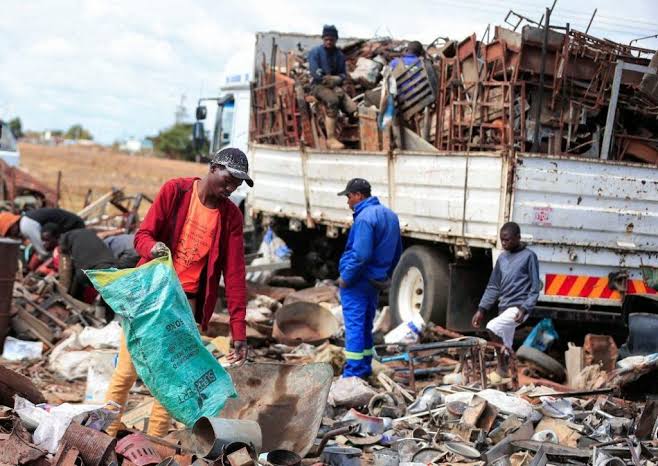
Scrap metal dealers have threatened to stop supplying iron and steel companies across Nigeria from October 1, in a dispute that could disrupt raw material flows to a sector that depends heavily on recycled metal.
The National Association of Scrap and Waste Dealers Employers of Nigeria said the action would begin on October 1 and run initially until October 15, with a possible indefinite extension if its grievances remained unresolved. The directive was contained in a statement issued in Kano on Thursday.
According to the association, the decision followed complaints from members over what it described as unfair pricing and other irregularities in the industry. NASWDEN said some iron and steel companies had repeatedly cut the prices they pay for scrap without giving dealers adequate notice.
The association’s Deputy National President, Aminu Hassan Soja, said such sudden reductions left dealers who had already bought and transported materials at higher prices facing heavy losses. He put the potential loss at between N3m and N6m on a single truckload when companies cut their purchase prices without warning.
“The incessant and deliberate reduction in the prices of scrap metals without adequate prior notice has placed considerable financial pressure on our members,” Soja said in the statement.
NASWDEN also alleged that some companies deducted between one and five per cent from transactions under a charge it called “extra dust”, which it said added to the burden on dealers. It raised concern too about what it described as growing involvement of foreign nationals in the trade, including the setting up of dumpsites and collection centres in parts of the country.
The association said this was making it harder for indigenous dealers to operate, and it called for stronger regulation of the sector. It further alleged that some companies bought scrap from unregistered or uncertified dealers and agents, warning that the practice could encourage the circulation of vandalised public and private property.
“The purchase of scrap from unregistered dealers and agents must be properly regulated and verified to ensure that materials entering the steel industry are obtained through legitimate channels,” Soja said.
The National President, Abdulfatah Ogunwale, urged members to remain peaceful and law-abiding during the action, and to avoid confrontation, violence, destruction of property or anything capable of disrupting public order. The association said it remained open to dialogue, describing its aim as a fair and mutually acceptable settlement with the affected companies.
The threat matters because of how the Nigerian steel industry is structured. Much of the country’s steel is produced by rolling mills that rely on recycled scrap rather than primary iron ore, so any sustained cut in supply feeds quickly into the price and availability of rods and other products used in construction.
That dependence has long been a point of concern. A steel expert, Anthony Madagua, said in Abuja earlier this year that scrap availability remained a major challenge to sustainable steel production and to the manufacture of affordable, quality products, adding that scrap aggregation should be regulated to some extent. His remarks point to a raw material chain that was already under strain before the current dispute.
The dispute also sits within a wider policy conversation about the sector. The Minister of Steel Development, Shuaibu Abubakar Audu, unveiled a proposed Nigeria Metallurgical Industry Bill in February 2025, describing it as a framework meant to set operational standards, strengthen enforcement and curb problems including scrap metal theft and substandard imports. The bill’s stated concerns overlap with several of the issues the dealers have now raised, particularly the call for verification of where scrap enters the steel chain.
Elsewhere in the region, governments have moved on the same questions from a different angle. Ghana announced restrictions on the export of non-ferrous scrap in its 2026 budget, and President John Dramani Mahama in February 2026 estimated that a ban on ferrous scrap exports could generate about 300 million dollars a year in processed metal exports while supporting local production. Those measures illustrate how central scrap supply has become to steel policy across West Africa, though Nigeria’s dispute is a commercial standoff between dealers and buyers rather than an export question.
For now, the practical effect of the threat will depend on how widely it is observed and whether talks open before October 1. NASWDEN has appealed to government agencies, stakeholders in the steel sector and the public to support efforts at resolution. Whether the companies named respond, and whether the action holds for the full fortnight or extends beyond it, remains to be seen. The claims of unfair pricing and irregular practices are the association’s own, and the affected companies had not publicly responded at the time the statement was issued.