
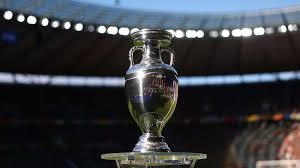
European football’s governing body is set to fundamentally reshape how nations earn their places at major tournaments, with UEFA drawing up plans to replace its traditional group-based qualification system with a format modelled after the UEFA Champions League’s “Swiss system” structure.
The proposed reform, reported by the Economic Times on Thursday, would affect qualification for both the 2030 FIFA World Cup and future UEFA European Championships, and represents one of the most significant structural changes to European international football in decades.
Under the proposed framework, the 36 highest-ranked European national teams would be grouped into League A, divided into three groups of 12 sides. Rather than playing every opponent home and away as the current format demands, each nation would face only six different opponents across the qualification campaign. The design is deliberately intended to eliminate the kind of lopsided fixtures that have long drawn criticism from fans, broadcasters and administrators alike, where elite sides routinely dismantle lower-ranked opponents by embarrassing margins.
Lower-ranked nations would operate within a separate League B structure, with playoff pathways expected to be retained as a route to major tournament qualification. League A group winners are anticipated to earn automatic berths at tournament finals, though UEFA has not yet finalised every element of the qualification pathway.
UEFA President Aleksander Ceferin said the reforms are aimed at modernising European international football while preserving the existing international calendar, a balance the governing body has carefully guarded amid ongoing tensions with club competitions over fixture congestion and player welfare.
The UEFA executive committee is expected to formally approve the proposal at its scheduled meeting in September, which would set the timeline for implementation ahead of the 2030 World Cup cycle.
The restructuring extends beyond World Cup qualification. The UEFA Nations League, which was only introduced in 2018 as a replacement for international friendlies, would itself be overhauled from the 2028 to 2029 season. Its current four-tier structure would be compressed into three leagues of 18 teams each, with nations facing five different opponents during the league phase rather than playing within fixed same-tier groups as they currently do.
The 2030 FIFA World Cup adds a further layer of complexity to the European qualification picture. Spain and Portugal, two of the tournament’s co-hosts alongside Morocco, would receive automatic berths in the finals but are still expected to participate in the qualification competition for purposes linked to Nations League standings and rankings. The three-country co-hosting arrangement spanning two continents makes 2030 one of the most geographically ambitious World Cups in the tournament’s history.
The Swiss system, on which the qualification model is based, has drawn considerable praise since UEFA introduced it for the Champions League’s 2024 to 2025 season expansion, with its ability to guarantee competitive matchups by pairing teams of similar performance levels mid-competition.
Whether that principle translates as effectively to the slower-paced, spread-out rhythm of international qualification remains an open question that UEFA officials and member associations are still working through.