
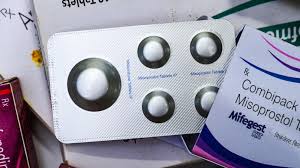
Access to one of the most widely used abortion medications in the United States has been disrupted after a federal appeals court temporarily blocked its delivery by mail, setting off a fresh legal and political battle over reproductive rights.
The ruling, issued on Friday by the US 5th Circuit Court of Appeals, requires that Mifepristone be obtained in person from authorised health clinics, effectively ending its distribution through pharmacies and postal services for now.
The decision stems from a lawsuit filed by the state of Louisiana against the Food and Drug Administration, challenging federal rules that had expanded access to the drug. A three-judge panel overturned an earlier lower court ruling that allowed continued mail delivery while regulatory reviews were ongoing.
Danco Laboratories, one of only two authorised distributors of mifepristone in the United States, has asked the court to pause the order for one week to allow it file an emergency appeal at the US Supreme Court. In court filings, the company described the ruling as “unprecedented” and warned it could trigger “immediate chaos” for patients and pharmacies.
Originally approved by the FDA in 2000, mifepristone is used in combination with misoprostol to terminate pregnancies up to 70 days of gestation. It is also widely prescribed in the management of early miscarriages and accounts for the majority of abortion procedures in the country.
Supporters of tighter restrictions have questioned the drug’s safety, citing a study that has not undergone peer review and was published outside established scientific journals. Critics argue that such evidence does not meet accepted medical standards.
Louisiana Attorney General Liz Murrill welcomed the ruling, describing it as a “Victory for Life!” In a public statement, she accused federal authorities of enabling widespread access to abortion pills through mail delivery, a claim that reflects the broader stance of anti-abortion groups following the rollback of federal protections.
Opposition to the ruling has been swift. Nancy Northup said the decision “isn’t about science — it’s about making abortion as difficult, expensive, and unreachable as possible.” Similarly, Julia Kaye stated that the restrictions would make access significantly harder for patients relying on a medication “safely used for more than 25 years.”
The legal fight unfolds against the backdrop of the Roe v. Wade reversal by the US Supreme Court in 2022, which removed constitutional protection for abortion rights and allowed individual states to impose bans or strict limitations. Since then, about 20 states have enacted laws restricting or prohibiting abortion access.
Despite the shifting legal landscape, national polling data consistently indicates that a majority of Americans support continued access to safe abortion services.
The Supreme Court had in 2024 rejected a separate attempt to restrict mifepristone, ruling that the challengers lacked legal standing. The latest appeal could, however, return the issue to the court, with implications for access to reproductive healthcare across the United States.