
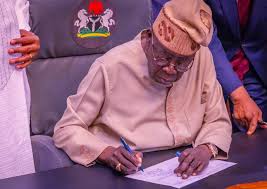
Mounting economic pressure and widespread insecurity took centre stage at Nigeria’s 2026 Workers’ Day as Bola Tinubu formally declared both crises national emergencies, warning that they threaten jobs, productivity and long-term stability.
Addressing workers at Eagle Square in Abuja through the Secretary to the Government of the Federation, George Akume, the President said the country could not achieve meaningful employment or economic growth under prevailing conditions.
“There cannot be decent work where workers fear for their lives, where wages cannot feed a family, or where insecurity disrupts farms, factories, markets and other economic activities,” he said.
The 2026 theme, “Insecurity and Poverty: Bane of Decent Work,” reflected concerns across labour unions and state governments, with organised labour pushing for a new minimum wage of up to N250,000 amid rising living costs.
Tinubu outlined interventions under his Renewed Hope Agenda, including the Community Protection Guards Initiative, which has recruited 45,000 youths to support local security. He said social investment programmes now reach 15 million vulnerable households, with about 7.5 million Nigerians lifted out of poverty, though such figures remain subject to ongoing policy evaluation.
The administration also reported reforms in workers’ welfare, including a new national minimum wage, clearance of pension arrears and the reintroduction of gratuity payments from January 2026. More than 800,000 informal workers have reportedly joined the micro pension scheme, while a N200 billion fund supports small and medium enterprises.
Agricultural measures include the National Agricultural Growth Scheme and deployment of 10,000 Agro Rangers across 19 states to protect farming communities, reflecting the link between security and food production.
At the National Assembly, Senate President Godswill Akpabio said lawmakers were pursuing legislation to address inflationary pressures and workplace conditions. “The Senate remains unwavering in its commitment to legislating for a living wage, safer workplaces, pension reforms and policies that expand job creation,” he stated.
Across states, governors highlighted local responses. In Kebbi, Nasir Idris announced a N75,000 minimum wage and ongoing recruitment in health and education sectors. Edo Governor Monday Okpebholo said his administration had sustained salary payments and implemented similar wage adjustments.
In Ekiti, Biodun Oyebanji reported the employment of about 10,000 workers over three and a half years, alongside clearance of promotion backlogs. Benue Governor Hyacinth Alia reaffirmed commitment to workforce productivity and welfare.
Labour leaders, however, raised persistent concerns. In Lagos, the Nigeria Labour Congress demanded an increase in minimum wage to N225,000, citing inflation and high living costs. Similar calls emerged in Niger State over pension reforms and arrears.
Political undertones also surfaced. Labour groups in Sokoto endorsed Governor Ahmed Aliyu for a second term, while the New Nigeria People’s Party urged workers to leverage their voting power ahead of the 2027 elections.
Here’s what matters: the May Day declarations underline a widening gap between policy responses and economic realities facing workers. While federal and state authorities highlight interventions and wage adjustments, labour unions continue to push for more aggressive reforms as inflation, insecurity and cost-of-living pressures persist across the country.