
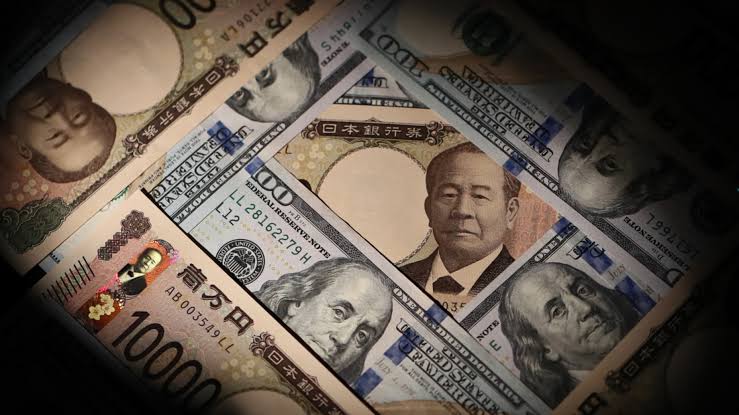
The United States and Japan confirmed on Monday their readiness to act again in currency markets after carrying out their first coordinated yen buying operation in nearly three decades. The joint step followed the Japanese currency’s fall to a four decade low and marked a notable shift in official efforts to curb what authorities described as excessive volatility.
Japan’s Finance Minister Satsuki Katayama stated that the action “countered excessive volatility and disorderly movements in the Japanese yen in recent months.” United States Treasury Secretary Scott Bessent said Washington “strongly support Japan’s decisive market and monetary steps to correct the substantial undervaluation of the yen” and added that the United States “will not hesitate to participate in further joint intervention.” President Donald Trump, speaking aboard Air Force One, called the move a “signal of friendship” with Japan and “good for the world economy.”
The yen had weakened to 163.99 against the dollar last month, its lowest level since 1986. After the intervention the currency strengthened sharply, reaching 157.40 on Friday and briefly touching 155.23 on Monday. The scale of the operation remains undisclosed. Officials noted that the last time the United States and Japan bought yen together was in 1998 during the Asian financial crisis. The previous coordinated G7 action involving the yen occurred in 2011, when authorities sold the currency to prevent a sharp rise after Japan’s earthquake and tsunami.
Pressure on the yen has stemmed largely from the wide gap between Japanese and American interest rates. The Bank of Japan raised its policy rate to 1.0 percent in June, the highest level in 31 years, and held it steady at its latest meeting. The United States Federal Reserve has kept its target range at 3.50 to 3.75 percent. This differential continues to encourage the yen carry trade, in which investors borrow in yen at low cost and invest in higher yielding assets abroad, adding to capital outflows from Japan.
Japan’s large public debt, estimated above 200 percent of gross domestic product, and policy signals under Prime Minister Sanae Takaichi have also weighed on sentiment. Takaichi, who took office in October 2025 as Japan’s first female prime minister, has been linked by officials to a renewed phase of Abenomics, the mix of monetary easing, fiscal stimulus and structural reforms associated with the late Shinzo Abe. Bessent described the current approach as “an exciting new phase of Abenomics” that has produced “durable, robust underlying economic dynamics.”
A weaker yen benefits major exporters such as Toyota and Sony by making their goods more competitive overseas. At the same time it raises the cost of imports for resource scarce Japan, particularly energy, at a moment when global supply concerns remain elevated. Previous Japanese interventions and verbal warnings from Katayama had failed to halt the decline, underscoring the significance of the bilateral support.
Market analysts have observed that historical joint interventions often coincide with turning points in exchange rates, though lasting gains usually require shifts in underlying economic fundamentals. The Bank of Japan is expected to consider further rate increases in coming months, while the Federal Reserve faces its own inflation and growth assessments. Whether the latest coordinated action produces a sustained recovery in the yen will depend on how these policy paths evolve and on broader investor confidence in Japan’s fiscal and monetary stance.
The development adds a new layer to global currency management as major economies navigate diverging interest rate cycles and lingering geopolitical pressures on commodity markets.