
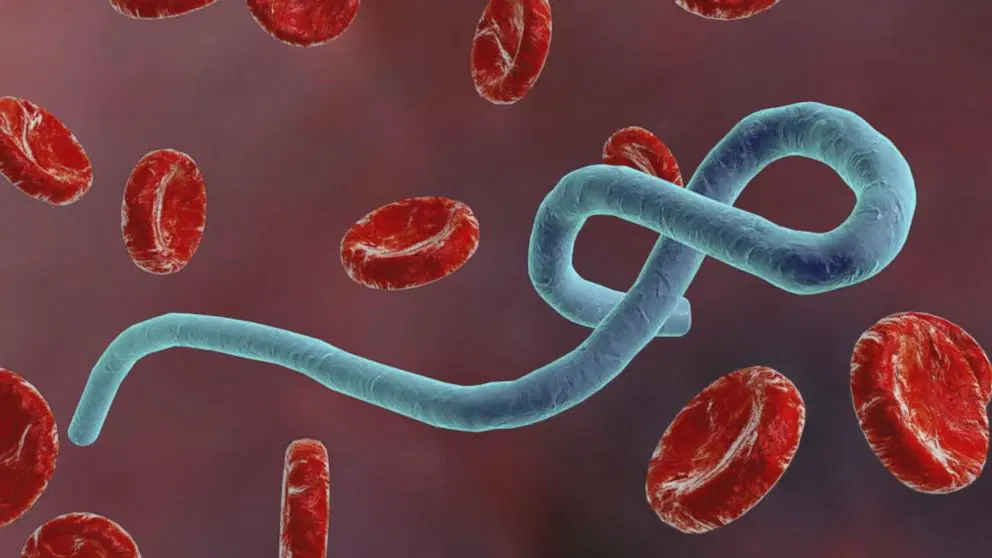
The Democratic Republic of Congo has begun testing two experimental therapies against the rare Bundibugyo strain of Ebola driving a deadly outbreak in its northeast, the World Health Organisation announced on Thursday, marking a critical turn in a response that has struggled to keep pace with the spread of the virus.
WHO Director-General Tedros Adhanom Ghebreyesus told reporters that enrolment of the first patient marked the start of the clinical trial, which is evaluating the monoclonal antibody MBP134 and the antiviral drug remdesivir, both alone and in combination. “Patients who enroll in the trial will receive comprehensive supportive care and close follow-up,” he said, adding that WHO was working to ensure communities could access the drugs “should they prove safe and efficacious.”
The study is being conducted by the DRC’s National Institute for Biomedical Research, led by the University of Oxford, and backed by partners including WHO and Africa CDC. The United States and Gilead Sciences donated the doses. MBP134, developed by Mapp Biopharmaceutical, has shown activity against multiple Ebola species in preclinical work, while remdesivir, made by Gilead, was widely used during the COVID-19 pandemic.
The urgency is stark. There are no licensed vaccines or approved treatments for the Bundibugyo species, a gap that separates this crisis from the 2018 to 2020 eastern Congo epidemic, where the Ervebo vaccine and antibody therapies helped curb transmission. Those tools were certified only for the Zaire strain and are not expected to protect against Bundibugyo.
Official figures underline how quickly the situation has worsened. The DRC’s National Institute of Public Health reported 1,333 confirmed cases and 399 deaths as of 29 June, with 609 patients hospitalised in isolation and 189 recovered. Neighbouring Uganda has recorded 20 confirmed cases and two deaths, with no new infection since 21 June. Single imported cases have surfaced in France and, earlier, in a US citizen evacuated to Germany. Case counts have since risen further, with some tallies placing deaths above 430 by 30 June.
Declared on 15 May and designated a Public Health Emergency of International Concern by WHO on 17 May, this is the DRC’s 17th Ebola outbreak since the virus was first identified in 1976, and it began barely five months after the previous outbreak in Kasai Province ended. Early infections are believed to date to February 2026 in the mining town of Mongbwalu, in Ituri Province, which remains the epicentre. Of the confirmed cases, 1,214 have come from Ituri.
WHO has repeatedly warned that the outbreak is outpacing the response. The agency has flagged insecurity, population displacement, mining-related movement and frequent cross-border travel as factors driving transmission, conditions that echo the difficulties of the 2018 to 2020 epidemic. Contact tracing has lagged the 95 percent coverage target considered necessary to control spread, though authorities report that 82.7 percent of identified contacts are now under follow-up.
The trial, cleared by the DRC ethics board weeks earlier, will randomly assign participants to receive MBP134, remdesivir, both, or neither, alongside supportive care. A separate study of the oral antiviral obeldesivir is planned as a preventive option for contacts. Health officials caution that medicine alone will not end the crisis, stressing that improved humanitarian access and community trust remain decisive.