
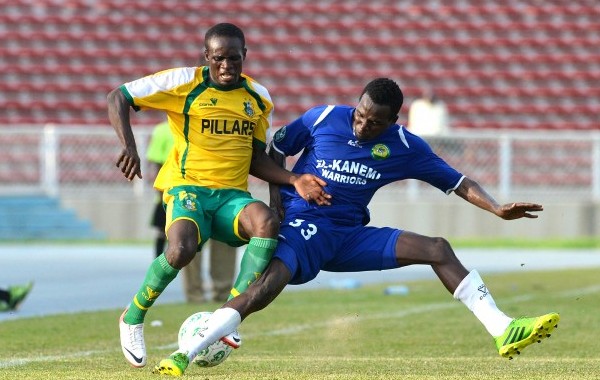
From inadequate funding and poor administration to an unstable domestic league and weak continental preparation, Nigeria’s disappointing club performances in Africa reflect deeper structural problems that talent alone cannot solve.
Nigerian football has never been short of talent, passion or ambition. The country produces gifted players, attracts enormous public interest in the game and possesses a rich history of domestic football. Yet, when Nigerian clubs step onto the continental stage to compete in the CAF Champions League and CAF Confederation Cup, their performances often fall short of expectations.
For a country with Nigeria’s football pedigree, the recurring difficulty of advancing deep into these competitions raises an important question: why do clubs that dominate at home so frequently struggle against the best teams from other African countries?
The answer is not that Nigerian footballers lack ability. Rather, the problem lies in the environment in which clubs operate. Financial instability, administrative weaknesses, inconsistent domestic competition, poor preparation, player turnover and inadequate infrastructure combine to undermine their continental ambitions.
1. Financial instability and inadequate investment
Continental football is expensive. Clubs must finance international travel, accommodation, player bonuses, training camps, medical services, scouting and match preparation. Competing successfully over several rounds requires reliable funding, not occasional financial intervention.
Many Nigerian clubs depend heavily on state governments, public institutions or individual benefactors. While such ownership arrangements can provide access to resources, they can also make a club’s financial future vulnerable to political changes, delayed budget releases and shifting priorities.
When salaries and bonuses are paid late, players may lose motivation, training can become disrupted and disputes may emerge at critical stages of a competition. Management may also struggle to arrange quality friendly matches or travel early enough to adjust to unfamiliar conditions.
By contrast, clubs with more dependable commercial partnerships, stronger sponsorship arrangements and effective revenue-generation strategies can plan ahead. They are better positioned to recruit strategically, retain experienced players and provide the professional support required for continental football.
The issue, therefore, is not simply that Nigerian clubs need more money. They need predictable funding, transparent financial management and business models that reduce dependence on government subventions.
2. An unstable domestic league
A club cannot consistently perform at a high level in Africa if its domestic environment does not provide adequate preparation. The Nigeria Premier Football League (NPFL) has historically faced challenges involving fixture disruptions, scheduling difficulties, venue standards and administrative uncertainty.
Continental competitions demand rhythm, tactical cohesion and physical sharpness. Teams need regular competitive matches to develop combinations, assess weaknesses and maintain fitness. When domestic fixtures are postponed or schedules become congested, coaches struggle to prepare their teams systematically.
The problem becomes more pronounced when Nigerian representatives must combine demanding continental fixtures with domestic league obligations. A team may travel long distances for an African match, return to face a domestic opponent with limited recovery time and then begin preparing for another international assignment.
Such circumstances can affect performance, particularly when squads lack sufficient depth.
A more predictable NPFL calendar, better coordination with CAF fixtures and stronger enforcement of professional standards would help Nigerian clubs enter continental competitions with greater consistency. Domestic league reform is not separate from continental success; it is one of its foundations.
3. Poor administration and short-term planning
Successful continental campaigns require planning that begins months before the first qualifying match. Clubs must assess their squads, identify recruitment priorities, organise preseason preparations, study potential opponents and ensure that administrative requirements are completed on time.
However, frequent changes in club leadership, coaching personnel and technical direction can disrupt continuity. A new administration may replace the coach, alter recruitment plans or dismantle a squad assembled by its predecessor. The result is often a team expected to achieve immediate success without the stability needed to build it.
Administrative problems can also affect player registration, travel arrangements, logistics and the handling of match-day responsibilities. At this level, even seemingly minor oversights can have serious consequences.
Nigerian clubs must begin treating continental participation as a planned institutional project rather than an event to be managed after qualification. Clear responsibilities, professional club executives, competent sporting directors and long-term technical strategies would improve preparation and accountability.
4. Excessive dependence on individual brilliance
Nigeria has consistently produced technically gifted footballers, but individual talent cannot compensate indefinitely for tactical and organisational deficiencies.
Continental opponents often arrive with disciplined defensive structures, coordinated pressing systems, well-rehearsed set-piece routines and clear plans for exploiting weaknesses. A Nigerian club that depends mainly on the creativity of one or two players may struggle when those players are marked out of the game.
Modern African club football increasingly rewards collective organisation. Teams must know when to press, when to defend in a compact shape, how to manage possession and how to protect a lead away from home.
Coaching quality is therefore crucial. Nigerian clubs need technical departments capable of analysing opponents, using match footage, monitoring player performance and adjusting tactics across two-legged ties.
There is also a need to develop players who understand different tactical roles rather than relying exclusively on raw athleticism or improvisation. Talent provides the foundation, but organisation turns talent into results.
5. Player instability and the failure to retain key talents
One of the biggest obstacles facing Nigerian clubs is their difficulty retaining their best players. Financial pressures often encourage clubs to sell valuable footballers, while players may leave in search of better wages, improved facilities or opportunities abroad.
Transfers are a normal part of football, but the timing matters. Losing several key players shortly before a continental campaign can destroy the tactical understanding developed over an entire domestic season. New signings may need time to adapt, and a coach may be forced to rebuild the team while already competing against experienced continental opponents.
The contrast with financially stronger African clubs is instructive. Teams such as Egypt’s Al Ahly and Morocco’s RS Berkane have demonstrated the value of maintaining competitive squads, investing in recruitment and building continuity.
Nigerian clubs do not necessarily need to match the budgets of Africa’s wealthiest sides. However, they must develop better recruitment systems, negotiate sustainable player contracts and avoid dismantling successful teams immediately after winning domestic honours.
6. Inadequate facilities and poor recovery systems
Football success depends on more than the quality of the playing surface on match day. Training pitches, gyms, medical facilities, recovery equipment, nutrition programmes and sports science all contribute to performance.
Clubs that lack these resources may struggle to maintain player fitness across a demanding season. Injuries can become more difficult to prevent and manage, while insufficient recovery time can affect players’ speed, concentration and decision-making.
Travel also presents challenges. Long journeys, unfamiliar accommodation and changes in climate can affect performance, especially when teams arrive shortly before kick-off.
Continental football requires careful logistical planning. Clubs must arrange appropriate travel, provide adequate recovery periods and ensure that players receive professional medical support. Investment in these areas may not generate the publicity associated with signing a star striker, but it can make a decisive difference over a two-legged tie or a six-match group stage.
7. Failure to learn from continental rivals
The success of North African clubs is not accidental. Their strongest teams often benefit from substantial investment, established football institutions, experienced technical personnel and regular participation in demanding continental competitions.
Nigeria’s recent record illustrates the gap. No Nigerian club had won any major CAF inter-club competition after Enyimba’s back-to-back Champions League triumphs in 2003 and 2004. Rivers United’s quarter-final appearances in the Confederation Cup in 2023 and 2024 showed that Nigerian teams could still compete, but sustained progress remained elusive.
Rather than lamenting these results, Nigerian clubs should study how successful opponents operate. They can examine scouting methods, youth development, commercial partnerships, tactical preparation and the management of players across multiple competitions.
Continental participation should also become a learning process. Clubs must review their performances after elimination, identify recurring weaknesses and implement corrective measures. Without serious evaluation, each new campaign risks repeating the mistakes of the previous one.
8. The evidence from recent campaigns
The problem is not merely historical. Recently, the early elimination of Nigerian representatives Abia Warriors and Kwara United from the Confederation Cup, while Remo Stars suffered a 7–1 aggregate defeat to South Africa’s Mamelodi Sundowns in the Champions League qualifiers. Rivers United progressed to the Champions League group stage but finished bottom of their group with one point from six matches.
These results demonstrate how difficult it has become for Nigerian clubs to progress beyond the preliminary rounds and group stages.
Nevertheless, it would be misleading to suggest that Nigerian clubs are incapable of competing. Enyimba’s two Champions League titles remain proof of what can be achieved when talent, organisation and ambition come together. Rivers United’s more recent continental runs likewise demonstrate that progress is possible.
The challenge is to turn occasional achievements into a consistent pattern of success.
9. The way forward: From participation to genuine competitiveness
Reversing this decline requires a coordinated effort from club owners, the Nigeria Football Federation, the NPFL leadership, sponsors and other football stakeholders.
First, clubs must strengthen their financial foundations through sponsorships, commercial partnerships, merchandising, improved match-day experiences and transparent budgeting. Publicly owned clubs should adopt professional management practices that protect long-term sporting objectives from political changes.
Second, the NPFL must provide a more predictable competitive calendar, enforce club licensing requirements and improve the quality of stadiums and training facilities. Clubs representing Nigeria in Africa should receive practical scheduling support without undermining the integrity of the domestic competition.
Third, club management must prioritise continuity. Coaches need sufficient time to establish tactical systems, while recruitment should be based on clearly defined technical requirements rather than short-term popularity.
Fourth, Nigerian clubs should invest in data analysis, opposition scouting, sports science, medical care and youth development. These investments can help close the competitive gap without requiring every club to spend beyond its means.
Finally, the football authorities and club executives must establish measurable targets. Progress should be assessed not only by domestic trophies or qualification for CAF competitions, but also by group-stage appearances, knockout-round progression and sustained improvements in continental results.
Conclusion
Nigerian clubs do not struggle in the CAF Champions League and Confederation Cup because the country lacks football talent. They struggle because talent is too often expected to compensate for weaknesses in finance, administration, infrastructure, preparation and long-term planning.
The experience of Enyimba, alongside the more recent achievements of Rivers United, shows that Nigerian teams can compete when the necessary foundations are in place. But isolated successes cannot substitute for a functional football system.
The real test is whether Nigeria can build clubs that are professionally managed, financially sustainable, tactically sophisticated and capable of retaining their best players.
Until that happens, qualification for Africa’s premier club competitions may continue to be celebrated as an achievement in itself. The ambition, however, must be greater: Nigerian clubs should not merely travel across the continent to participate. They should arrive prepared to challenge for trophies.