
The faction of the Peoples Democratic Party backed by the Minister of the Federal Capital Territory, Nyesom Wike, has faulted President Bola Tinubu and the ruling All Progressives Congress for suggesting that the hardship in the country is caused by the opposition.
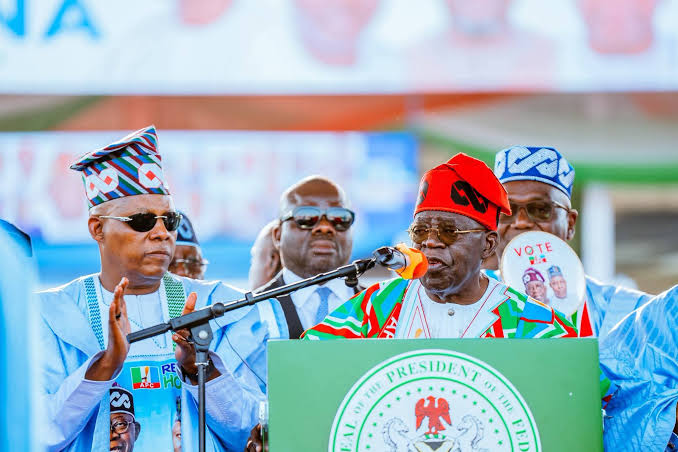
The President had told the crowd at the flag-off of his re-election campaign at the Kaduna Township Stadium on Saturday that his government was working to eradicate the hardship he attributed to the opposition.
Responding in a statement on Monday, the National Publicity Secretary of the PDP, Jungudo Haruna Mohammed, said the opposition, particularly the PDP, is not responsible for the hunger and economic difficulties confronting Nigerians, and asked the ruling party to accept responsibility for its time in office. The statement said it was also reacting to remarks by the APC’s publicity secretary, Felix Moka, on a television programme on Monday, in which he blamed the PDP for the hunger and hardship in the land.
The party described the remarks as attempts to evade responsibility and divert public attention from the pressing challenges facing the country under the APC-led administration. “After more than APC’s 10 years in office, Nigerians deserve answers, not excuses,” the statement said, urging the APC to tell Nigerians what it has achieved and the concrete measures it is taking rather than continually drawing the PDP into its own shortcomings.
Mohammed argued that the ruling party should explain what it intends to do to make food affordable, support farmers, strengthen local food production, create jobs, improve security, fight corruption, improve electricity supply, reduce transportation costs and restore the purchasing power of ordinary Nigerians. “The PDP is not responsible for the hunger Nigerians are experiencing today. The APC must own its record, address the nation’s challenges, and deliver on its promises to Nigerians,” he said.
The faction maintained that the economic challenges confronting the country cannot be resolved by repeatedly blaming previous PDP-led administrations, which held power from 1999 to 2015. “While historical circumstances may provide context, they cannot serve as a permanent shield against accountability,” the statement said, adding that every administration must be judged by its policies, decisions, achievements and, most importantly, the living conditions of the people it governs.
The PDP also framed the exchange as a campaign matter, saying the growing desire among Nigerians for a return to PDP leadership reflects their yearning for better governance, improved living conditions and a more secure and prosperous country, and predicting that voters will judge parties by their records and commitment to the welfare of the people.
The war of words has deepened as the 2027 campaign gathers pace. The flag-off in Kaduna on October 24 marked the formal start of the President’s re-election bid for the January 16, 2027 election, and hardship has emerged as a central battleground. The National Bureau of Statistics put headline inflation at 14.63 per cent in September, with food inflation at 19.6 per cent, while the World Bank estimates that 104 million Nigerians live below the national poverty line. The Finance Minister, Taiwo Oyedele, said this week that some households spend as much as 120 per cent of their income on food.
The ruling party has leaned on the same economic argument at its campaign events, with the President citing gross domestic product growth of 3.89 per cent in the first quarter of 2026 and capital importation of 10.37 billion dollars, figures presented at the Nigerian Economic Summit in Abuja, alongside the recent decline in headline inflation.
For voters, the dispute underscores the terms of the coming contest. The APC will ask for more time to complete its reforms; the PDP will argue that a decade in office is enough to own the outcome. Between now and January, every claim about hunger, jobs and security will be pressed into campaign service, and each side will insist that the other’s record is the real issue.