
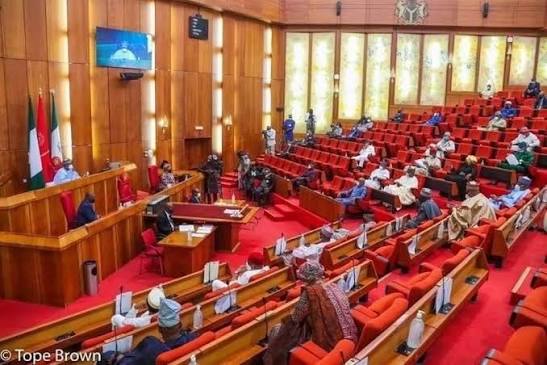
The ruling All Progressives Congress has tightened its hold on Nigeria’s upper legislative chamber, pushing its strength to 88 senators after four lawmakers elected in the June by-elections took their oaths of office, a development that leaves the opposition with its slimmest presence since the 10th Senate was constituted.
The four were sworn in at plenary by the President of the Senate, Godswill Akpabio, on June 24. They are Ikeje Asogwa of Enugu North Senatorial District, Dayo Faduyile of Ondo South Senatorial District and Danladi Envulu-Anza of Nasarawa North Senatorial District, all elected on the platform of the APC. The fourth, Olaka Nwogu of the Peoples Democratic Party, represents Rivers South-East Senatorial District. Their entry lifted APC membership from 85 to 88 and completed the full complement of 109 seats prescribed by the Constitution.
Welcoming the new members, Akpabio described the chamber as a prestigious institution and urged them to study its rules before joining debates. “We welcome the senators-elect, who have come today to be sworn in as members of this elite club, the Senate of the Federal Republic of Nigeria,” he said at plenary. He added that the copies of the Standing Orders and the Constitution handed to the lawmakers were working documents, stressing, “The two documents presented to you are not meant for your shelves. They are provided so that you can follow proceedings seriously.” Paying tribute to the colleagues whose deaths necessitated some of the polls, the Senate President prayed, “I want to pray that Almighty God grants eternal rest to our departed colleagues and that no member of this chamber will lose his life again. Amen.”
Each of the four contests was triggered by either death or political appointment. The Enugu North seat became vacant following the death of Senator Okey Ezea on November 18, 2025. According to figures declared by the Independent National Electoral Commission, Asogwa won that by-election with 162,360 votes, defeating the PDP’s Nestor Ezeme, who polled 9,299 votes.
In Rivers South-East, Nwogu emerged with 47,961 votes to defeat the APC candidate Osar Erewari, who secured 1,647 votes. That poll was held to replace the late Barinada Mpigi, who died earlier in 2026 after a prolonged illness. Faduyile clinched Ondo South with 68,474 votes, ahead of Adeolu Akinwunmi of the Allied Peoples Movement, who scored 1,411 votes. The seat had fallen vacant after former Senator Jimoh Ibrahim was appointed Nigeria’s Permanent Representative to the United Nations. In Nasarawa North, Envulu-Anza polled 45,362 votes to defeat the Labour Party’s Labaran Maku, who scored 12,931 votes, and the PDP’s Emmanuel David Ombugadu, who secured 11,570 votes. That vacancy arose from the death of former Senator Godiya Akwashiki.
The current standing marks a striking realignment from June 2023, when the 10th Senate was inaugurated. Findings by Sunday PUNCH show that the APC controlled 59 seats at inauguration; that figure has now climbed to 88. The PDP, which held 36 seats at the start, has shrunk to five. The Labour Party, which entered the Assembly with eight senators, is down to one. The New Nigeria Peoples Party, which began with two, has lost both, while the Social Democratic Party, which also started with two, no longer has representation in the chamber.
Against those losses, one opposition platform has grown sharply. The African Democratic Congress, which had no senator at the inauguration of the 10th Senate, now controls nine seats, making it the second-largest bloc, a rise that mirrors the wider consolidation of opposition figures around the party ahead of the 2027 general elections. Based on the composition announced at plenary, the Nigeria Democratic Congress holds four seats, while the All Progressives Grand Alliance, the Labour Party and the Accord Party retain one seat each. The NDC, formed only months ago, counts among its members its National Leader and Bayelsa West lawmaker, Seriake Dickson.
The APC’s numerical gains have come even as the party contends with internal friction. The expansion arrived barely a month after a wave of defections by aggrieved aspirants and lawmakers who accused the party leadership of candidate imposition, injustice and a lack of internal democracy during its governorship and legislative primaries.
Among those who left was a former Inspector-General of Police, Abubakar Adamu, who resigned his APC membership after losing the governorship primary in Nasarawa State. Two serving senators from Bauchi State and a member of the House of Representatives from Kano also departed for the Peoples Redemption Party and the Nigeria Democratic Congress. The senators were Shehu Buba of Bauchi South, who lost the APC governorship ticket, and Sama’ila Dahuwa of Bauchi North, who failed to secure a second-term ticket. Both cited what they described as injustice in the conduct of the primaries.
The list widened on June 23 when the senator representing Kebbi South, Garba Maidoki, quit the APC for the ADC after being barred from the party’s senatorial primary. Maidoki was elected to the Senate in 2023 on the PDP platform before defecting to the APC in May 2025 alongside fellow Kebbi senators Adamu Aliero and Yahaya Abdullahi after a meeting with President Bola Tinubu at the Presidential Villa. He was later screened out of the APC senatorial primary and denied the chance to seek re-election, prompting his exit.
Despite those departures, the ruling party has continued to widen its advantage through a mix of defections into its fold and by-election victories, a pattern that has steadily reshaped the balance of power in the National Assembly. With the 2027 elections drawing closer and party primaries already generating friction across the political divide, the composition of the Senate is likely to remain fluid, even as the APC enters the contest holding more than four-fifths of the chamber.