
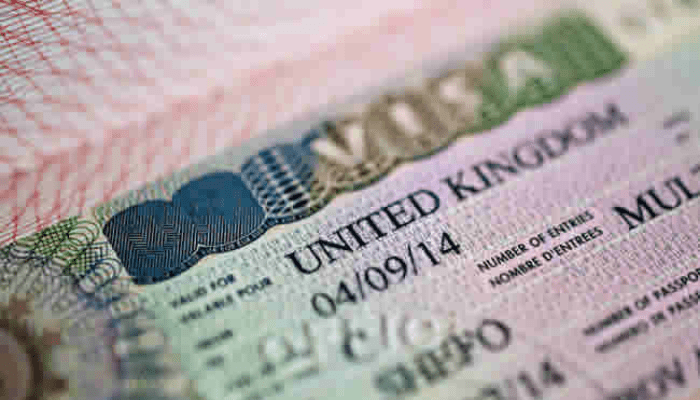
The United Kingdom refused 1,344,595 visa applications submitted by Nigerians between 2005 and the first quarter of 2026, according to official figures from the UK Home Office, a tally that places Nigeria second only to India among the world’s most rejected nationalities.
The data, drawn from the Home Office’s entry clearance visa outcomes dataset, shows Nigeria accounted for 15.2 per cent of the 8.83 million refusals recorded worldwide over the 21-year period. Nigeria also accounted for 44.4 per cent of all UK visa refusals involving African applicants during the period.
The picture is not one-sided. Despite the high rejection rate, Nigerians also received 2,723,558 UK visas over the same period, ranking third globally behind India and China. Of roughly 4.09 million applications, 4,068,153 received decisions, leaving a cumulative refusal rate of 33.1 per cent, more than double the UK’s global average of 14.8 per cent.
Visitor visas drove the rejections. Of the 1.34 million refusals, 1,127,088, representing 83.8 per cent, were visitor visa applications, which recorded an overall refusal rate of 37.1 per cent. Study visa applications recorded 130,712 refusals, while work visa applications accounted for 41,410 refusals, and family visa applications recorded 12,217 refusals.
Rejection rates were steepest in the mid-2000s. In 2006, the UK refused 117,968 Nigerian applications, a rate of 49.6 per cent, while 111,058 applications were refused in 2005. The numbers improved over the following decade, with the refusal rate falling to 26.2 per cent in 2011 and reaching a recent low of 21 per cent in 2023, when a post-pandemic surge drove a record 281,658 visa grants to Nigerian applicants.
That recovery proved short-lived. In April 2024, the UK raised the minimum salary threshold for Skilled Worker visas from £26,200 to £38,700, a 48 per cent increase, and restricted dependent visa rights for students and care workers. Immigration research firm Intelpoint reported that Nigerian work visa applications dropped by about 68 per cent after the changes, while refusal rates climbed to 33.5 per cent in 2024, 33.1 per cent in 2025, and 35.4 per cent in the first quarter of 2026.
The surge in applications has unfolded against a worsening economic backdrop at home. The World Bank, in its Nigeria Development Update released in Abuja in April 2026, reported that the share of Nigerians living below the poverty line rose from 56 per cent in 2023 to 61 per cent in 2024 and 63 per cent in 2025, equivalent to about 140 million people. The trend tracks closely with the “Japa” wave, the Yoruba expression for fleeing abroad that has come to define mass emigration since the 2023 removal of the fuel subsidy and the floating of the naira.
Former Nigerian Ambassador to Singapore, Ogbole Amedu-Ode, said the inclination to leave the country largely stems from Nigeria’s struggling economy, arguing the trend would only ease with significant economic improvement.
Among African countries, Ghana followed Nigeria with 374,108 refusals, ahead of Algeria (191,903), Egypt (134,055), Zimbabwe (102,246), Morocco (93,722), Kenya (75,973) and South Africa (61,521).
The Home Office linked its tighter scrutiny to asylum patterns. It noted that Nigerians were among the top five nationalities that claimed asylum after entering Britain legally on visas in the year ending September 2025.