
President Bola Tinubu has taken the reform of Nigeria’s policing architecture a decisive step closer to reality, inaugurating a Presidential Working Group tasked with drafting the legal machinery that will bring state police to life once the ongoing constitutional amendment is concluded.
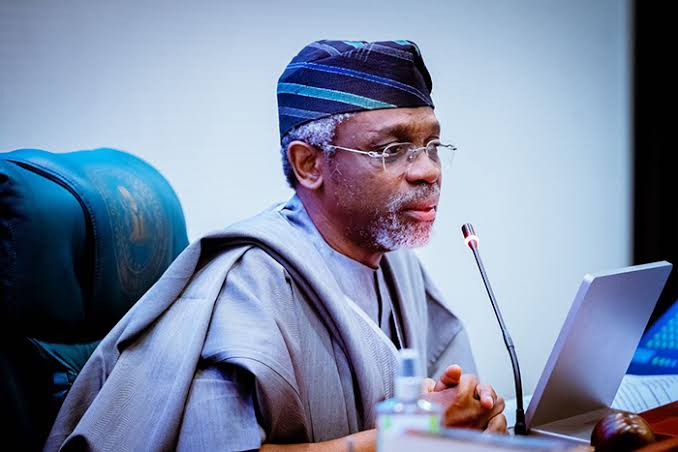
The panel was inaugurated on Tuesday at the Presidential Villa in Abuja by the President’s Chief of Staff, Femi Gbajabiamila, who is representing Tinubu and will also chair the committee. According to a statement by the President’s spokesman, Bayo Onanuga, the inauguration followed the National Assembly’s passage of the Constitution Alteration (State Police) Bill, 2026, which proposes a dual policing structure made up of the Federal Police Service and 36 State Police Services.
Tinubu was careful to draw a line between the constitutional groundwork already laid and the detailed legislation still needed to make it work. “The Constitution Amendment Bill establishes the framework for dual policing, but it does not operationalise it. That work is left to the National Policing Bill,” he said. He explained that the proposed law would set out minimum policing standards, state readiness certification, federal-state coordination, accountability, human rights safeguards, fiscal conditions and personnel transition.
The President stressed the value of moving early. “The Working Group has been constituted to produce a technically robust, implementation-ready draft National Policing Bill for transmission to the National Assembly,” he said, adding, “We must not wait until the constitutional process is concluded before beginning this important assignment.” The committee will also recommend other legal instruments required for a smooth rollout of the dual system.
Beyond Gbajabiamila, membership includes the Attorney-General of the Federation, the National Security Adviser, the Inspector-General of Police, the President of the Nigerian Bar Association, the Chairman of the Nigeria Governors’ Forum and the Chairman of the NGF Committee on State Police, supported by a dedicated secretariat.
The Attorney-General of the Federation and Minister of Justice, Lateef Fagbemi (SAN), framed the move against the backdrop of the country’s security troubles. “There is no denying the fact that we are in a critical moment security-wise, and all hands must be on deck,” he said, appealing to governors to ensure their state assemblies ratify the amendment quickly, since “this is a shared responsibility.”
The NBA President, Afam Osigwe (SAN), backed the reform while warning against its potential misuse. “Nigeria can hardly be effectively policed by one national police. We fully support the constitutional amendment providing for state police,” he said, cautioning, “We must ensure we do not create a monster. The right legal framework must guarantee accountability and prevent oppression.”
Speaking for the governors, Ogun State Governor Dapo Abiodun said the 36 states intend to pass the bill in unison once it reaches their assemblies. He described the reform as an answer to a long-standing public demand for community-based policing and a vindication of regional outfits such as Amotekun in the South-West. On scale, he offered a projection: “If each state deploys about 6,000 personnel, we will add nearly 200,000 officers to complement the existing federal police.”
That figure speaks directly to a decades-old deficit. The Nigeria Police Force currently fields roughly 370,000 officers for a population above 220 million, producing a police-to-citizen ratio of about one to 600, well short of the United Nations benchmark of roughly one to 450. Meeting the global average of about 311 officers per 100,000 people would require close to 684,000 personnel, leaving a shortfall exceeding 300,000. Former acting Inspector-General Kayode Egbetokun had, as far back as 2023, put the additional requirement at 190,000 officers.
The debate over state police is far from new. For much of Nigeria’s Fourth Republic, successive administrations treated decentralised policing as too politically sensitive to touch, fearing governors might weaponise their own forces against opponents. That caution held even as insurgency, banditry, communal clashes and a sprawling kidnapping economy overwhelmed the centralised model, with the military now deployed across roughly two-thirds of the states. The National Bureau of Statistics estimated 51.89 million crime incidents between May 2023 and April 2024, a figure that captures the scale of the strain.
The reform gathered fresh momentum after Tinubu declared a security emergency in late 2025 and urged the National Assembly to create the legal room for states to establish their own forces. With the Senate now having passed the alteration bill, attention shifts to the 36 state Houses of Assembly, whose concurrence is required to amend the Constitution, and to the working group whose draft will determine how the new structure is governed, funded and held to account.