
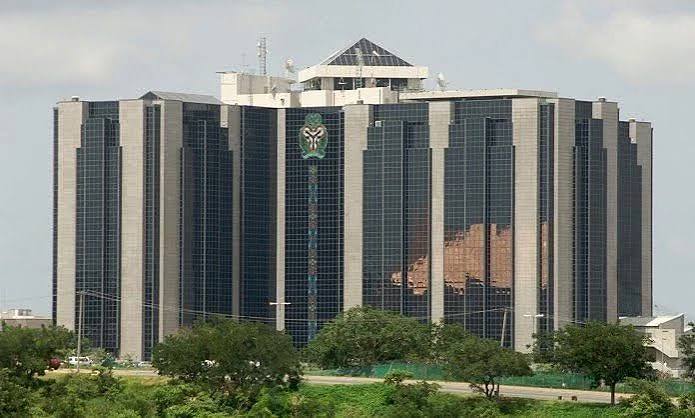
Households across Nigeria pulled back sharply from bank borrowing in 2025, pushing consumer credit into its first annual contraction in six years as punishing interest rates reshaped how Nigerians and their lenders approached debt.
Figures contained in the Central Bank of Nigeria’s 2025 Annual Report and Statement of Accounts show that outstanding consumer credit fell by 19.89 per cent to N3.78tn, down from N4.72tn in 2024. It was the first decline recorded since December 2019, ending a growth run that had held through the pandemic years and the early phase of the current reform era.
The apex bank tied the retreat directly to the cost of money. “Consumer credit outstanding moderated in response to the dynamic interest rate environment,” the report stated, noting that the fall to N3,783.40bn from N4,722.93bn “was the first since December 2019.”
The headline number masks a deeper change in how banks lend to individuals. Personal loans, long the backbone of household credit, slid to N1.85tn and now make up 48.84 per cent of the portfolio. Retail loans, by contrast, jumped 63.77 per cent to N1.94tn, overtaking personal loans for the first time in years to command 51.16 per cent of the total.
Consumer lending also lost ground within the wider system, accounting for 6.60 per cent of total credit to the private sector in 2025, down from 7.98 per cent a year earlier. The figure suggests household borrowing cooled faster than lending to businesses.
The backdrop is a monetary regime that has stayed unusually tight. After six straight rate increases in 2024 under Governor Olayemi Cardoso that took the benchmark to a peak of 27.50 per cent, the CBN began a cautious easing, cutting the Monetary Policy Rate by 50 basis points to 26.50 per cent in February 2026. The rate has since been held at that level at both the May and July sittings of the Monetary Policy Committee, which concluded its 306th meeting on 21 July 2026.
Those decisions kept credit expensive at the retail end. CBN data for February 2026 put the average maximum lending rate at 35.17 per cent, up from 32.68 per cent a month earlier, a level that priced many households out of fresh loans. Consumer credit, which had swelled to roughly N5tn in May 2025, drifted steadily lower through the second half of the year.
The report also traced shifts in the maturity of bank loan books. Short term credit remained dominant at 51.60 per cent of total lending, though its share fell by 7.71 percentage points from 2024. Medium term credit eased to 13.46 per cent, while long term credit expanded strongly, gaining 7.82 percentage points to reach 34.94 per cent. The CBN linked the persistence of short term lending to banks matching loans against a deposit base that is itself heavily short dated. Deposits maturing within one year made up 91 per cent of total deposit liabilities, up from 90.09 per cent, while long term deposits shrank to 3.85 per cent from 7.28 per cent.
Even so, credit to the broader private sector kept expanding, rising to N83.2tn in June 2026 from N81.04tn in May, a nine per cent increase over the N76.13tn recorded in June 2025. The trend shows banks continued to fund businesses even as consumers retreated.
The squeeze on households is playing out against a slowly cooling price environment. Headline inflation eased to 15.91 per cent in June 2026 from 15.93 per cent in May, far below the peak above 30 per cent reached in 2024, according to the National Bureau of Statistics. With the CBN insisting on firmer proof of disinflation and a stable naira before loosening, borrowing costs, and the credit squeeze on households, look set to persist through the rest of 2026.