
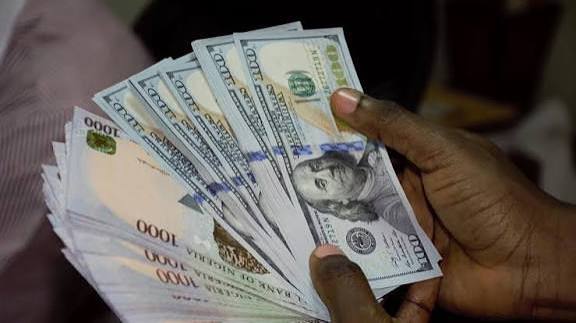
The naira closed out July on a stable footing against the United States dollar, extending a run of calm that has defined Nigeria’s foreign exchange market through much of 2026 and narrowing the long standing gap between official and street rates.
At the official Nigerian Foreign Exchange Market (NFEM), the dollar traded around ₦1,360 in the most recent session, with Central Bank of Nigeria data placing the closing rate near ₦1,358.63 on Thursday, July 30, after moving between ₦1,356 and ₦1,366 across the week. In the parallel market, widely called the black market, the currency changed hands at roughly ₦1,407 to ₦1,420 in Lagos and Abuja, leaving a spread of about ₦45 to ₦60 per dollar.
That premium, once a symptom of acute dollar scarcity, has become one of the clearest signs of the market’s recovery. During the worst stretch of the crisis in early 2024, the naira sank to record lows near ₦1,900 to the dollar, and the divergence between the official and unofficial windows ballooned. The convergence now points to steadier supply and firmer confidence in the formal market.
Behind the stability sits a stronger external buffer. CBN Governor Olayemi Cardoso told reporters after the bank’s 306th Monetary Policy Committee meeting in Abuja that gross external reserves had climbed to 52.52 billion dollars as of July 17, up from 50.47 billion dollars at the end of May. The figure, the highest in roughly 17 years, represents growth of 6.96 billion dollars, or about 15.3 percent, since January, and covers between nine and eleven months of imports, far above the three month international benchmark.
“Our focus is to sustain a transparent, liquid foreign exchange market driven by willing buyers and willing sellers,” Cardoso said, adding that daily turnover now sometimes exceeds one billion dollars.
Monetary policy has reinforced the trend. At its July 20 and 21 sitting, the committee held the Monetary Policy Rate at 26.5 percent for a second consecutive meeting, after a 50 basis point cut in February brought it down from 27 percent. The Cash Reserve Ratio stayed at 45 percent for commercial banks, signalling a deliberately tight stance meant to keep the naira firm and inflation retreating.
Price pressures, though still high, are easing. Headline inflation slowed marginally to 15.91 percent in June from 15.93 percent in May, while core inflation dropped to 15.92 percent from 16.82 percent. Food inflation, however, moved the other way, rising to 17.52 percent on the back of transport costs and supply constraints in producing regions, a reminder that relief in the market has not fully reached the kitchen.
The current calm traces back to the sweeping reforms launched in June 2023, when the Tinubu administration floated the naira and merged multiple exchange windows into a single market. The adjustment triggered a steep devaluation and painful inflation, but authorities argue it restored transparency and drew back foreign investors who had fled the earlier system of controls and backlogs.
Risks remain on the horizon. Cardoso flagged renewed hostilities in the Middle East and their potential to lift crude and commodity prices, which could feed back into domestic inflation for an economy still heavily reliant on oil earnings. The bank has said it expects inflation to approach single digits by early 2027, but has tied any further easing to sustained gains.
For now, the numbers read as consolidation rather than breakout. With the next Monetary Policy Committee meeting slated for September 21 and 22, traders expect the naira to hold within its recent band, barring a sharp external shock, as the CBN keeps its hand steady and lets fundamentals set the price.