
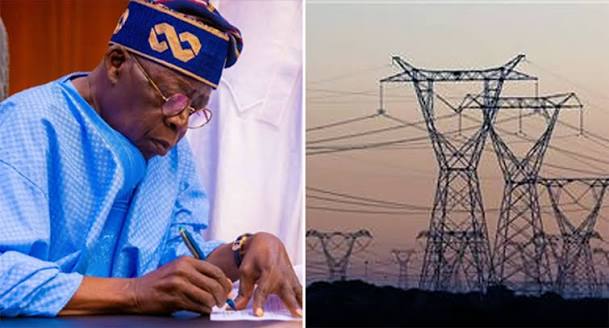
Nigeria’s costly electricity subsidy is heading for the exit. Minister of Power Joseph Tegbe announced on Friday that the Federal Government will begin phasing it out from 2027, framing the move as central to rescuing a power sector buried under trillions of naira in unpaid bills.
Speaking at a media session in Abuja, Tegbe stressed that the withdrawal would be gradual and would not immediately push up tariffs. “I promise you, next year, by God’s grace, we will put a stop to this so-called subsidy in the power sector,” he said. “We’ll make sure Nigerian consumers continue to have power and improve power services.” He added that a Power Consumer Assistance Fund would cushion vulnerable households as the reforms take hold.
To grasp why the decision matters, it helps to know what the subsidy actually covers. Since the government froze consumer tariffs at December 2022 levels, a widening gap has opened between the cost reflective tariff, driven up by naira depreciation and gas prices, and what customers are billed. The Treasury pays that difference. In practice, the subsidy is applied to the generation cost that distribution companies owe through the Nigerian Bulk Electricity Trading company.
The numbers are heavy. The Nigerian Electricity Regulatory Commission reported that the subsidy cost N1.94 trillion in 2024, an average of about N161.85 billion every month, yet the government settled only a sliver of it that year. The obligation stood at N536.40 billion in the first quarter of 2025 before easing to roughly N358 billion in the first quarter of 2026 as consumer offtake dipped.
Unpaid bills have pooled into a dangerous backlog. Generation companies are owed about N4 trillion, made up of N2 trillion for 2024 supply and N1.9 trillion in legacy arrears, while the Association of Power Generation Companies has put total exposure as high as N6.5 trillion. The GenCos have repeatedly warned that gas shortages and possible shutdowns could follow if the debt is not cleared.
The government’s answer has been to borrow. President Bola Tinubu approved a N4 trillion Presidential Power Sector Debt Reduction Programme, under which a N501 billion bond was floated in January and a second tranche of about N729 billion followed on July 20, bringing early issuances to N1.23 trillion. Officials say the bonds are designed to restore liquidity and rebuild trust across the value chain.
The reform lands on a fragile grid. Generation has hovered below 3,000 megawatts for much of 2026 in a country of more than 200 million people, and of some 11.8 million registered customers, close to half remain unmetered, feeding endless disputes over estimated billing. Memories of the last big tariff move are fresh. In April 2024, the previous minister Adebayo Adelabu raised the Band A rate from about N66 to N225 per kilowatt hour for the top 15 percent of users who consume roughly 40 percent of supply, a decision that drew loud public anger.
The plan also fits a wider fiscal script. The International Monetary Fund has urged Nigeria to wind down electricity subsidies gradually, echoing the logic behind the removal of petrol subsidy on Tinubu’s first day in office in May 2023, which triggered a sharp rise in living costs.
What follows will be watched closely. Tegbe has promised further detail on timelines and consumer protection as the programme advances, and with a general election set for January 2027, the balance between fixing the sector’s finances and shielding households is likely to define how the phase out is judged.