
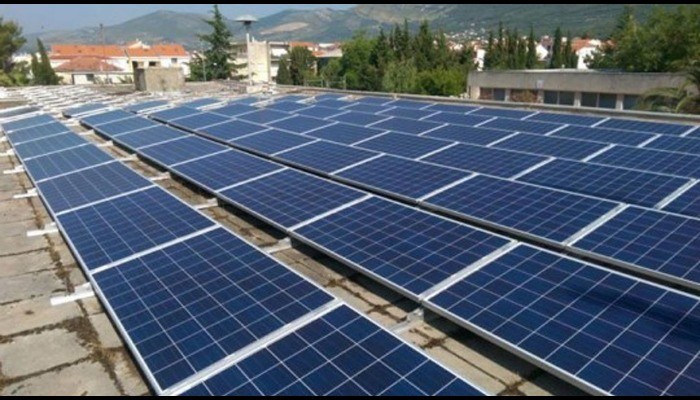
Nigerian households and businesses are buying their way out of the national grid at a pace that has now placed the country among the biggest markets for small scale solar investment across Sub Saharan Africa, according to a new BloombergNEF assessment that credits arithmetic rather than climate policy for the shift.
The report, titled Sub Saharan Africa Clean Energy Market Outlook 2026 and released on Wednesday, examined clean energy developments across 16 markets in the region. It found that clean energy investment reached a record 13.5 billion dollars in 2025, and identified Nigeria as one of the largest markets driving growth in small scale solar, alongside South Africa and Kenya.
Its central finding cuts against the familiar framing of the energy transition. According to the report, economic considerations, rather than climate ambition or government policy, are increasingly the primary drivers of the region’s move to renewables. Rising electricity prices, it said, have accelerated solar adoption as consumers and businesses search for alternatives to expensive and unreliable grid supply.
The region installed 13 gigawatts of solar, wind and battery capacity in 2025, with annual additions projected to rise to 29 gigawatts by 2030, the report stated. Investment in small scale solar more than doubled year on year to 8.5 billion dollars, meaning distributed systems on rooftops, in compounds and behind factory gates now account for the larger share of the region’s record clean energy spend.
The report added that utility scale renewable projects and small scale solar plus battery systems are increasingly displacing petrol and diesel generators in homes and businesses because of improving cost competitiveness. It identified off grid systems as the primary means of expanding electricity access in a region where more than 560 million people lacked reliable electricity in 2025.
The supply chain tells its own story. Sub Saharan Africa has become the fastest growing destination for Chinese solar exports, accounting for 10.1 per cent of those exports in the first quarter of 2026, up from 4.9 per cent in the same period a year earlier. Separate BloombergNEF data on storage showed annual battery installations in the region quadrupled from 2024 levels, reaching 4.3 gigawatts and 8.8 gigawatt hours of additions in 2025.
The Nigerian case rests on two sets of prices moving in the same direction at once.
On the grid side, the Nigerian Electricity Regulatory Commission introduced service based tariffs in April 2024, lifting Band A customers from N68 per kilowatt hour to N225, an increase of roughly 300 per cent. NERC said at the time that Band A represented about 15 per cent of customers but consumed around 40 per cent of national electricity. Some distribution companies later adjusted downward, with Ikeja Electric moving its Band A rate to N206.80 and Abuja Electricity Distribution Company operating at N209.50 under the Multi Year Tariff Order issued in November 2025. Customers on Bands B to E continue to pay between roughly N50 and N63 per kilowatt hour, though they receive far fewer hours of supply.
On the fuel side, the alternative has become punishing. Depot prices for petrol in Lagos climbed to about N1,275 per litre on July 21, 2026, after importers signalled a move from N1,230 to N1,350 from July 17, with marketers warning pump prices could reach N1,400 in some states. The national average retail price stood at roughly N1,077.5 per litre in mid July 2026. Diesel, the fuel of choice for commercial generators, was priced at about N1,476 per litre at the end of June 2026, according to international price tracking data. Dangote Refinery further unsettled the market on July 13, 2026, when it suspended naira denominated sales and began quoting petrol at 0.779 dollars per litre, diesel at 1.087 dollars and jet fuel at 0.985 dollars. Headline inflation stood at 15.91 per cent.
For a factory owner or a landlord, that spread is the entire argument. Published market comparisons put the effective cost of self generated power from a petrol generator at several times the Band A grid rate, before maintenance, spare parts and downtime are counted.
Price alone would not be decisive if supply were dependable. It is not.
Nigeria’s installed generation capacity stands at 13,625 megawatts, yet available capacity for dispatch averaged about 4,286 megawatts in April 2026, leaving roughly 69 per cent of the fleet offline, largely because of gas constraints and maintenance. Thermal plants require an estimated 1,629 million standard cubic feet of gas daily, while supply has routinely fallen below 700 million. Against an estimated national requirement of about 30,000 megawatts, actual generation typically hovers between 4,000 and 5,000 megawatts for a population of more than 200 million.
The system also fails outright. The grid collapsed on December 29, 2025, and again on January 23, 2026, when the Nigerian Independent System Operator recorded total generation at zero megawatts and all 11 distribution companies at zero load allocation. Abuja DisCo had been taking 639 megawatts and Ikeja Electric 630 megawatts hours earlier that morning. Published tallies put the number of partial and total collapses since 2010 at more than 220. Underpinning the fragility is a liquidity crisis, with sector debt across generation, transmission and distribution reported at N6.8 trillion by early 2026.
Nigeria’s solar build out is now measurable. The Global Solar Council recorded 803 megawatts of new installations in 2025, taking cumulative capacity to approximately 1.19 gigawatts. Captive solar in the commercial and industrial segment has been climbing steadily since the turn of the decade.
Policy has begun to follow the money. The Rural Electrification Agency said in April 2026 that local solar panel manufacturing capacity had risen from about 120 megawatts two years earlier to roughly 300 megawatts, supported by about 425 million dollars invested in 2025 across eight renewable energy manufacturing facilities, with a project pipeline of about 3.7 gigawatts. Nigeria began exporting panels, with reported shipments valued at N85.7 billion in the first quarter to destinations including the United States and Burkina Faso. The country nonetheless remains heavily dependent on imported cells, batteries and inverters, a structural exposure to currency movements that developers have repeatedly flagged.
The flagship programme is the Distributed Access through Renewable Energy Scale Up scheme, backed by 750 million dollars in World Bank credit through the International Development Association and implemented by the REA. It targets electricity access for 17.5 million Nigerians through more than 2.5 million household connections and 1,350 mini grids, including 250 interconnected systems, and is expected to catalyse a further 1.1 billion dollars in private capital under a results based financing model that requires developers to commit their own funds first. About 900 mini grids were reported under construction as of April 2026. The predecessor Nigeria Electrification Project closed after delivering more than 200 mini grids in 2025. In April 2026, on the margins of the World Bank and IMF Spring Meetings in Washington, a group of Nigerian off grid developers secured 83 million dollars in IFC backed financing under the programme.
Regulation has loosened in parallel. NERC’s 2026 Mini Grid Regulations raised the permissible size of mini grids from 1 megawatt to 5 megawatts, and to 10 megawatts for interconnected systems, while clarifying how such systems interact with the main grid and simplifying licensing.
The World Bank Group endorsed a new Country Partnership Framework for Nigeria covering 2026 to 2032 on July 1, 2026, alongside 1.25 billion dollars in financing under the Nigeria Actions for Investment and Jobs Acceleration operation. The framework targets expanded electricity access for 32 million Nigerians, broadband for 58 million and support for 9.5 million farmers.
Continentally, the gap remains stark. The International Energy Agency’s 2026 investment review put global energy investment at about 3.4 trillion dollars, with Africa’s share at roughly 110 billion dollars, close to 3 per cent for a continent holding about a fifth of the world’s population. The 2026 SDG7 progress report placed 563 million of the world’s 655 million people without electricity in Sub Saharan Africa. Nigeria’s own electrification rate was put at about 61.2 per cent in 2023.
Studies of solar mini grids in rural Nigeria and Kenya have recorded improvements in economic activity and productivity among connected households and businesses, including longer trading hours and reduced exposure to fuel price swings. Those gains, however, depend on conditions that are not yet settled: affordable local currency financing, enforceable quality standards for imported equipment, consumer protection where private operators set tariffs, and regulatory stability across 36 states now empowered to run their own electricity markets under the Electricity Act 2023.
BloombergNEF’s outlook projects that falling technology costs, rising demand for reliable power and expanding private investment could accelerate the regional transition through the end of the decade. Its more pointed conclusion for Nigeria is that the shift may continue to be driven less by climate commitments than by household and business budgets. On current pricing, solar has stopped being an environmental statement in Nigeria and become an accounting decision.