
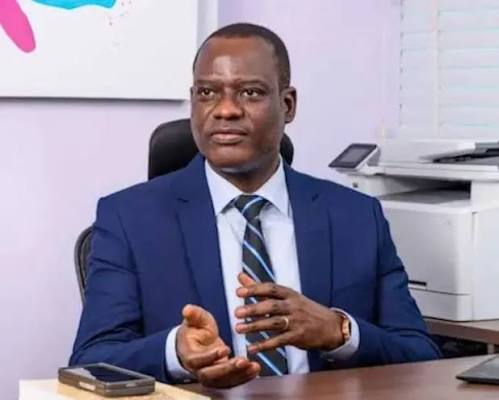
Nigeria’s monthly Federation Account allocations have climbed past N2 trillion, a level the Federal Government says was unthinkable before 2023, when states routinely struggled to meet salary obligations on allocations averaging between N300 billion and N600 billion.
Minister of Finance and Coordinating Minister of the Economy, Prof Taiwo Oyedele, disclosed the figures on Monday in Owerri, while declaring open the 2026 National Council on Finance and Economic Development (NACOFED) retreat, themed “Strengthening Fiscal Federalism for Equity, Sustainable Development and Economic Resilience in a Volatile Global Economy.” He said the Federation Account Allocation Committee (FAAC) shared N2.8 trillion to the federal, state and local governments in June 2026, the highest monthly disbursement on record.
Oyedele attributed the jump in revenue to two of President Bola Tinubu’s earliest and most contested economic decisions: the removal of the petrol subsidy in mid 2023 and the unification of the foreign exchange market shortly after. Both measures freed up funds previously spent defending the naira and subsidising fuel, while a weaker, more market reflective exchange rate also boosted the naira value of oil receipts and customs collections once converted for distribution.
The numbers support the broader trend the minister described, even if June’s N2.8 trillion appears to be a peak rather than a flat new normal. FAAC disbursements first breached the N2 trillion mark in July 2025, at N2.001 trillion, before climbing to N2.225 trillion in August that year. Total allocations for the first ten months of 2025 reached N18.54 trillion, already surpassing all of 2024’s N15.26 trillion, according to figures compiled from the Ministry of Finance and the Office of the Accountant General of the Federation. Disbursements have crossed the N2 trillion threshold repeatedly through 2026, including N2.036 trillion in March, before the June figure pushed higher still. Whether June’s N2.8 trillion holds as a sustained monthly average or reflects a one off spike in statutory revenue and exchange rate gains is not yet clear from available data.
Oyedele was careful not to present the higher allocations as an achievement in itself. “For nearly 30 years, it was common for many states to struggle to pay salaries,” he said, adding that no state currently struggles with salary obligations under the present arrangement. But he cautioned governors that bigger allocations alone would not deliver prosperity without deliberate investment in local productivity, infrastructure, human capital and basic services. “Ultimately, the federation cannot share its way into prosperity,” he said, urging states to reduce their dependence on oil linked allocations by expanding internally generated revenue.
That caution reflects a long standing structural weakness in Nigeria’s fiscal federalism. Most states depend heavily on monthly FAAC receipts rather than their own tax and revenue collection, leaving subnational finances exposed whenever oil prices or production volumes dip. Oyedele called for an urgent review of the revenue allocation formula to ensure greater equity across Nigeria’s 774 local government areas, alongside stronger fiscal responsibility and debt sustainability frameworks.
He also pointed to safety net programmes the Federal Government has expanded to cushion Nigerians from the effects of subsidy removal and currency reforms, including cash transfers to 15 million vulnerable households and the National Grant for Vulnerable Groups, known as NG-CARES.
Imo State Governor Hope Uzodimma, represented by his deputy, Chinyere Ekomaru, welcomed the reforms but echoed the call for states to build stronger independent revenue bases. “States must be empowered to generate revenue,” the governor’s office said, adding that allocations needed to be equitable and backed by resilience through diversification and prudent resource management.
The retreat, opened by Permanent Secretary in the Ministry of Finance, Raymond Omachi, brought together the Revenue Mobilisation Allocation and Fiscal Commission, the Office of the Accountant General, state Ministries of Finance, the Central Bank of Nigeria and the Nigerian National Petroleum Company, among other stakeholders. Organisers say the three day gathering is expected to produce recommendations on revenue mobilisation, fiscal responsibility, debt sustainability and improved resource allocation across the three tiers of government, though such recommendations typically require further legislative or executive action before they take effect.