
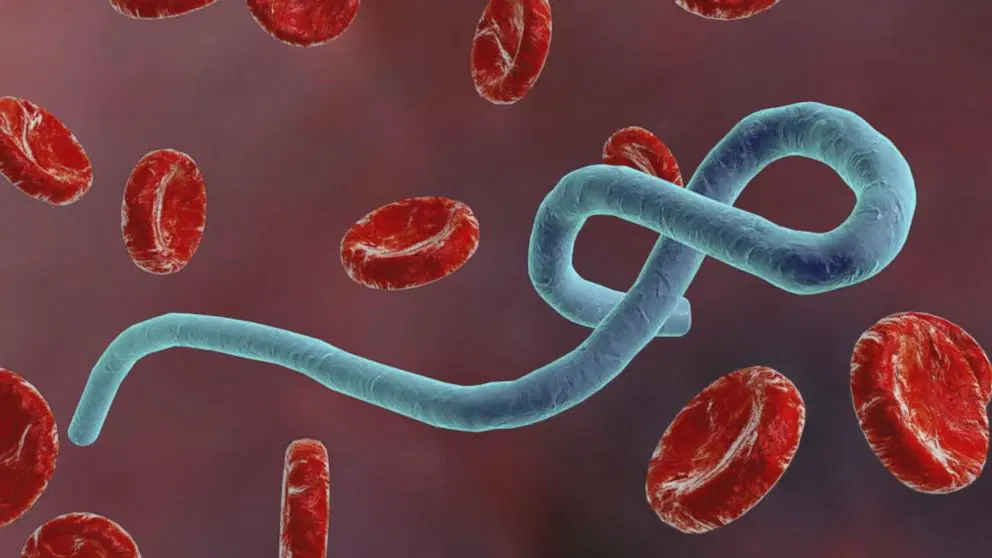
The Democratic Republic of Congo launched an emergency vaccination campaign in the city of Kisangani on Friday, 28 August 2026, administering initial doses to frontline healthcare workers battling a lethal Ebola surge. Health authorities deployed the first batch of more than 50,000 vaccine units to shield doctors and nurses as national infection figures climbed to 5,713 confirmed cases and 2,744 deaths. Public health teams face a severe scientific gamble because the Ervebo vaccine in use holds formal regulatory approval only for the Zaire strain rather than the Bundibugyo variant driving the current wave. Scientists possess no approved commercial vaccine or therapeutic drug specifically tailored to neutralise the rare Bundibugyo pathogen. Congolese Health Minister Samuel Roger Kamba confirmed that medical teams will adopt a ring vaccination strategy, immunising populations across provinces bordering Ituri before pushing inward toward the outbreak core. The World Health Organisation approved 70,000 doses for the country, reserving 20,000 units for clinical trials to assess cross-strain efficacy. Speed remains the only viable defence against an epidemic that threatens to outpace regional containment barriers. Desperate medical emergencies force clinicians to deploy imperfect tools.
Deploying a vaccine designed for a different viral strain highlights the sheer scarcity of specific medical countermeasures in central Africa. The Ervebo formulation proved remarkably effective against Zaire ebolavirus during previous flare-ups in West Africa and North Kivu. However, structural differences between filovirus surface proteins mean antibodies generated against Zaire may offer limited protection against the Bundibugyo strain. Researchers in Kisangani must now gather real-time data from inoculated health staff to measure actual immune responses. Frontline nurses willingly accept the unproven jabs because working unprotected inside isolation wards guarantees catastrophic infection risks. International medical charities continue to demand accelerated research into multivalent vaccines that cover all known filovirus lineages. Hope currently substitutes for solid clinical certainty in Congolese treatment wards.
The outbreak has already established itself as the deadliest in the history of the Democratic Republic of Congo. World Health Organisation monitors warn that the crisis could soon eclipse the West African epidemic of 2014 to 2016, which claimed more than 11,000 lives. Public clinics in Ituri and neighbouring provinces operate under crushing logistical deficits that leave isolation wards without basic protective clothing. Intense population movements across regional river networks and forest roads spread viral chains faster than contact tracers can isolate them. Rural families frequently hide symptomatic relatives at home out of fear that isolation centres represent death traps. Unsafe traditional burial practices continue to spark explosive secondary clusters in remote gold-mining settlements. Epidemics thrive wherever public trust breaks down completely.
Armed violence in eastern Congo severely limits the reach of international medical teams and diagnostic supply trucks. Dozens of competing militia factions control rural transit roads and mining camps across Ituri and North Kivu. Gunmen frequently ambush humanitarian convoys, raid rural pharmacies, and kidnap community health volunteers for ransom. Displaced farming families crowd into squalid camps where poor sanitation and clean water shortages accelerate pathogen spread. Military escorts for vaccination teams often deepen community suspicion, convincing locals that health interventions serve political agendas. Health workers must negotiate passage through insurgent checkpoints just to deliver cold-chain coolers to village clinics. Guns and viruses form a lethal partnership across the eastern provinces.
The crisis faces further disruption from prolonged domestic labour strikes by underpaid Congolese medical personnel. Doctors and nurses in public hospitals have repeatedly downed tools to protest months of unpaid hazard allowances and salary arrears. Striking staff leave isolation wards understaffed, forcing untrained family members to feed and bathe contagious patients without protective gear. When public health workers strike, containment walls collapse within days. The central government in Kinshasa has promised emergency bonus payments, but treasury disbursements arrive slowly at provincial bank branches. International donors must fund frontline payrolls directly to prevent total abandonment of isolation wards. A state cannot defeat a deadly epidemic while shortchanging its medical soldiers.
Neighbouring countries watch the deteriorating situation in eastern Congo with justified panic and heightened border security. While Uganda recently secured official all-clear status after containing its own imported outbreak, porous frontier trails leave border districts exposed to fresh viral incursions. Informal cross-border traders and refugees cross unguarded bush paths daily, bypassing official thermal screening gates at designated customs posts. South Sudan and Rwanda have tightened surveillance along their western frontiers, fearing sudden imported clusters in vulnerable border towns. The World Health Organisation maintains that closing official borders simply drives infected travellers into unmonitored forest paths. Regional health security requires coordinated containment inside Congo rather than paper travel bans abroad. National borders cannot stop microscopic threats.
The international community must match its verbal warnings with immediate funding for diagnostic laboratories and field logistics. Global health agencies cannot rely on piecemeal vaccine donations while ignoring the basic supply chains required to keep medicines cold in tropical heat. The Congolese health ministry needs mobile testing units that can confirm blood samples within hours rather than days. Pharmaceutical manufacturers must speed up trials for candidate Bundibugyo vaccines to provide real protection for future outbreaks. If the world treats eastern Congo with indifference, the virus will inevitably travel to distant urban centres. Containing the fire in Ituri protects the entire continent from a prolonged health catastrophe. Neglecting the Congolese crisis will extract a heavy global price.