
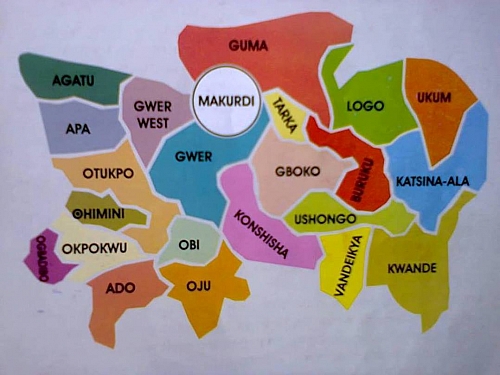
The Benue State Police Command has arrested 17 people following a savage mob assault that left officers wounded and another comatose on life support. State Commissioner of Police Cletus Nwadiogbu announced the arrests in Makurdi after operatives tracked suspects tied to the August 30 violence in Adagi along the Jato-Aka-Adikpo road in Kwande Local Government Area. What began as an effort by travelling passengers to aid an injured child quickly devolved into a murderous free-for-all. Jungle justice remains a swift, reflexive habit across rural Nigeria. Good intentions often invite machetes before reason can intervene.
The bloodshed began when a commercial vehicle travelling from Taraba State struck a young boy on the highway. Several police officers travelling as passengers immediately stopped the vehicle, lifted the injured child, and attempted to drive him to a nearby hospital. Rather than assisting the rescue effort, an armed crowd encircled the car with clubs and blades. The mob viewed every occupant as a target for instant execution. Rural crowds rarely wait for facts before meting out capital punishment.
Local commanders scrambled to contain the frenzy as the violence spilt into nearby government installations. The Divisional Police Officers for Kwande and Jato-Aka rushed to the scene to pull the travellers out of harm’s way, retreating toward a nearby police post. The mob promptly besieged the station, brandishing machetes and cutting down anyone in uniform. Attackers inflicted deep blade wounds across the body of the Kwande DPO. Another senior officer took repeated blows to the skull until he passed out, surviving only because the rioters assumed he had died.
The medical aftermath illustrates the grim price of the riot. The critically injured officer remains in a coma on a mechanical ventilator in an Anambra State hospital, having been moved under oxygen from Makurdi. The struck boy also remains hospitalised on life support. Nwadiogbu warned that should the victim die, investigators will escalate the charges to capital murder. A crowd that sets out to avenge an accident often commits worse atrocities in the process. Bloodshed compounds tragedy every time reason yields to panic.
The assault points to a total breakdown of civil trust between rural communities and the uniform. For decades, arbitrary arrests, highway extortion, and sluggish response times have alienated villagers from regular constables. When a road accident occurs, onlookers expect drivers to flee or officers to cover up wrongdoing. That deep cynicism drives villagers to take the law into their own hands rather than trust the courts. An absence of institutional credibility turns every highway mishap into a potential flashpoint.
The physical vulnerability of rural police posts invites this kind of open rebellion. Divisional stations in outposts like Jato-Aka often operate without perimeter walls, operational backup vehicles, or enough ammunition to deter an angry crowd. Rural detachments contain only a handful of men who must police thousands of residents across vast farming tracts. Rioters know that reinforcements in Makurdi sit hours away over broken roads. When the state looks feeble, armed mobs act with complete impunity.
The command has transferred the 17 suspects to the State Criminal Investigation Department for interrogation and formal screening ahead of trial. Nwadiogbu rightly insisted that the state will not tolerate a descent into animal lawlessness. Yet arresting suspects after a police station burns does not fix the underlying social disease. Nigeria’s rural interior needs functional magistrates, disciplined local policing, and active community dialogue to curb street retribution. Without speedy trials and real judicial deterrence, the mob will continue to act as judge, jury, and executioner.