
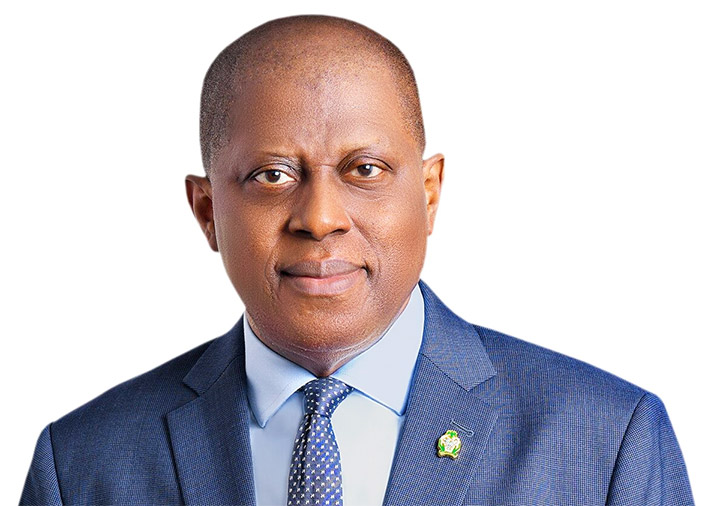
The Africa Finance Corporation has appointed CBN Governor Olayemi Cardoso as board chairman as Nigeria seeks $78.5bn in investment for 65 projects and assures investors of continued economic reforms.
The Africa Finance Corporation (AFC) has appointed the Governor of the Central Bank of Nigeria, Olayemi Cardoso, as Chairman of its Board of Directors.
Cardoso succeeds Ireti Samuel-Ogbu, who will remain a board member after completing her tenure as chair.
The appointment was announced on Wednesday as Nigerian government officials courted investors at a forum in Bangkok, Thailand, on the sidelines of the ongoing International Monetary Fund and World Bank Group Annual Meetings.
At the forum, the Minister of Finance and Coordinating Minister of the Economy, Taiwo Oyedele, and Cardoso reaffirmed the government’s commitment to economic reforms, an improved investment climate and policies designed to attract long-term capital.
The Federal Government is seeking to mobilise $78.5bn for 65 projects across key sectors of the economy, with energy and transport accounting for nearly four-fifths of the total funding requirement.
The project pipeline includes 25 oil, gas and power projects requiring $36.4bn, while eight transport and maritime projects need $25bn.
Agriculture and agro-processing account for six projects valued at $9.8bn, while 17 projects in industry, manufacturing and mining require $6.6bn.
The remaining nine projects cover technology, health and urban services, with a combined funding requirement of $700m.
The government also introduced a deal room at the forum to connect prospective investors with policymakers, explain available opportunities and address questions about investing in Nigeria.
According to the project breakdown presented, funding requirements range from $1m to $15bn per project. While 48 projects require less than $500m each, the other 17, valued at a combined $72.3bn, require at least $1bn apiece.
To encourage foreign investment, the government highlighted existing protections, including 100 per cent foreign ownership in most sectors, repatriation of capital and profits subject to applicable requirements, bilateral investment treaties and membership of the International Centre for Settlement of Investment Disputes.
The investment framework also provides a five per cent annual tax credit on qualifying capital expenditure for five years under the Economic Development Tax Incentive.
Oyedele urged investors to consider longer-term commitments, arguing that direct investment in businesses and productive assets could become more attractive as interest rates decline.
He said the government was prioritising agriculture, electricity, inflation management, regulatory efficiency and data transparency as part of its economic reform agenda.
According to the minister, reducing inflation to single digits could lower borrowing costs and save the government more than $10bn based on 2026 figures.
He also pointed to the need to address electricity supply and transmission challenges, describing reliable power as essential to achieving Nigeria’s ambition of building a $1tn economy.
On regulatory reform, Oyedele said excessive rules, unclear requirements and administrative burdens were imposing high costs on businesses. He disclosed that the government was developing a framework to prevent arbitrary introduction of regulations, fees and licences.
He also said the Ministry of Finance was finalising arrangements to publish accessible and regularly updated fiscal information to address concerns about the availability and consistency of economic data.
Cardoso said the reforms were helping to create greater stability for investment and economic growth, but stressed that lowering inflation remained essential to improving the welfare of Nigerians.
He said inflation had declined from approximately 34 to 35 per cent to about 15 per cent, adding that the central bank’s medium-term target remained single-digit inflation.
The CBN governor also said Nigeria’s external reserves had reached their highest level in 18 years, providing a buffer against external shocks. He added that exchange-rate stability and the naira’s gradual appreciation had helped ease inflationary pressures.
The Dangote Group also endorsed the government’s reform programme. Its Group Chief Economist, Hassan Mammud, said fiscal and monetary policy changes had helped stabilise investments in the group’s refinery and other businesses.
Representing the group’s president, Aliko Dangote, Mammud said greater transparency and credibility in monetary policy had improved investment planning and confidence.
He urged international investors to consider Nigeria, describing the country’s reform experience as a potential model for other African economies.
Cardoso welcomed the endorsement, saying the reforms had helped address difficulties businesses previously faced when operating with different exchange rates for imports and exports.
Meanwhile, the AFC said Cardoso’s experience in banking, investment management, economic policy and public-sector leadership would support the corporation’s strategic direction as it mobilises capital for infrastructure development across Africa.
Before becoming CBN governor in September 2023, Cardoso served as chairman of Citibank Nigeria for 12 years and as Lagos State Commissioner for Economic Planning and Budget.
AFC President and Chief Executive Officer, Samaila Zubairu, said Cardoso’s leadership would strengthen the corporation’s efforts to mobilise African capital for infrastructure and industries that create jobs and support economic growth.
Cardoso said he looked forward to working with the board, management and member states to expand Africa’s productive capacity, develop industries and support employment.