
By N’Mazi Obiomah O. Igbokwe
The man and the stench of a broken society
Some books hold up a mirror to society so uncomfortably that readers must confront truths they would rather avoid. Ayi Kwei Armah’s The Beautiful Ones Are Not Yet Born, published in 1968, examines corruption, political betrayal and the struggle to preserve integrity in a dishonest society. Though set in post-independence Ghana, its moral questions resonate in Nigeria’s petroleum industry.
Armah’s unnamed protagonist is an ordinary railway employee who refuses to participate in corruption. In a society where bribery and material acquisition are accepted routes to success, his honesty makes him appear foolish. The novel warns that corruption becomes most dangerous when it is no longer shocking but normal. Nigeria’s petroleum sector reflects this pattern: oil has financed budgets and generated foreign exchange, yet controversies over crude theft, opaque transactions, subsidies, refinery performance and public-resource management persist.
A nation sitting on oil, searching for fuel
For years, Nigeria depended heavily on imported refined petroleum products despite its substantial crude oil resources. Ageing state-owned refineries, maintenance problems, inadequate investment and weaknesses in the downstream sector sustained that dependence.
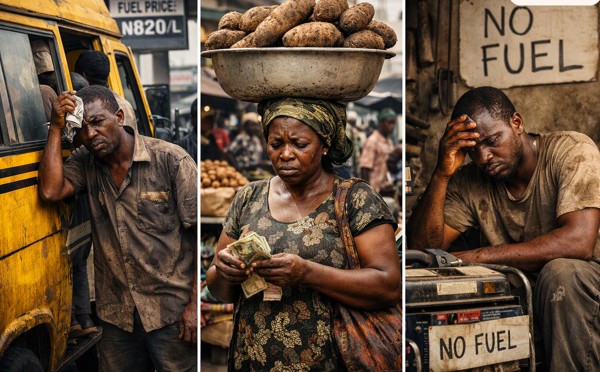
Fuel costs affect transport fares, food prices, manufacturing and small businesses. In a country where many people rely on road transport and petrol-powered generators, fuel prices are a cost-of-living issue, not merely an energy statistic.
Nigeria’s difficulties have accumulated through institutional weaknesses, investment decisions, infrastructure constraints, exchange-rate pressures and inconsistent policies. But complexity must not become an excuse. The question is why Nigeria took so long to build the commercial, regulatory and institutional capacity needed to turn crude oil wealth into reliable domestic energy supply.
The subsidy trap and the price of political convenience
For years, governments maintained petrol-subsidy arrangements intended to protect consumers from the full cost of fuel. Although the policy offered immediate relief, it also pressured public finances and raised questions about payments, imports, waste and whether benefits reached those most in need.
President Bola Ahmed Tinubu’s removal of the subsidy in May 2023 marked a major shift. Supporters argued it would reduce fiscal pressure and free resources for other priorities. Many households, however, faced higher transport and living costs, while the adequacy of compensatory measures remained contentious.
The issue is not whether every subsidy is inherently good or bad, but whether policy is implemented honestly and fairly. A policy can be economically defensible yet socially unjust if poorer citizens bear a disproportionate burden. Conversely, a policy intended to protect consumers becomes indefensible when it enables waste or private enrichment.
Reform should be judged not only by claimed savings, but by transparent accounting, better public services, meaningful protection for vulnerable citizens and a more productive economy.
Dangote Refinery: the promise of a beautiful beginning
The Dangote Petroleum Refinery offers Nigeria an opportunity to reduce dependence on imported refined products. It creates prospects for local value addition, employment, industrial development and a stronger position in the African energy market.
Yet a refinery is an industrial asset, not a substitute for good governance. It does not automatically guarantee affordable petrol, stable prices, competition or equitable benefits. Nigeria needs a transparent, predictable framework for crude producers, refiners, marketers, regulators and consumers.
In May 2026, the Nigerian Upstream Petroleum Regulatory Commission reported that domestic refineries received 28.5 million barrels of crude in the first quarter, compared with 61.9 million barrels allocated under the Domestic Crude Supply Obligation framework. The Commission attributed the shortfall principally to pricing differences between producers and refiners. Allocating crude on paper is not the same as delivering it in practice.
Domestic refining will fulfil its promise only with dependable crude supply, commercially workable arrangements, effective regulation and genuine competition. Its value must ultimately be measured by the benefits Nigerians experience.
Price controls: relief or another cycle of contradiction?
In October 2026, the Federal Government announced measures to cushion rising petrol prices, including a temporary NNPC Retail discount funded by the company forgoing its retail profit margin. It also proposed a mechanism to keep petrol around N1,350 per litre, with refiners and importers absorbing temporary cost differences and recovering them when conditions improve. The proposals raised questions about financing, duration and market-based pricing.
Allowing prices to reflect international crude prices, foreign-exchange movements and supply costs can expose consumers to sudden increases. But suppressing prices without sustainable financing risks creating distortions and shifting hidden costs to businesses or the public purse.
Government should disclose how any price-stabilisation arrangement works, who carries the financial risk, how long it will last and how deferred costs will be recovered. Otherwise, Nigeria may repeat a familiar cycle: prices rise, anger intensifies, government intervenes, commercial uncertainty grows, and structural weaknesses remain. Temporary relief cannot replace a coherent long-term energy policy.
The citizen as the ultimate victim
The costs of petroleum-sector failures fall on ordinary people. Drivers raise fares to stay in business; farmers pay more to transport produce; manufacturers face higher energy costs; and small businesses choose between raising prices and accepting smaller profits. These pressures can increase food prices, erode purchasing power, discourage investment and deepen poverty.
For millions of Nigerians, fuel is an input into everyday economic survival. The petroleum question is therefore a national development issue. Success should be measured not only by crude production, refinery capacity or reported revenue, but by whether energy resources improve productivity and living standards.
Where are the beautiful ones?
Armah’s message is that moral renewal requires people willing to resist wrongdoing, institutions prepared to punish it and citizens determined to demand better. Nigeria needs officials who treat petroleum revenue as a public trust; regulators who publish reliable data and apply rules consistently; companies that honour their obligations; and legislators who scrutinise spending and demand results.
Citizens and civil-society organisations must insist on evidence and accountability, regardless of which party holds power. This is not a call to condemn every official or entrepreneur. Nigeria needs capable leadership, investment and competent operators; the aim is to let enterprise thrive without sacrificing the public interest.
The country must also reduce its vulnerability to crude oil and imported energy. Domestic refining should be accompanied by investment in natural gas, renewable energy, electricity infrastructure, efficient public transport and manufacturing. Petroleum revenue should support infrastructure, education, healthcare and technology, while environmental protection and the livelihoods of oil-producing communities must not be neglected.
The moral test of leadership
Armah’s novel shows how a corrupt society can make the honest person look foolish and the dishonest person successful. When that reversal becomes normal, the crisis is moral as well as economic and political. Nigeria’s fuel situation tests whether leaders explain difficult policies honestly, institutions disclose how revenues are managed, regulators enforce rules impartially and domestic refining delivers measurable benefits.
When policies fail, those responsible must acknowledge mistakes and correct them. Public confidence grows through evidence that institutions can be trusted; it cannot be manufactured through patriotic slogans, assurances or elaborate announcements.
Conclusion: the beautiful ones must be born
Nigeria’s petroleum predicament does not imply its future is doomed. It has natural and human resources, entrepreneurial talent and the capacity to build major industrial assets. Large-scale domestic refining offers a genuine opportunity, but opportunity is not achievement, and national wealth is not the same as national wellbeing.
The Beautiful Ones Are Not Yet Born reminds us that material progress does not automatically produce moral progress. Refineries, pipelines, and financial reforms must be supported by integrity, accountability and commitment to the public good. The beautiful ones are leaders who refuse to manipulate the truth, regulators who cannot be bought, entrepreneurs who compete fairly, public servants who protect resources and citizens who insist on better governance.
Nigeria needs a new social contract in which petroleum wealth is managed transparently, energy markets function fairly, domestic refining is commercially sustainable, and national resources improve quality of life. The question is whether Nigeria will create conditions for the beautiful ones to emerge, lead and succeed.
Until then, the petroleum industry will remain a symbol of the distance between what a nation possesses and what its people receive: a country rich in resources, yet struggling to build the institutions and values that make those resources meaningful.
I come in peace!