
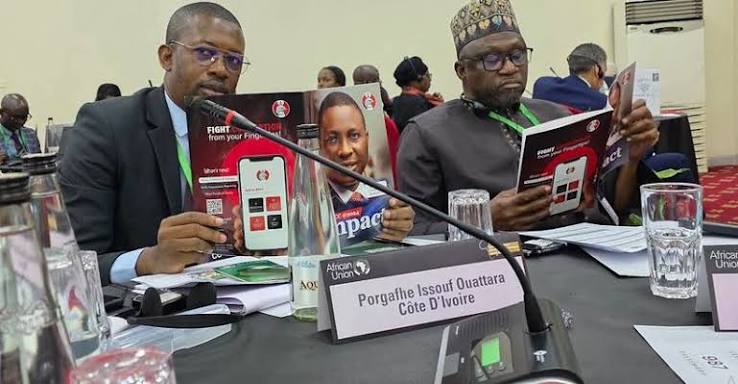
More than 50 African countries are converging on Abuja this week for a continental push to recover the billions of dollars drained from the region through corruption and illicit financial flows, in what organisers describe as a move towards a single, coordinated recovery strategy.
The gathering, which runs from 17 to 20 November, is the maiden General Assembly of the African asset recovery practitioners forum, convened with Nigeria’s Independent Corrupt Practices and Other Related Offences Commission as host. The Director of Special Services at the ICPC and chairman of the local organising committee, Hassan Mohamed, said the meeting would allow member states to share experiences, compare recovery efforts and agree common strategies for confronting corruption. He stressed that the goal was not only to retrieve stolen wealth but to ensure that recovered proceeds are put to work for ordinary citizens.
Mohamed said asset recovery had become central to the global anti-corruption fight, and that African agencies increasingly need to harmonise their methods and strengthen cooperation across borders. He gave an assurance that the ICPC would continue to disclose what it recovers, describing such records as public property, though he declined to give fresh figures ahead of the assembly, saying the details were not immediately available at the briefing.
The forum sits at the heart of the Common African Position on Asset Recovery, a continental policy framework proposed by Nigeria and adopted by the African Union in February 2020. The position was framed as a response to the findings of the AU High Level Panel on Illicit Financial Flows, chaired by former South African president Thabo Mbeki, and it commits member states to speak with one voice on detecting, recovering and returning stolen assets.
The scale of the problem explains the urgency. The Mbeki panel estimated that Africa was losing at least 50 billion dollars every year to illicit financial flows. A later study by the United Nations Conference on Trade and Development put the figure far higher, at about 88.6 billion dollars a year between 2013 and 2015, a sum that outstripped much of the aid and investment flowing into the continent over the same period. The same study found that the largest share came from the extractive sector, with gold alone accounting for more than three quarters of commodity related outflows, and noted that the lost revenue could cover half of Africa’s shortfall in financing its development goals.
Nigeria’s own experience shows both the promise and the difficulty of recovery. The country is still retrieving funds stolen by the former military ruler Sani Abacha, who governed from 1993 until his death in 1998 and is widely believed to have looted as much as 5 billion dollars. Official records indicate that more than 3.6 billion dollars has been returned over roughly two decades, in tranches negotiated with Switzerland, Jersey, Liechtenstein and the United States. The most recent large repatriations include 322 million dollars from Switzerland in 2018 and about 311 million dollars from assets held in Jersey in 2020.
Those drawn out cases illustrate why African governments want a common approach. Recovering money hidden across several jurisdictions typically involves years of litigation, competing legal systems and, at times, conditions imposed by the countries holding the funds. The continental position argues that a united front gives African states greater leverage in such negotiations, and a stronger basis for demanding the return of not only cash but also stolen artefacts and other assets tied to the colonial and slavery eras.
Mohamed said delegates in Abuja would review progress on the common position, adopt governance instruments and strategic action plans, and examine gaps in both national and continental frameworks. He added that participants would visit sites in Nigeria where recovered assets are being deployed, part of a wider effort to show that returned funds can translate into visible public benefit rather than disappearing again.
The outcome of the assembly remains to be seen, and the forum itself is young, having been launched only in late 2024. What is clear is that the question of how Africa reclaims its stolen wealth, and ensures it reaches citizens once recovered, is climbing steadily up the continent’s political agenda.