
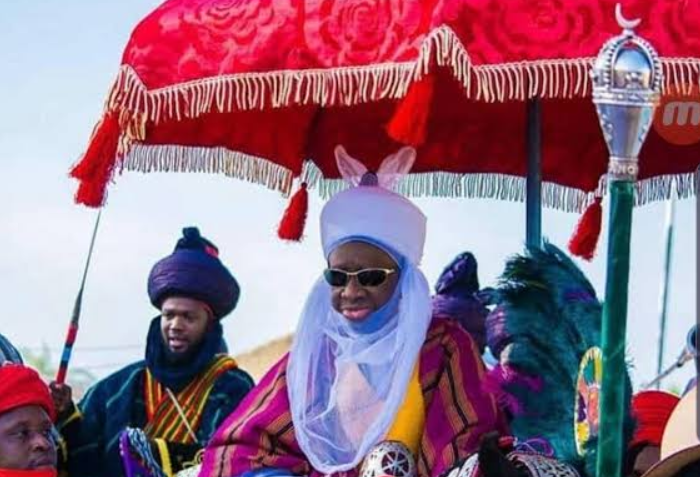
The Emir of Gumel, Alhaji Ahmed Muhammad Sani II, died in Cairo on Thursday, 3 September 2026, ending a forty-five-year reign on the throne of the historic Jigawa emirate. Palace officials confirmed the passing of the revered monarch in an Egyptian hospital following a protracted illness. His death closes an era for northern Nigeria, removing one of the country’s longest-serving first-class traditional rulers from the public sphere. Born during the colonial era, the late monarch ascended the throne in the early 1980s and steered his border domain through decades of military coups, democratic experiments, and regional security upheavals. He maintained a quiet, conservative court that prioritised grassroots stability over political grandstanding. His subjects viewed him as a dependable arbiter in an era of turbulent governance. Traditional authority still commands deep loyalty in the arid borderlands of the Sahel. His demise creates a profound leadership vacuum across the traditional councils of Jigawa State.
The late monarch spent his final weeks receiving medical care in North Africa. His journey to Cairo underscores the perennial medical migration of Nigeria’s elite class. Decades of chronic underinvestment leave tertiary domestic hospitals poorly equipped to handle complex geriatric care for prominent citizens. State governors, cabinet ministers, and traditional rulers routinely charter medical flights to Egypt, Britain, or Germany when serious illness strikes. Meanwhile, millions of ordinary citizens must rely on underfunded general hospitals and neglected rural clinics across the country. Elite reliance on foreign medical care weakens official incentive to build world-class domestic healthcare centres. The ruling class buys private comfort abroad while the public system decays at home. Medical flights overseas advertise institutional failure to the world.
Gumel Emirate occupies a crucial geopolitical corridor along the frontier between northern Nigeria and the Niger Republic. For over four decades, the late emir worked closely with community heads to mediate grazing disputes and maintain peaceful border commerce. Smuggling networks and roving armed bandits tested the security of the border corridor continuously. Sani II used traditional intelligence networks to keep cross-border criminal syndicates from setting up permanent camps in his domain. His palace served as an informal court where farmers, cross-border merchants, and pastoralists resolved bitter resource quarrels without costly litigation. Modern state security agencies rely heavily on such traditional networks to police remote border posts. An alert monarch preserves peace far better than distant bureaucratic decrees. Local prestige holds broken frontiers together.
The passing of the emir triggers an immediate succession contest within the royal ruling houses of Gumel. A council of kingmakers must convene in the coming days to screen eligible princes and recommend suitable candidates to the state executive. Under the laws of Jigawa State, Governor Umar Namadi holds the ultimate statutory power to approve and appoint the next first-class monarch. That legal power inevitably invites intense lobbying from partisan factions keen to place a friendly ally on the throne. Modern Nigerian politicians routinely meddle in royal successions to build dependable local patronage networks ahead of general elections. Traditional stools lose moral independence when governors treat them as political rewards. A royal turban carries little weight if partisan hands tie it. The kingmakers face the delicate task of shielding the palace from crass political capture.
Traditional rulers in modern Nigeria occupy an awkward constitutional territory. The 1999 Constitution stripped royal fathers of formal executive powers, leaving them without explicit administrative or judicial authority. Yet the central government constantly summons them to calm angry youths during protests and persuade rural parents to accept public health programmes. When communal violence erupts, governors plead with traditional palaces to restore calm in the streets. The political class expects royal rulers to bear the burden of communal security without giving them statutory budgets or constitutional backing. The late emir navigated this contradiction with steady diplomatic tact, keeping his palace above day-to-day party bickering. Traditional respect survives despite constitutional neglect. Royal influence persists because state institutions fail to deliver basic justice.
The economic reality of the Gumel Emirate reflects the broader economic hardship gripping northern agrarian communities. Subsistence farming, cattle trade, and artisanal commerce form the bedrock of the local economy. Skyrocketing fertiliser prices, expensive transport fuel, and currency volatility have hammered rural household budgets this season. The late emir used his personal resources and palace food banks to cushion the blow for indigent families during harvest shortfalls. His successor will inherit an impoverished populace struggling under the weight of high food inflation and scarce formal jobs. Traditional stools require substantial wealth to sustain royal patronage and hospitality obligations. A modern monarch cannot lead effectively on symbolic prestige alone. Empty palaces cannot console hungry subjects.
The Jigawa State Government and the Gumel Emirate Council will announce formal state burial arrangements once the remains arrive from Egypt. Thousands of mourners, dignitaries, and fellow monarchs from across West Africa will gather to pay their final respects. His departure reminds the nation of a vanishing generation of public figures who prioritised civic dignity over vanity. The incoming emir must find a way to maintain the cultural heritage of the throne while addressing contemporary economic crises. Jigawa State needs a ruler who can advocate for rural irrigation, local security, and youth education. The late monarch leaves behind a legacy of quiet authority that held his people together through difficult decades. A venerable chapter of traditional history closes in Gumel.