
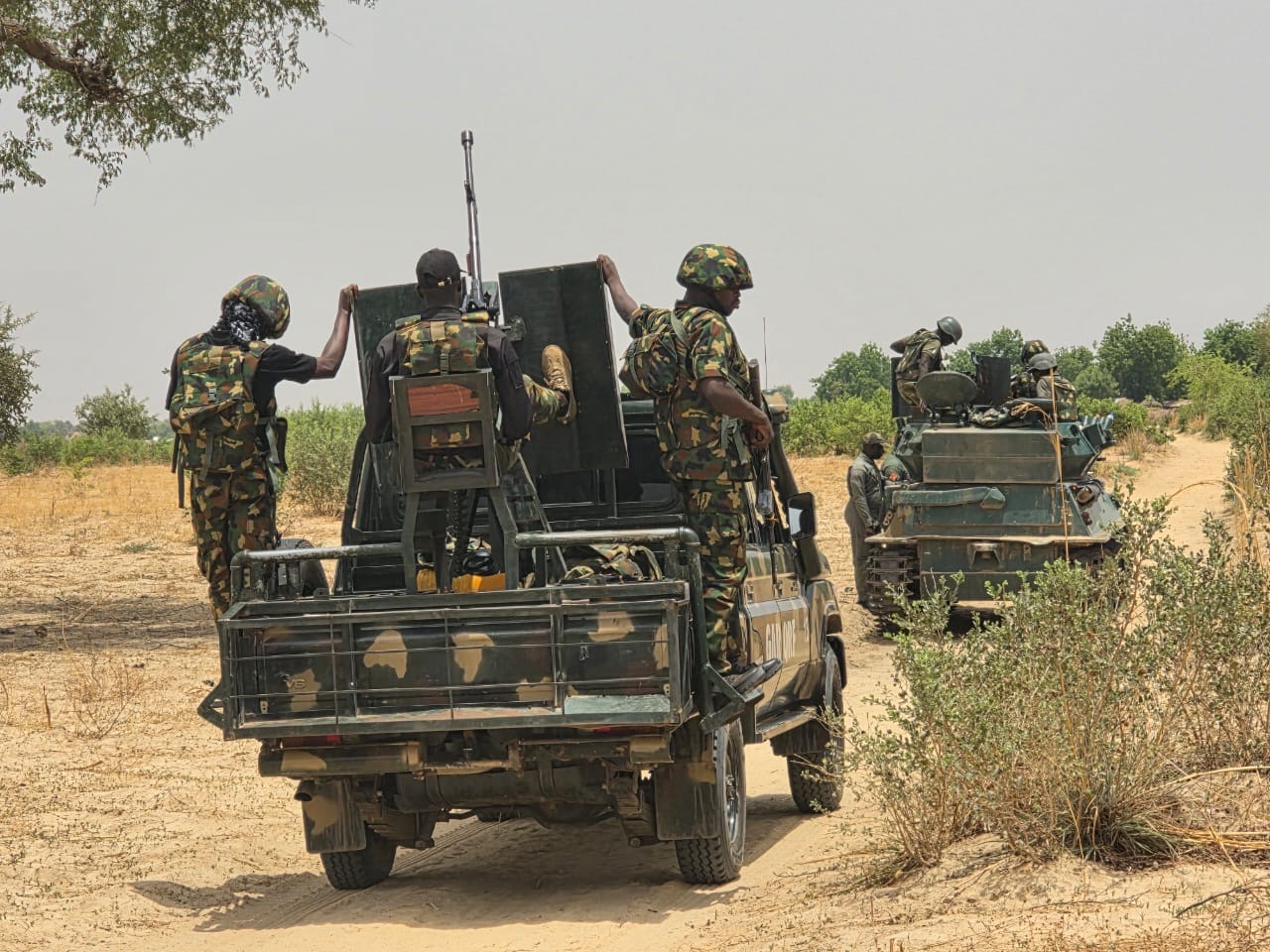
Nigerian military aircraft killed more than eighteen insurgents and smashed key supply depots during dawn raids across northern Borno on Friday, 11 September. The Air Component of Operation Hadin Kai directed precision munitions against fortified camps at Tumbunma Baba within the marshy Lake Chad islands. Field reports confirmed that the raids destroyed several permanent structures, fuel dumps, and food stores belonging to the fighters. Ground troops from Sector 1 moved in tandem with the fighter jets, sealing off surrounding escape routes across the swamplands to engage fleeing remnants. Acting Military Information Officer Captain Mohammed Goni stated that the strikes followed weeks of intensive surveillance tracking high-profile insurgent commanders. The army claimed an eighty-five per cent success rate in wiping out the assigned targets. The Lake Chad basin remains an intractable, bloody operational theatre. Tactical aerial successes rarely deliver final strategic victories.
The operation relied on methodical reconnaissance before fighter jets rolled down runways in Maiduguri. Military surveillance aircraft spent weeks charting boat traffic, footpaths, and concealed clusters of thatch and corrugated roofs across Tumbunma Baba. Confirmatory reconnaissance missions started on Wednesday, 9 September, establishing that the militant factions were running a staging base for regional ambushes. The armed forces moved to strike once spotters verified that senior commanders had gathered for a high-level logistics meeting. The military leadership increasingly turns to precision-guided munitions to strike isolated marshland outposts without exposing infantry battalions to lethal ambushes. Striking an island enclave eliminates the need to haul heavy artillery across treacherous seasonal floodwaters. Intelligence-led aerial bombardments have become Abuja’s favoured method for degrading insurgent logistics. Precision targeting cannot completely replace persistent boots on the ground.
The targeted geography of the Tumbuns provides an exceptionally hospitable sanctuary for asymmetrical warfare. The islands form an intricate maze of reed beds, shifting sandbars, and shallow waterways stretching across four national borders. Insurgents exploit this watery frontier to dodge conventional army patrols, slipping between Nigeria, Chad, Niger, and Cameroon whenever pressure mounts. The terrain neutralises heavy battle tanks, forcing conventional armies to fight on terms dictated by nimble, light-footed insurgents. Fighters easily hide supply caches under dense tree canopies, using small canoes and converted fishing boats to ferry munitions. Decades of counter-insurgency operations have proved that taking an island outpost is vastly easier than holding it. Ground troops routinely pull back after successful air strikes, allowing surviving cells to creep back once the jet fuel burns out. Ungoverned marshlands inevitably draw armed men back to their ruins.
The destruction of these logistics hubs deals a painful, if temporary, blow to insurgent operations in northern Borno. Guerrilla factions cannot sustain cross-country raids against rural outposts without regular supplies of petrol, small-arms ammunition, and basic foodstuffs. Dismantling a central node disrupts the coordination needed to launch multi-vehicle ambushes against army convoys. Yet the militant groups have proved remarkably adept at decentralising their supply networks across the Sahel. When military jets flatten one island depot, commanders simply disperse their materiel into dozens of smaller, camouflaged camps. Smuggling syndicates based in neighbouring border towns readily sell fuel, grain, and motor spare parts to whoever offers hard cash. The war economy of the Lake Chad basin feeds on deep poverty and neglected trade routes. Military bombs can sever supply lines, but they do not eliminate the black market.
The coordination between aerial strike platforms and Sector 1 ground forces marks a steady technical refinement in Nigerian military doctrine. For many years, air force jets and army infantry battalions operated in mutual distrust, often failing to synchronise attack timelines or share surveillance data. The simultaneous blocking of escape channels on Friday shows that inter-service coordination is improving under current field commanders. Ground troops caught fleeing fighters in direct fire ambushes as they scattered from the burning island encampments. This combined-arms approach raises the lethality of each engagement while denying fighters their usual retreat into open waters. Yet the armed forces remain stretched thin across multiple internal crises, policing banditry in the north-west and oil theft in the Niger Delta. The military cannot afford to keep elite combat teams permanently tied down to one swampy redoubt. Operational overstretch continues to haunt army headquarters.
The ongoing violence in Borno continues to impose a crushing economic toll on the agricultural heartland of the north-east. Lake Chad once supported a multi-billion-naira trade in smoked fish, cattle, and irrigated vegetables that fed major urban centres from Kano to Lagos. The prolonged insurgency turned vibrant commercial jetties and bustling border markets into ghost towns, driving millions of smallholders into squalid aid settlements. Farmers and fishermen who attempt to return to ancestral waters face extortion, forced conscription, or murder by roving insurgent bands. The federal government frequently declares that the insurgency has collapsed into harmless, scattered remnants. The reality in the field tells a far more stubborn story of resilient rebel cells that survive by bleeding the local economy. National food security will remain broken while the north-eastern border remains a free-fire zone. Starving farms cannot feed a hungry nation.
Military authorities routinely ask rural communities to volunteer actionable intelligence to track down hidden terrorist cells. Captain Goni concluded his operational briefing with the standard official appeal for locals to report suspicious movements. Yet expecting rural dwellers to serve as informants ignores the brutal realities of life in contested borderlands. When the army clears an island and flies away, local villagers face the wrath of returning fighters who execute suspected state collaborators. Informants take enormous physical risks for a state that cannot guarantee basic neighbourhood security once night falls. Rural communities will share credible intelligence only when they believe the security forces can establish permanent, unyielding protection. Winning a guerrilla conflict requires earning the absolute trust of the population, not merely asking for it. Bombs can level camps, but civic trust rebuilds the border.
The Lake Chad counter-insurgency campaign stands at an operational crossroads that air power alone cannot resolve. Precision air raids and body counts provide tidy press releases for military spokesmen in Abuja, but they do not end wars. The armed forces need a permanent naval and amphibious footprint, combined with deep regional cooperation among all four basin states. The Multinational Joint Task Force must secure the open waters to stop the flow of illicit arms and fuel across international borders. Simultaneously, civilian authorities must restore civil administration, schools, and commercial trade to liberated border settlements. If the state fails to fill the administrative vacuum in Tumbunma Baba, another insurgent faction will occupy the same huts before the dry season ends. Kinetic force buys breathing room for politics to work. Nigerian leaders must finally use that room to build enduring peace.