
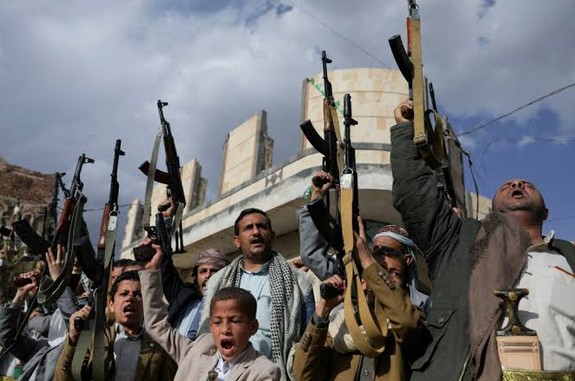
A sudden offensive by Iran-aligned Houthi fighters along Yemen’s southern coast has placed the White House in a dangerous military dilemma. The insurgents seized the historic port city of Mocha on Thursday and reached Perim Island inside the Bab el-Mandeb strait on Friday. That southward dash positions the group to close the narrow maritime passage linking the Red Sea to the Gulf of Aden. The territorial gain gives Tehran potential leverage over two vital energy channels simultaneously. The advance lands at an awkward moment for President Donald Trump as his wider war against Iran enters its seventh month. The White House had hoped to contain the conflict through economic pressure without entangling American troops in fresh ground wars. Geography has broken those plans. The regional battlefield continues to widen beyond Washington’s control.
Saudi Arabia feels the immediate operational squeeze of this southern push. Crown Prince Mohammed bin Salman phoned Donald Trump on Thursday to request direct American military intervention against the advancing militants. Riyadh had rerouted much of its crude oil through western Red Sea terminals after fighting shut down commercial traffic in the Strait of Hormuz. A hostile presence across the Bab el-Mandeb strait neutralises that bypass route completely. Trump told the crown prince that Washington would not intervene with direct strikes for now, offering intelligence sharing instead. Trump confirmed on Saturday that the Houthis also placed calls to his administration, warning American forces to stay out of the local fight. Washington finds itself cornered between an anxious Gulf ally and an intractable guerrilla foe. Simple answers do not exist in the Yemeni desert.
The military arithmetic leaves American planners with few good options. Entering the fight against the Houthis would require pulling scarce destroyers, surveillance planes, and air defence batteries away from the main front with Iran. American stockpiles of shipboard interceptors and precision missiles have already run low after months of high-tempo fleet engagements. Taking on the group would also end a mutual non-aggression understanding that paused American air strikes on Yemeni targets last year. The Pentagon must locate mobile missile batteries that have shifted hideouts across rugged mountain terrain over the past twelve months. Former American envoy Tim Lenderking warned that Washington must rapidly step up intelligence feeds to help Saudi forces mount their own defence. Leaving local allies to fight alone carries high reputational costs for the superpower. The White House hesitates because every choice carries real peril.
The economic fallout from a closed strait would reach far beyond Middle Eastern waters. The Bab el-Mandeb carries roughly 12 per cent of global sea trade and seven per cent of worldwide petroleum shipments. Insurgent control over the waterway hands Tehran enormous bargaining power in wider ceasefire talks. Tankers unable to transit the Red Sea must detour around Africa’s southern coastline, adding weeks to voyages and driving freight bills sharply higher. Those delays will quickly filter into domestic markets, pushing up pump prices for motorists and transport firms across the globe. Brent crude already trades above 107 dollars per barrel, and further disruption will fuel stubborn domestic inflation. Donald Trump faces sinking approval ratings at home as voters bristle at high living costs ahead of midterm elections. A choked trade corridor guarantees higher consumer prices at the worst political moment.
Diplomatic posturing reveals the growing strain inside the American administration. Official spokesmen insist that Washington remains committed to navigation rights while empowering regional partners to manage their own backyard security. That carefully chosen language reflects a White House trying to project resolve while avoiding new military commitments. Observers point out that the strategy of squeezing Iran’s economy while keeping American military exposure low has broken down. The Houthis have shattered that delicate calculation by opening a second maritime front on their own timetable. Tehran denies direct control over the Yemeni fighters, using their autonomous momentum to drain American strategic patience. The White House cannot easily ignore a chokepoint crisis that threatens world commerce. Words alone will not clear the shipping lanes.
The Saudi-led coalition brings a dismal track record to this renewed coastal contest. Riyadh spent twelve years bombing Houthi strongholds in northern Yemen without dislodging the group from the capital city of Sanaa. Yemeni government factions based in the south remain divided by regional jealousies and lack the combat power to reverse the tide alone. The flight of government units from Mocha shows that proxy forces cannot hold open ground against determined insurgent assaults. Asking regional partners to take the lead amounts to asking exhausted, fractured armies to pull off victories they failed to secure for over a decade. If the White House expects local forces to roll back the Houthis without heavy foreign backing, disappointment will follow swiftly. Military weakness on the ground cannot sustain grand diplomatic expectations. A broken coalition cannot hold the coast.
The standoff now heads toward a critical showdown as shipping companies evaluate the rising danger. Commercial operators will refuse to send crews through the passage if Houthi coastal batteries begin tracking merchant hulls from Perim Island. Washington must either commit scarce naval power to run a hazardous convoy system or watch international trade divert around the Cape of Good Hope. Neither path offers quick relief to energy markets or political comfort to the Oval Office. The Iran war, initially framed as a short campaign to enforce economic terms, has mutated into an open-ended struggle across several sea corridors. Houthi commanders now hold the physical keys to the Gate of Tears, and they show no appetite for retreat. Washington must decide whether to fight or swallow the loss.