
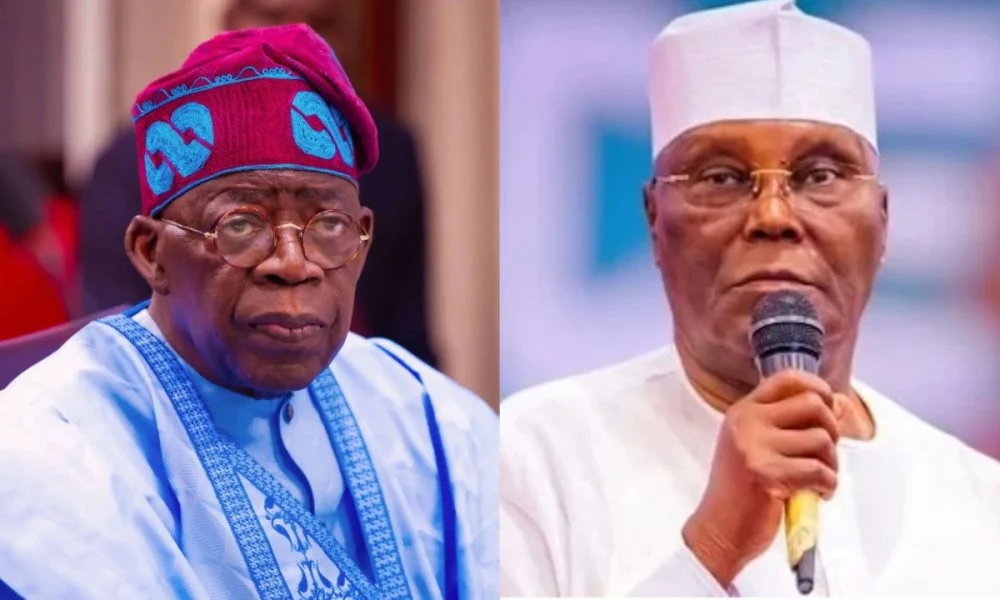
Former Vice President Atiku Abubakar has asked President Bola Tinubu to publish the payments, designs and borrowing plans behind the Lagos-Calabar Coastal Highway, hours after the Federal Government said parts of the road would now run along the existing East-West Road. In a statement on Monday by Phrank Shaibu, Director of Strategic Communication of the African Democratic Congress Presidential Campaign Council, Atiku also asked whether the government was preparing to seek a loan of up to $20 billion from the National Assembly. He wanted to know whether any of that money would go to Hitech Construction Company, the project’s main contractor.
“Tinubu sold Nigerians a coastal highway. Now his Minister says parts of it will follow an existing road inland,” Atiku said. “When the route changes, the price must be opened. When the work changes, the payments must be explained.” He asked Works Minister David Umahi to release the original engineering studies, the revised designs, a breakdown of work removed from the contract and the new project cost.
The statement followed a briefing by Umahi on Monday. The minister said Tinubu had directed that the highway pass through the existing East-West Road from Ondo State into Edo State, quoting the President as saying, “Divert, do not do any new alignments.” Umahi said parts of that road would be raised by about two metres above existing and anticipated flood levels. He also defended an earlier diversion in Ondo State, saying the original alignment crossed deep pits without suitable sand, which would have pushed up the cost per kilometre.
Umahi used the same briefing to report progress. He said the 47.47km Section 1 from Victoria Island was complete and awaiting commissioning, while the dual pavement on the 55km Section 2 to the Lagos-Ogun boundary would be finished next month. Sections 3A and 3B, covering 65km at the Calabar end, were said to be more than 30 per cent complete. Together, those segments cover about 167km, roughly a quarter of the planned 700km corridor.
Cost has dogged the project since work began in March 2024 on an eight year timeline. Umahi has said Section 1 was procured at ₦1.068 trillion, Section 2 at ₦1.6 trillion and Sections 3A and 3B jointly at ₦1.33 trillion, about ₦4 trillion in awarded contracts. In 2024, Atiku argued that ₦1.06 trillion for 47.47km meant ₦22.5 billion per kilometre and a possible ₦15.7 trillion for the whole road. Umahi countered at the time with a figure of ₦4 billion per kilometre, and in October 2025 put the cost at ₦7.5 billion per kilometre of standard two lane highway, after adjusting for Section 1’s six lane design.
Section 1 has been financed partly through a $747 million syndicated loan led by Deutsche Bank, while the ECOWAS Bank for Investment and Development approved a further $100 million for the same stretch. The sum Atiku now raises is of a different order. Debt Management Office figures put Nigeria’s total public debt at ₦159.35 trillion, or $114.95 billion, as of March 31, 2026, with external debt at $51.90 billion. A $20 billion facility, if one exists at that size, would equal almost two fifths of the country’s entire external debt stock.
Atiku went further, alleging that some lawmakers had been warned that funds for their election campaigns would be withheld unless they approved the anticipated loan request. “Who is making that threat? Whose money is being promised or withheld?” he asked. He urged the National Assembly leadership to investigate and called for the publication of feasibility and environmental studies, Bills of Quantities, Bureau of Public Procurement approvals and payment certificates, followed by a public hearing.
Atiku described his information on the loan as intelligence, and his statement did not include any document showing that such a request exists or that lawmakers have been threatened. “If no such request exists, say so plainly and on the record,” he said. There was no immediate public response from the Presidency, the Ministry of Works or the National Assembly leadership to the loan and pressure allegations.
The government has previously rejected claims that the project bypassed due process, and Umahi has consistently argued that terrain, shore protection and concrete pavement explain its cost. Hitech, founded by businessman Gilbert Chagoury, has remained at the centre of opposition criticism since the first contract was awarded. Any new external borrowing would require the approval of the National Assembly, where the alleged request, if it is submitted, would face its first public test.