
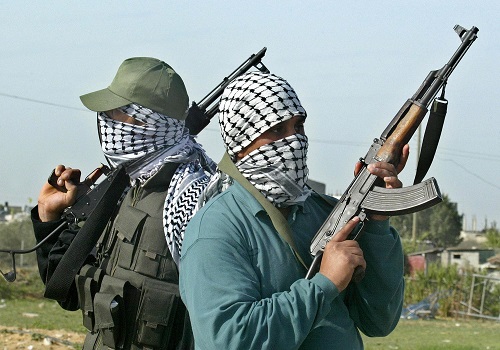
At least twenty-three insurgents died during fierce fighting between rival Boko Haram and Islamic State West Africa Province factions in the Sambisa forest on Thursday, 3 September 2026. The lethal clash erupted around the Chingolo axis of Bama Local Government Area as Boko Haram gunmen ambushed advancing ISWAP units. Hours later, Boko Haram fighters struck the political motorcade of Mustapha Gubio, the All Progressives Congress governorship candidate in Borno State, along the Kareto-Damasak highway. The twin events show how internal territorial quarrels among jihadists spill straight onto regional transit routes. A bitter turf war inside the forest does not prevent outlaws from staging daylight ambushes against high-profile political targets. Competing terror factions wage war on two distinct fronts at once. Rival jihadist armies slaughter each other while still ambushing state convoys.
The bloody clash in Bama highlights the continuous struggle between the two extremist groups for operational dominance across central Borno. Boko Haram fighters launched a surprise assault to halt an ISWAP push into their traditional Sambisa forest stronghold. The two factions traded heavy machine-gun fire across open scrubland, leaving twenty-three corpses on the ground. The tactical friction stems from disputes over access corridors, food supply trails, and the recruitment of local combatants. When these factions turn their weapons against one another, they expose their own operational fatigue. Yet internal bloodshed rarely brings lasting relief to neighbouring farming settlements. Factions fight for loot and regional mastery rather than religious purity. Outlaw civil wars leave the countryside thoroughly exhausted.
The ambush on the Kareto-Damasak road occurred around 2:30 pm as Gubio returned from a campaign tour across northern Borno. The candidate had travelled to Damasak to thank ruling party delegates for selecting him as their consensus candidate. Attackers planted improvised explosive devices along the tarmac to shatter the convoy before opening fire with rocket-propelled grenades. A combined detachment of soldiers, mobile police, civil defence officers, intelligence agents, and civilian vigilantes returned fire to break the assault. Escort units evacuated Gubio and his political entourage without recording any civilian or security deaths. The explosion tore through a police armoured vehicle, ripping off heavy metal plates. Heavy armour shields politicians from roadside death. The common peasant travels without bulletproof plates.
The violence along the Kareto corridor proves that armed cells still control key supply lines near the Niger border. Insurgents move freely between the marshlands of Lake Chad and the open savanna of northern Borno. They monitor major highways with village spotters, choosing their targets with cold tactical precision. State security forces maintain fortified garrison towns while ceding the open roads between them to roving outlaws. Travel along these northern corridors requires military firepower and advance bomb disposal sweeps. When political candidates require heavy armour to meet voters, the state has lost territorial control. Damasak sits roughly 156 kilometres from Maiduguri, but that distance represents a perilous transit zone. Desert brush swallows gunmen after the shooting stops.
Borno Police Public Relations Officer Kenneth Daso praised the quick tactical reaction of the combined security team. Force headquarters in Abuja noted that tactical units cleared secondary explosive booby traps left along the retreat line. Yet defensive victories do not solve the strategic dilemma facing the armed forces in the north-east. Repelling an ambush after the bombs explode leaves the initiative entirely in the hands of the terrorists. The insurgents choose the hour, place, and weapons of engagement without fear of encirclement. Security escorts react to fire rather than hunt down the crews that lay the road mines. Clearing an ambush site cannot replace permanent territorial occupation. Reactive shooting fails to stop rural highway terror.
The simultaneous flare-up of factional combat and highway ambushes threatens the planned return of displaced rural populations. The Borno State Government has spent billions of naira rebuilding destroyed communities to encourage peasant farmers to return home. Yet villagers cannot plant grains or harvest vegetables while rival terror cells battle across their backyards. If political leaders cannot move safely along the Damasak highway, ordinary farmers face certain death. Displaced persons will refuse to return to fertile border valleys if the state cannot guarantee safe passage on trunk roads. Empty food baskets worsen the acute food inflation, punishing northern markets. Agricultural revival dies where landmines linger in the dirt. Farmers need peace, not political speeches from afar.
The state must exploit the growing division between Boko Haram and ISWAP to crush both factions permanently. Intelligence agencies should monitor communication channels between rival forest commanders to locate their forward assembly points. Military air wings must strike both groups while they exhaust their ammunition in internal skirmishes. Border posts along the frontier with Niger require permanent electronic surveillance to stop the movement of rocket launchers and fresh recruits. The federal government must provide modern mine-clearing equipment to ground units patrolling the northern scrubland. Nigeria cannot secure its borders while rival terrorist armies wage private wars across sovereign territory. The state must assert its authority over every inch of Borno. Halfway security will never bring true peace.