
Nigeria has won a long running arbitration over the stalled Mambilla hydropower project, after a tribunal in Paris rejected a $400 million claim brought against the country by Sunrise Power and Transmission Company Limited and its principal, Leno Adesanya.
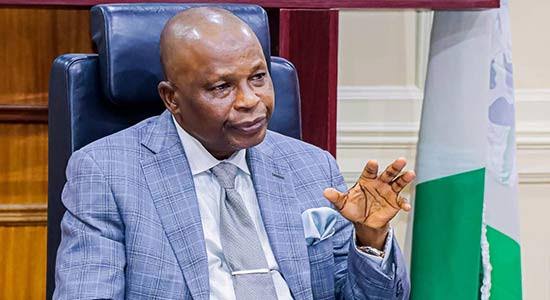
The Attorney General of the Federation and Minister of Justice, Prince Lateef Fagbemi, SAN, announced the outcome in a statement he signed personally, describing the ruling as a comprehensive victory for the country. He said the International Chamber of Commerce tribunal delivered its final award on 17 September 2026 and dismissed Sunrise’s entire claim.
According to Fagbemi, the $400 million demand was made up of a $200 million settlement sum and a further $200 million described as a default sum, with interest sought at 10 per cent a year compounded daily. The claim arose from the 3,050 megawatt Mambilla project in Taraba State, which he described as one of the most strategically important infrastructure schemes in the country’s history.
The tribunal’s own findings, as set out by the Attorney General, turned on two points. It held that the settlement agreement and its addendum were not binding on the Federal Government because the former ministers who signed them lacked the authority to commit the country without presidential approval. It also found that the settlement agreement was the product of corruption and violated Nigerian public policy, which made it unenforceable.
Fagbemi said the tribunal established that Adesanya had engaged in a prolonged pattern of bribery involving substantial payments to several senior government officials connected with the project. He said the panel described the conduct as a settled “modus operandi” of using financial incentives to influence officials, and that this pattern extended to the very origins of the dispute.
On costs, Fagbemi said Sunrise and Adesanya were ordered to bear 75 per cent of Nigeria’s legal fees and expenses, with interest at 10 per cent a year compounded annually. Reports of the award put the recoverable costs at about $11.8 million. The Attorney General said the tribunal expressed the hope that the order would deter Adesanya and his companies from pursuing further proceedings it considered frivolous.
The $400 million claim was one strand of a larger case. President Bola Tinubu, in a separate statement on 17 September, said the tribunal had rejected claims totalling about $3.38 billion arising from the Mambilla disputes, and described the decision as clearing “the single biggest legal hurdle that has paralysed the Mambilla hydro power project for years”.
Both the President and the Attorney General framed the ruling as a signal to would be claimants. Fagbemi said Nigeria would not be “a soft target for predatory litigation and arbitration”, while Tinubu said the country would keep defending what he called predatory and exploitative claims by corrupt local and international entities and their funders. Neither Sunrise nor Adesanya had issued a public response to the final award at the time of writing.
The significance for the project lies in its financing. Fagbemi said the money for Mambilla from the China Export Import Bank had been conditioned on resolving the disputes, and that the litigation prevented the scheme from reaching financial close. He said this had denied the country the benefit of 3,050 megawatts of hydroelectric power, in a system where generation on the national grid has for years struggled to stay above 5,000 megawatts.
The dispute is not new. The Mambilla project has been the subject of legal and arbitration battles between Sunrise and successive Nigerian governments for more than two decades, with earlier proceedings including a settlement agreement reached in 2020 that was tied to project financing and never fully implemented.
What the latest award settles is this particular claim and the corruption question the tribunal addressed. What it does not settle is the project itself, which still needs financing arrangements to close, contractors to be engaged and the physical work to begin before any power reaches the grid. Whether the removal of the arbitration overhang now allows the scheme to move forward will depend on decisions and funding commitments that lie ahead, rather than on the ruling alone.