
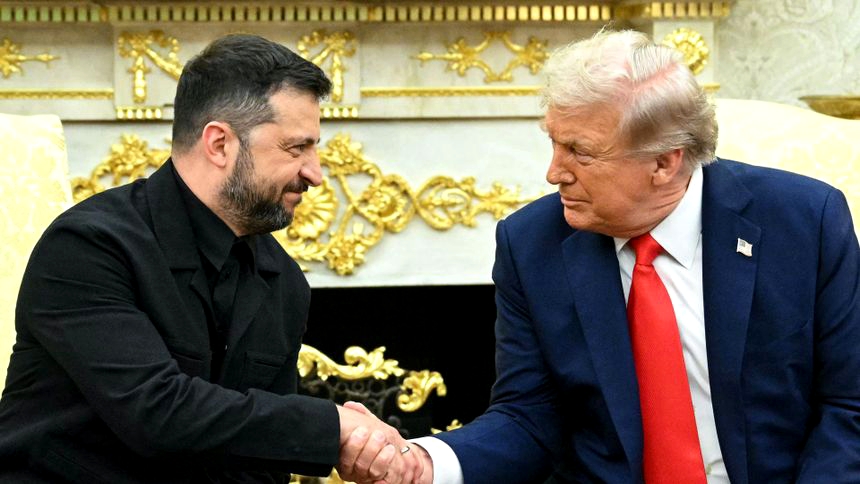
A major diplomatic rupture between Washington and Kyiv has erupted after the White House ordered operational restrictions on military-grade Starshield satellite terminals in Ukraine, crippling drone speeds and tactical communications across frontline battlefields. The covert throttling of the vital defence network followed President Donald Trump’s demand that Ukrainian forces halt long-range drone strikes on Russian oil refineries, an intervention designed to protect global energy markets ahead of upcoming United States midterm elections.
The escalating standoff reached a boiling point after Ukrainian President Volodymyr Zelensky declared the collapse of an uncoordinated energy truce, vowing to resume targeted bombardments on Russian oil facilities. In a scathing interview on Newsmax, Trump lashed out at the Ukrainian leader, calling the resumed refinery attacks a disgrace, questioning Zelensky’s desire for peace, and stating openly that he finds the Ukrainian president more difficult to deal with than Vladimir Putin.
The deliberate slowdown of Starshield, coupled with a temporary suspension of early-warning intelligence sharing, left Ukrainian cities defenceless during a barrage of Russian ballistic missile strikes that left six hundred thousand citizens without power. As Kyiv runs out of air defence interceptors, European allies are expressing grave concern that Washington’s transactional foreign policy is actively compromising Ukrainian sovereignty to achieve short-term domestic political goals.
Satellite Sabotage on the Frontlines
The technical throttling of the Starshield network, a defence-grade satellite service developed by SpaceX and funded under United States government contracts, dealt a severe blow to Ukrainian frontline manoeuvres. Ukrainian generals reported that operational restrictions artificially limited hardware speeds, disrupted tactical drone guidance systems, and severely reduced communication capacity for warplanes and helicopters engaged in combat.
While Elon Musk publicly clarified on X that speed and bandwidth limits on military satellite networks are decided exclusively by the United States military and the presidency, White House officials confirmed that the directive originated directly from senior administration aides. The intentional network degradation provided Russian forces with an immediate battlefield advantage during active artillery engagements, prompting fierce condemnation from Ukrainian commanders who characterised the move as deliberate sabotage.
Zelensky confirmed that full functionality was eventually restored to the satellite system after intense diplomatic protests, but warned that the incident represented an alarming precedent. In an interview with the Financial Times, the Ukrainian leader rejected Washington’s claims of a technical glitch, emphasizing that the network shutdown was a calculated political move intended to force Kyiv into compliance with American trade demands.
Energy Deals and Intelligence Blackouts
The rift between the two traditional allies widened further after Washington announced a sanctions-busting agreement to purchase Russian diesel, a move intended to lower domestic fuel costs before American voters head to the polls. To protect the commercial arrangement, the Trump administration warned Kyiv that continued long-range strikes against Russian refining infrastructure would result in a complete halt of military intelligence sharing and a blockade of European purchases of American-made weaponry.
Following Washington’s demand, Ukraine briefly heeded a proposed ceasefire covering energy installations, only for Russian forces to exploit the pause by launching massive missile and drone strikes against power generation plants in Kyiv and Lutsk. Ukrainian officials reported that the usual early warning radar intelligence provided by United States forces was suddenly withheld during the attack, preventing civilian defense teams from alerting residents before ballistic missiles struck critical infrastructure.
Describing the sequence of events as a profound betrayal, Zelensky announced that Ukraine would no longer abide by unilateral restrictions while its cities burned. Speaking to international news outlets, Zelensky criticized Washington’s attempt to conduct business with Moscow while Ukrainian citizens died under bombardment, asserting that Kyiv would not sacrifice its national survival for foreign commercial deals.
European Alarm and Geopolitical Fallout
Washington’s aggressive leverage against Kyiv has sent shockwaves through European capitals, where leaders view the pressure campaign as a dangerous appeasement of Russian expansionism. Meeting in Brussels for high-level summits, European Union representatives reaffirmed their commitment to Ukraine, emphasising that pressuring the victim of aggression rather than the invader undermines global security architecture.
British intelligence agencies and European security analysts warned that unilateral concessions to Moscow endanger broader regional stability, noting that Russian state agents continue to execute hybrid warfare and sabotage operations across NATO territories. Intelligence officials cautioned that injecting billions of dollars into the Russian economy through unilateral energy agreements directly funds the Kremlin’s military machine, enabling prolonged aggression across Eastern Europe.
As Ukraine faces critical ammunition shortages and depleting air defence stockpiles, the growing divide between Washington and Kyiv marks a pivotal turning point in international relations. With European allies scrambling to fill the supply gap, Zelensky’s defiance underscores a stark new reality: Ukraine is determined to fight for its existence, even if it means defying its most powerful partner.