
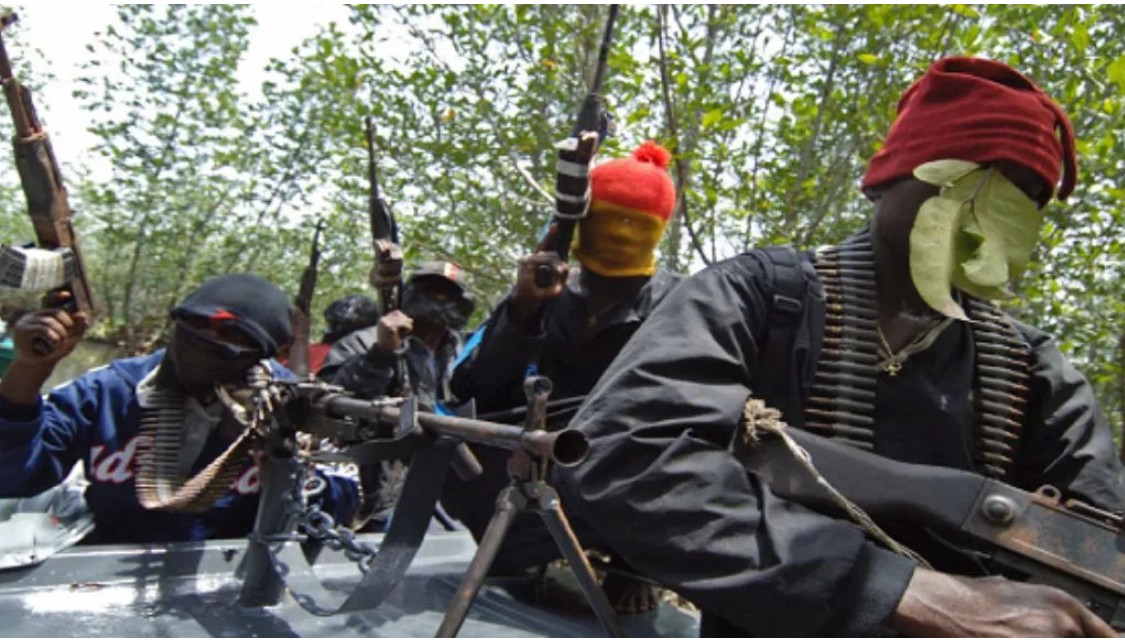
Armed raiders killed four mobile police officers and eight local farmers during a dawn assault on Ayilamo community in Benue State on Friday. More than two hundred gunmen crossed from neighbouring Taraba State along the Alufu corridor to storm the agrarian settlement in Logo Local Government Area. Eyewitnesses reported that the attackers set residential houses ablaze while firing indiscriminately into family compounds. A small detachment of mobile policemen stationed in the settlement fought back during a gun battle that lasted several hours. The raiders withdrew into the bush, leaving twelve dead and several homesteads in smoking ruins. Search parties discovered the bodies of the fallen officers in the surrounding thickets on Friday morning. The raid exposes the state’s inability to protect vulnerable agrarian settlements across the central food belt. Death visits the Benue Valley with grim regularity.
Ayilamo sits directly on the transit corridor linking Abinsi, Tyulen, Anyiin, and Wukari, making it an easy target for cross-border raids. Settlers in Logo have endured recurring assaults for more than two years without lasting state protection. Local community leader Tyolumun Ugande explained that the sheer size of the invading force overwhelmed the defensive outpost. The gunmen wielded assault rifles and military-grade hardware that outmatched the ammunition stocks of the small local police unit. The village security committee swiftly dispatched urgent appeals to Makurdi and Abuja for heavy troop reinforcements. This tragedy marks the second time in four weeks that gunmen have ambushed and killed mobile policemen in Ayilamo. Security detachments deployed without proper armour or heavy air support become easy targets for mobile guerrilla units. The rural frontier remains an ungoverned expanse where gunmen kill at will.
The violence in Logo carries profound economic consequences for a nation already grappling with runaway food inflation. Farmers in Benue produce the yams, cassava, and grain that feed major markets across southern Nigeria. Repeated raids have forced thousands of farming families off their ancestral fields and into squalid displacement settlements. Those who venture out to tend crops risk abduction or outright murder by armed herder militias. Cultivation across the fertile Benue River basin has dropped precipitously as agricultural labourers flee the countryside. Food traders in Lagos, Ibadan, and Port Harcourt face shrinking supplies and soaring wholesale prices as harvest volumes fall. The federal government speaks often about national food security while rural farmers die in their furrows. Agricultural pledges count for nothing when cultivators cannot step onto their land without armed escorts.
The porous boundary between Benue and Taraba states remains an open corridor for criminal operations. Heavily armed groups move freely across state borders, exploiting the complete absence of integrated police communications and border patrols. When state commands treat violence as an internal affair, bandits skip across regional borders to evade pursuit. The Divisional Police Officer in Ayilamo acknowledged the heavy casualties and stated that his unit had asked for operational backup. Yet reinforcements in the Nigerian interior usually arrive long after the raiders have vanished into remote forests. State boundaries serve as shields for armed gangs rather than administrative divisions for effective policing. The state governor and his counterparts in the North Central zone continue to issue joint communiques that produce few joint security patrols. Inter-state coordination exists mostly on paper.
Local residents also suspect that competition over unexploited natural wealth drives the persistent violence around Ayilamo. Community spokesman James Ugah noted that rumours of extensive mineral deposits beneath Logo soil have circulated among local prospectors for years. Unscrupulous mining syndicates often use armed proxies to displace native populations and clear land for illegal extraction. In many rural communities across central Nigeria, resource exploitation and communal displacement move hand in hand. State officials rarely investigate the shadowy financial interests that fund assault rifles and high-grade munitions for rural militias. The official security narrative focuses entirely on ethnic and pastoral clashes, ignoring the lucrative illicit economies that thrive behind the chaos. Displacement creates empty fields where unlicensed excavators can dig without community oversight. The soil of Benue yields grief as quickly as it yields crops.
The federal security apparatus remains trapped in a reactive mode that yields predictable results. Police authorities in Abuja consistently deploy static outposts to rural communities instead of maintaining active, mobile reconnaissance patrols. Small contingents of four or five poorly equipped constables cannot realistically hold off hundreds of attackers armed with automatic weapons. Stationing isolated units in remote villages amounts to setting traps for the state’s own security personnel. The government must provide its tactical units with modern tactical gear, night-vision equipment, and armoured patrol vehicles. State commands also need dedicated air wings to track insurgent columns before they reach settled farmlands. Without superior mobility and heavy firepower, the police will continue to lose men to rural ambushes. Bravery cannot substitute for basic equipment.
The latest deaths in Ayilamo underline the steady breakdown of law and order across Nigeria’s rural interior. Ordinary citizens find themselves entirely on their own, caught between ruthless raiders and an absent state. If the authorities cannot defend settled communities and their own police posts, rural dwellers will inevitably form private militias to defend their lives. That trajectory leads directly to warlordism and total civil collapse across the Middle Belt. The presidency and the police high command must move beyond press statements and flush out the armed camps operating along the Taraba border. Delivering justice requires hunting down the killers and tracking the financial networks that supply their weapons. Families in Ayilamo have buried too many relatives to accept another round of official condolences. Peace will not return to the Benue Valley until the state proves it can hold its ground.