
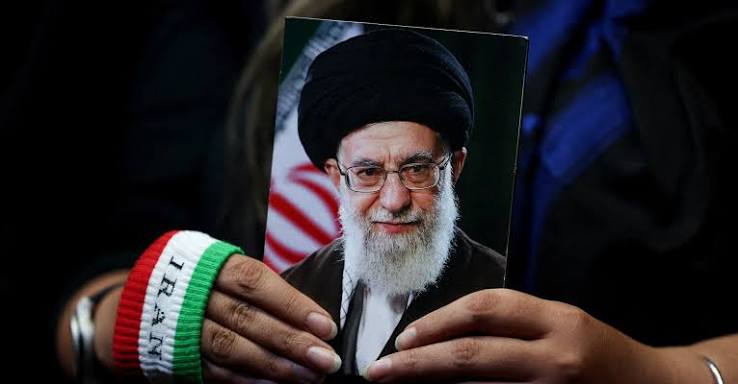
Iran’s supreme leader, Mojtaba Khamenei, has warned the United States and Israel against returning to war, declaring in a written statement that any new attack would end only on terms set by Iran.
“If the enemies once again launch military or terrorist attacks, it is the armed forces of the Islamic Republic and the Iranian nation that will determine the time and conditions for ending them,” the statement, published on the leader’s official website on Saturday, read.
The remarks followed threats from Iran’s adversaries of a possible resumption of strikes, and came during a reported meeting between Khamenei and the country’s senior military commanders, including armed forces chief of staff Ali Abdollahi, army chief Amir Hatami and Revolutionary Guards commander Ahmad Vahidi. It was the first reported meeting between the new supreme leader and the command structure.
Khamenei has not been publicly seen since he succeeded his father, Ayatollah Ali Khamenei, who was killed in US-Israeli strikes at the start of the Middle East war in February. The statement, one of the few direct communications attributed to him since his succession, therefore carries the weight of a leadership testing its command.
According to the statement, Khamenei ordered the commanders to ensure that “any level or type of threat must be met with an immediate, impactful and geographically unrestricted response”. He also ordered them to update Iran’s target list to include “all types of tangible and intangible assets belonging to the American-Zionist enemy”, language that widens the doctrine of retaliation beyond military installations to economic and digital infrastructure.
The war began on February 28 with US-Israeli strikes on Iran, which responded swiftly with attacks on countries around the region, drawing in Gulf states and triggering one of the most dangerous crises the region has faced in decades. A ceasefire has held, but both sides have spent the months since warning that the pause rests on narrow ground.
The supreme leader’s statement came as fresh diplomatic efforts were under way to avert a return to fighting. A Qatari delegation arrived in Tehran on Friday for talks with Iranian officials, following Iran’s reported receipt of a letter from US Vice President JD Vance. According to Iranian media, Tehran had yet to respond to the letter.
The sequence, a letter from Washington, a mediator in Tehran and a war order from the leadership on the same weekend, captures the contradiction at the centre of the moment: both capitals say they do not want another round, and both are preparing for one. The “geographically unrestricted” formulation in the statement is aimed as much at deterrence as at planning, a signal that Iran wants any calculation of a new strike to price in retaliation that cannot be contained to the battlefield.
For the region, the stakes are measured in the same currency as February. Gulf capitals that spent the war absorbing the consequences of strikes launched from and aimed at their neighbourhood have pressed both sides toward de-escalation, and Qatar’s mediation role has placed Doha once again between Washington and Tehran.
What happens next depends on whether the diplomatic track moves faster than the military one. The letter from the US vice-president awaits a reply, the Qatari delegation is in Tehran, and the commanders now hold orders whose language leaves little room for ambiguity. The statement attributed to Khamenei sets out Iran’s terms, not its intentions, and the difference between the two will be settled by whatever arrives first: an answer to Washington’s letter, or another strike.