
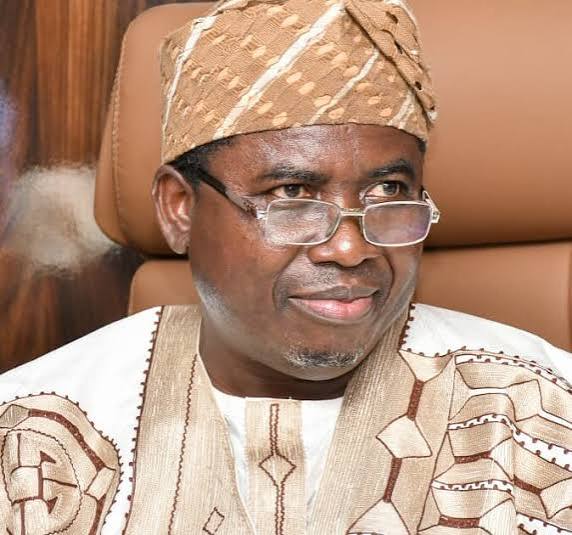
The Chairman of the Independent National Electoral Commission, Prof. Joash Amupitan, has declared that the 2027 general elections will hold as scheduled, ruling out any shift in the commission’s timetable, and announced that Rivers State will receive special attention as the South-South’s largest voting bloc.
Amupitan spoke in Port Harcourt during the commission’s interactive meeting with staff from the six states of the South-South geopolitical zone, held to assess their readiness for the elections. “Our statutory timeline is fixed. We will not change anything. The election must hold as scheduled,” he said.
Rivers tops the zone’s voter numbers at 3,736,434 registered voters, ahead of Delta with 3,525,988, Edo with 2,865,263, Akwa Ibom with 2,566,198, Cross River with 1,928,978 and Bayelsa with 1,200,691, for a combined 15,823,550 registered voters across the six states. The chairman said the commission will pay closer attention to Rivers because of its electoral significance in the region, and told staff: “It is your duty to ensure that no voter is disenfranchised because of operational failures.”
The register itself remains a work in progress. INEC has published the voters’ register online and at designated locations, and has so far received more than 5,000 claims for corrections, including names and dates of birth, and more than 600 objections, all of which are being addressed to ensure a credible register ahead of the polls. The final voters’ register will be released on December 15, and the commission says it is committed to resolving all outstanding issues before that deadline.
Amupitan disclosed that he had initially considered revalidating the voters’ register on assuming office, but dropped the idea after concerns that the exercise would come too close to the general elections, a decision that keeps the commission’s attention on cleaning the existing register rather than rebuilding it.
The chairman grounded his confidence in recent practice, citing the off-cycle governorship elections, particularly Osun State, which he said recorded the highest voter turnout in the history of off-cycle elections in the state and was adjudged locally and internationally as credible despite earlier security concerns. “Osun State elections gave us the confidence that we can achieve this despite the noise. It is good that we had a series of those elections before the general elections because we learn lessons from every election,” he said, adding that INEC would conduct elections that move the nation forward rather than bring it down.
On security, Amupitan said the commission is working with the police, the Department of State Services and other agencies to guarantee the safety of voters, electoral personnel, ad hoc staff and election materials, and was blunt about the responsibility that follows encouragement. “We want every part of Nigeria to be calm during the elections so that people can come out to vote. We will not tell them to take their PVCs and then will not guarantee their safety,” he said.
He also dismissed fears that artificial intelligence or algorithms could determine the outcome of the elections, insisting that Nigerians, not machines, will decide. At the same time, he acknowledged the growing cybersecurity threats associated with AI, saying the commission would explore ways to deploy technology to protect its systems against possible attacks and strengthen the security of its digital infrastructure.
Amupitan urged staff across the South-South to remain committed, stressing that electoral credibility is determined by the conduct of officials at the polling units and other field locations. With the register closing on December 15, campaigns already under way and the polls fixed for January 16, the timetable he defended in Port Harcourt now has less than three months of preparation left to run.
.