
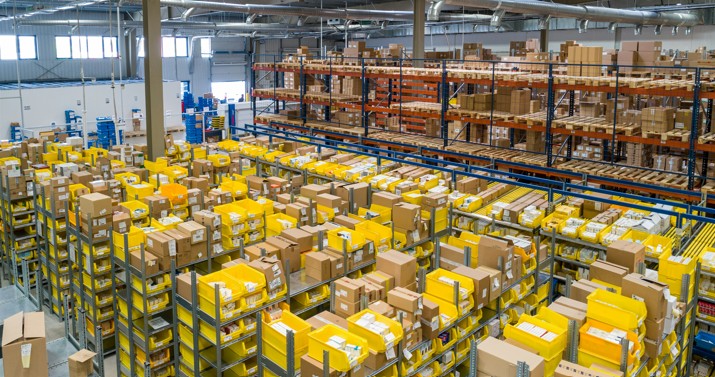
Nigerian manufacturers entered the second quarter of 2026 carrying a massive mountain of unsold inventory valued at 1.77 trillion naira. Financial data from companies listed on the Nigerian Exchange Limited showed a 10.6 per cent climb in stockpiles compared to the 1.597 trillion naira recorded in the opening quarter of 2025. Over that same period, the combined cost of sales across the industrial sector rose by 13.7 per cent to hit 1.434 trillion naira. Those twin increases paint an uncomfortable operational picture for factory boardrooms. Industrialists face much higher bills to turn out goods that cash-strapped households simply refuse to buy. Warehouses across commercial cities now double as storage yards for stalled merchandise. Broken balance sheets follow clogged warehouse floors.
The accumulation of unsold stock cuts across fast-moving consumer goods, building supplies, commercial agriculture, and domestic food processing. Building materials bellwether Dangote Cement sat on the largest pile, with its stock valuation rising by 4.8 per cent to 703.58 billion naira. Diversified conglomerate UAC of Nigeria posted the sharpest jump, watching its stored inventory surging by 231.8 per cent from 57.13 billion to 189.55 billion naira. Plantation operator Okomu Oil Palm logged a 90.3 per cent rise to 39.90 billion naira, while Livestock Feeds climbed 35.9 per cent to 9.14 billion naira. Household goods maker PZ Cussons held 69.37 billion naira in warehouses, and container manufacturer Beta Glass tied down 25.21 billion naira. Mattress producer Vitafoam absorbed a 12.3 per cent inventory increase to reach 23.20 billion naira. Even cement producer Lafarge Africa saw inventory inch up by 7.3 per cent to 110.64 billion naira. Working capital sits trapped in cardboard boxes.
The root cause of this warehouse paralysis sits in the collapse of ordinary household purchasing power. Chartered Institute of Stockbrokers President Fiona Ahimie pointed out that industrial supply outstripped commercial demand because wages have failed to match retail price tags. While headline consumer inflation eased modestly from past peaks, shelf prices remain stubbornly high relative to take-home salaries. Families across urban hubs spend the bulk of their earnings on immediate food staples, leaving little money for discretionary retail goods. Shoppers ignore brand loyalty, choosing smaller single-portion packages or abandoning branded items entirely. Factory managers cannot force consumers to buy what their pockets cannot afford. High production volumes meet empty consumer pockets.
Some seasoned manufacturers managed to push back against the tide by slashing their production lines to bare bones. Northern Nigeria Flour Mills cut its stockpiles by 34.6 per cent to 31.46 billion naira by producing strictly on order. Food seasoning maker NASCON Allied Industries reduced its inventory holdings by 17.1 per cent to 14.34 billion naira. Confectionery giant Cadbury Nigeria dropped its stored goods by 16.9 per cent to 27.14 billion naira. Personal care manufacturer Unilever Nigeria shrank its warehouse stock by 7.7 per cent to 23.42 billion naira, while Nestlé Nigeria trimmed inventory by 7.3 per cent to 167.84 billion naira. Nigerian Breweries also adjusted its bottling runs, bringing stock down by 6.7 per cent to 171.92 billion naira. These firms protected their cash by running smaller batch runs rather than filling empty storerooms. Discretionary factory shutdowns substitute for commercial demand.
The monetary policy stance of the central bank compounds the crisis by making short-term operating finance prohibitively expensive. Governor Olayemi Cardoso kept the benchmark Monetary Policy Rate pegged at 26.5 per cent during the July meeting to fight price pressures. Commercial banks pass those rates down to corporate clients, charging business overdrafts at well over thirty per cent. Stockbroker and market analyst David Adonri observed that high lending charges punish companies that finance trapped warehouse inventory with commercial debt. A firm holding billions in unsold goods must continue paying double-digit interest on the bank credit used to buy raw materials. Those financial carrying costs erode operational margins and eat into retained profits. A high-rate regime chokes business cash flow.
Operational overheads outside the banking halls continue to bleed local factories of scarce capital. The national electrical grid contracted by over ten per cent in the second quarter, leaving industrial estates to run on private diesel generators. Diesel prices hover above historical averages, adding heavy logistics surcharges to every delivery van moving along damaged highways. Local governments also hound factory gates with overlapping levies, municipal parking fees, and informal haulage taxes. While currency stability at 1,326 naira to the dollar reduced foreign exchange uncertainty, it locked in an elevated baseline for imported inputs. Factory directors cannot cut retail prices because their production costs remain pinned to the ceiling. The state taxes productivity while ignoring infrastructure decay.
The agricultural hinterland offers little relief because persistent rural insecurity starves food processors of steady domestic inputs. Adonri stressed that boosting factory productivity requires restoring public order across agricultural belts. Roving gunmen and armed bandits keep farming families away from their acreage in the food basket states. This rural disruption forces food manufacturers to import expensive agricultural substitutes from abroad or pay exorbitant premiums to local middlemen. When primary supplies dry up, factories run at partial capacity while their fixed overhead costs remain unchanged. A broken rural security architecture ruins urban industrial supply chains. Industrial progress cannot survive persistent rural violence.
The divergence between overall economic indicators and factory health exposes the hollow nature of headline output statistics. While real national output expanded by 4.43 per cent in the second quarter, manufacturing’s direct share of the economy shrank to 7.72 per cent. The Manufacturers Association of Nigeria has warned that an economy cannot build long-term stability by relying solely on service-sector consumption. If corporate inventories continue to climb into the third quarter, factories will resort to mass redundancies and extended plant closures. Clearing the 1.77 trillion naira backlog requires real wage growth, cheaper enterprise credit, and secure transit routes. Government planners must tackle these structural bottlenecks or watch local manufacturing grind to a dead halt. Nigerian factories cannot run on hope alone.