
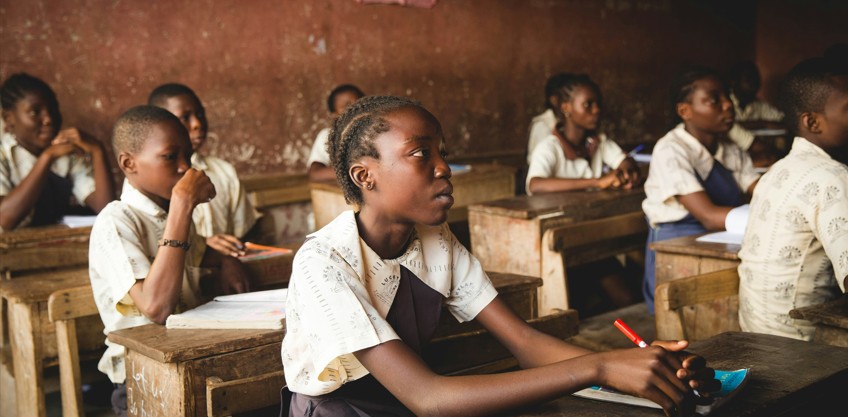
More than 267 billion naira in basic education intervention funds sat idle in government accounts as of August, while seventy per cent of Nigerian primary school pupils cannot read a single sentence of simple text. Universal Basic Education Commission head Dr Aisha Garba, represented by director Maryam Sani Dangaji, delivered that grim indictment in Abuja on Monday, 12 October, showing that state governments leave colossal windfalls unspent while primary classrooms collapse. Administrative lethargy strangles basic learning outright. Thirty-six state governors also failed to claim a further 65 billion naira in federal matching funds simply because state houses refuse to budget their own legally required counterpart cash.
Treasury allocations cannot improve literacy when state officials treat basic education as a distant bureaucratic chore rather than a core public duty. Federal Budget Ministry permanent secretary Dr Deborah Odoh told state planners at the World Bank human capital workshop that throwing more money at broken procurement agencies will never teach a destitute child to read, write, or count. Bureaucracies excel at hoarding public funds. State universal basic education boards consistently write vague spending proposals that gather dust in provincial capitals, leaving rural school pupils without desks, printed textbooks, or trained teachers while hundreds of billions of naira rot away in central vaults.
The criminal neglect of primary schooling mirrors the wider administrative decay across local council health clinics and community classrooms. While the primary healthcare agency disbursed 77.7 billion naira to 8,309 clinics across the federation, education administrators in most states cannot even complete the basic paperwork to buy primary textbooks. Empty classrooms mock official development goals. Representatives of the Nigeria Governors’ Forum readily admitted that budgetary promises mean nothing to ordinary families when regional finance commissioners fail to release approved capital funds to local village schools.
The World Bank now ties future technical disbursements to strict performance benchmarks because Nigerian regional rulers refuse to spend their existing basic education allocations. Programme coordinator Dr Assad Hassan warned state delegates that the multilateral bank will evaluate state budgets against verified classroom results rather than theoretical development plans. Foreign donors lose patience with excuses. State commissioners must tie their 2027 fiscal estimates to audited school maps, geotagged classroom repairs, and transparent accounts, or external partners will shut the loan tap completely.
Nigeria risks raising an illiterate generation while state governments hoard over a third of a trillion naira in unspent educational grants. A country that leaves seven in ten primary children unable to decipher the printed word cannot build a competitive industrial economy or curb violent rural crime. Idle cash breeds civic ruin. Until state governors stop diverting statutory revenues into vanity projects and begin matching federal basic education grants with real local funds, Nigerian primary schools will remain squalid holding pens for millions of illiterate children.