
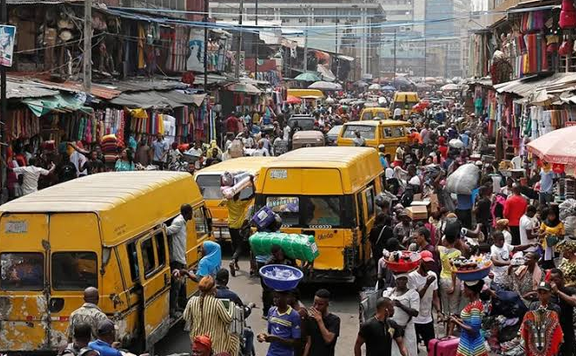
The Federal Government’s agreement with organised labour offers temporary relief to public-sector workers, but raises difficult questions about fairness, the cost of living, the plight of private-sector employees and the millions of Nigerians who have no employer to negotiate with.
Nigeria’s latest agreement between the Federal Government and the Nigeria Labour Congress (NLC) is a welcome acknowledgement that the country’s workers are struggling under the weight of rising living costs. Yet, beneath the announcement of a ₦70,000 transport intervention lies a more fundamental question: is the government addressing Nigeria’s wider cost-of-living crisis, or merely negotiating temporary relief for a section of the population?
The agreement, reached at conciliation meetings held on October 22 and 27, 2026, provides for a six-month transport intervention, the payment of outstanding allowances, the constitution of a Minimum Wage Negotiation Committee and further discussions on salary adjustments and tax relief. It also addresses outstanding health workers’ allowances and the verification of hazard allowances for agricultural workers.
These are significant commitments. However, the agreement, as reported by the Federal Ministry of Labour and Employment, leaves important questions unanswered about implementation, affordability, equity and the millions of Nigerians whose incomes are not protected by formal employment arrangements.
For a country battling poverty, expensive food, costly transportation and widespread informal employment, the real test is not whether government and labour can reach an agreement. It is whether the agreement delivers meaningful relief to ordinary Nigerians without leaving the most vulnerable further behind.
A relief package with an important limitation
The most immediate benefit is the transport intervention of ₦70,000 per month for six months, beginning in November 2026. If implemented as announced, an eligible worker would receive ₦420,000 over the six-month period.
That is not insignificant. For a worker struggling to commute to work while meeting household expenses, the payment could help cover transportation, food or other essential bills. It could also reduce pressure on workers whose earnings have lost purchasing power.
But there is a critical distinction between temporary assistance and a sustainable improvement in living standards.
The intervention lasts only six months. What happens when it expires in April 2027? Will transport costs have fallen sufficiently for workers to cope without it? Will inflation have eased, wages have risen and household purchasing power recovered? The agreement offers no guarantee of any of these outcomes.
There is also a question of affordability and clarity. The report describes the payment as a transport intervention across all levels, but does not provide the total number of beneficiaries, the aggregate cost to government, the precise eligibility arrangements or a detailed funding mechanism. These details are necessary to assess the fiscal implications and ensure that the money reaches its intended recipients.
The government should publish the estimated cost and funding source, the number of eligible workers, and a transparent payment schedule. Without such information, the public cannot properly evaluate the programme’s value for money.
The wider population cannot live on a workers’ agreement
The biggest weakness of the arrangement is its limited reach.
Nigeria’s economic hardship is not confined to civil servants. Private-sector employees, traders, artisans, farmers, commercial drivers, unemployed graduates, pensioners and millions of people surviving through informal economic activities also face rising living costs.
The World Bank’s October 2026 assessment of Nigeria’s economy highlights the scale of the challenge. Its country overview estimates that 69.6 per cent of Nigerians lived below the lower-middle-income poverty line of $4.20 a day in 2025, while 50.8 per cent, equivalent to approximately 123 million people, lived in extreme poverty under the assessment’s poverty measure.
World Bank Group+1
These figures expose the limitations of a policy that relies primarily on formal employment to distribute relief. A market trader who pays for transportation every day, a smallholder farmer facing rising input costs or an unemployed graduate searching for work may be experiencing the same economic pressures as a civil servant. Yet none automatically qualifies for the transport intervention.
The agreement may therefore be defensible as a negotiated employment benefit, but it cannot reasonably be presented as a comprehensive response to Nigeria’s cost-of-living crisis.
The question is not whether organised labour deserves assistance. Workers do. The question is why the broader population, which also bears the consequences of government policies and economic adjustment, should have no comparable, clearly articulated protection.
The answer cannot be to deny workers their negotiated benefits. It must be to design complementary measures for other vulnerable groups.
Is ₦70,000 enough in today’s economy?
The national minimum wage itself illustrates the problem.
Nigeria’s ₦70,000 monthly minimum wage was signed into law in July 2024. More than two years later, the government and labour are again negotiating workers’ welfare, while implementation of the existing wage remains uneven across the country.
A report published by ActionAid Nigeria and the NLC in October 2026 put compliance at 67 per cent at state level and 48 per cent at local government level. These figures suggest that even an agreed statutory entitlement does not automatically translate into money in workers’ pockets.
That is a serious governance problem. If some governments are still struggling to implement the existing minimum wage fully, there must be credible assurances that the new transport intervention will not suffer similar delays.
There is also a question of purchasing power. The World Bank reported that Nigerian headline inflation declined from 27.4 per cent in March 2025 to 15.1 per cent in February 2026, before averaging 15.7 per cent between March and July 2026. Food inflation reached 20.3 per cent in July.
Falling inflation does not mean prices have returned to earlier levels. It means prices are generally rising more slowly. Food, transport and housing expenses can remain painfully high even when the inflation rate declines.
Consequently, a temporary cash allowance may soften the blow without restoring the purchasing power lost over previous years. The real test is whether earnings rise sustainably relative to the prices households pay.
The government must therefore treat the allowance as emergency relief, not evidence that the wage question has been resolved.
Outstanding allowances: welcome promises, but why the delays?
The agreement also addresses longstanding obligations to workers. Peculiar allowance arrears, effective from May 1, 2026, are to be paid in three equal monthly instalments beginning in November. Nineteen months of outstanding allowances owed to health workers are to be redeemed within three months from December 2026. Meanwhile, agricultural workers’ hazard allowances remain subject to verification.
These commitments are welcome, but they raise a troubling question: why should workers have to wait months or years to receive allowances they are already entitled to?
Health workers, whose responsibilities include caring for patients under difficult conditions, should not have to rely on repeated negotiations to secure outstanding remuneration. Delayed payments can undermine morale, weaken confidence in public institutions and aggravate the difficulties of retaining skilled personnel.
The same concern applies to agricultural workers whose hazard allowances are still awaiting verification. Administrative checks are necessary to prevent fraud and ensure that public money goes to legitimate beneficiaries. But verification must not become an excuse for indefinite delay.
The government should publish firm deadlines, identify the responsible agencies and explain what happens if those deadlines are missed. The proposed one-month review meeting between government and labour must produce measurable results, not another round of assurances.
Is this a fair deal?
The agreement is fair in one important respect: organised labour has a legitimate responsibility to negotiate better conditions for its members. Workers should not be expected to absorb every increase in the cost of living while government delays wage adjustments or outstanding payments.
However, fairness must be assessed at two levels: fairness to workers and fairness to the wider population.
For public-sector workers, the transport intervention provides temporary support, while the arrears arrangements offer a route towards settling existing obligations. Yet the unresolved effective date for minimum wage implementation means that a major issue remains unsettled.
For the wider population, the picture is less satisfactory. The agreement contains no equivalent, clearly specified relief programme for low-income informal workers, unemployed Nigerians or households without regular earnings.
The government should not be expected to pay every Nigerian the same allowance irrespective of circumstances. Public employees have contractual relationships with the state, and their negotiated entitlements are distinct from general social protection. But a government concerned about national welfare must also recognise people who have no union, no formal salary and no bargaining power.
There is another consideration: fiscal sustainability. The agreement does not disclose the total cost of the intervention or its funding source. Without these figures, it is impossible to determine whether the package is affordable, whether it will require borrowing or whether it will displace spending on health, education, infrastructure and social protection.
A fair deal must be financially sustainable as well as socially desirable.
What should government do next?
First, the government must honour the agreement transparently. Payments should commence on schedule, arrears should be settled within the agreed periods, and the next review meeting should publish an implementation report.
Second, minimum wage negotiations should proceed without unnecessary delay. The government and labour must agree on an effective date, while state and local governments should demonstrate how they will meet their obligations. The reported gaps in compliance with the existing wage show why implementation must be monitored independently.
Third, relief must extend beyond the formal public service. Better-targeted assistance for poor households, vulnerable pensioners and people with disabilities would help close the gap. Existing social-protection programmes should be assessed for coverage, effectiveness and payment reliability before additional schemes are announced.
Fourth, the government must tackle the underlying causes of high living costs. Improving public transport, reducing logistical bottlenecks, strengthening agricultural productivity, expanding reliable electricity and encouraging competitive domestic production would provide more durable benefits than recurring cash interventions.
Finally, the government must publish the fiscal cost of the agreement and explain how it will be financed. Citizens deserve to know whether the intervention is being funded from existing revenue, savings or additional borrowing.
Conclusion: relief for workers, but not yet a national solution
The Federal Government–NLC agreement is a useful short-term measure. It recognises the hardship facing workers, promises to address outstanding obligations and creates a mechanism for further wage negotiations.
But it does not resolve the larger economic problem confronting Nigeria.
With poverty widespread, food inflation still elevated and compliance with the existing minimum wage incomplete, a six-month transport allowance cannot substitute for sustained improvements in wages, productivity, employment and public services.
The agreement should therefore be judged by what happens after the announcements: whether workers receive their money, whether wage negotiations produce a credible outcome and whether government develops effective support for Nigerians outside formal employment.
The ultimate measure of fairness is not how much government agrees to pay one organised group, but whether its economic policies improve the lives of Nigerians across the social spectrum. Until that broader objective is pursued with the same urgency as labour negotiations, the country will continue to have temporary relief agreements without a comprehensive solution to its cost-of-living crisis.