
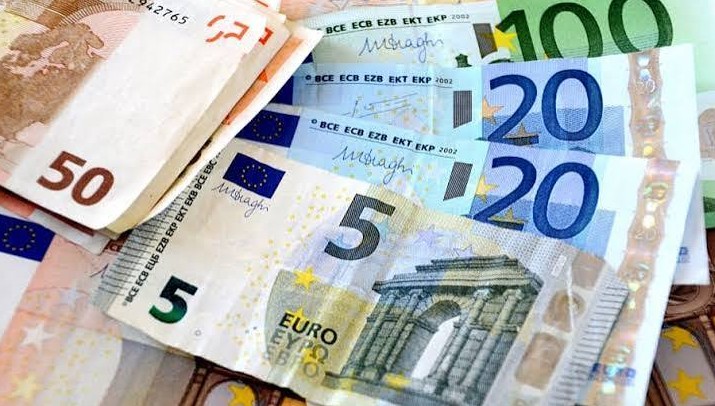
Nigeria’s currency found rare stability on Friday, holding at 1,548 naira to the euro in official trading. The Central Bank of Nigeria has built a foreign exchange buffer that currently fluctuates between 54.08 billion and 54.13 billion dollars. That haul marks the highest reserve level recorded by the monetary authority since December 2008. The steady inflow of petrodollars and tighter domestic policy have squeezed illicit currency speculators out of the market. On the parallel market, the street rate hovered near 1,560 naira per euro, leaving an unusually tiny margin between official and unofficial desks. That narrow premium has starved black-market operators of the lucrative arbitrage margins that once made currency hoarding irresistible. Governor Olayemi Cardoso now commands the physical balance sheet to defend the naira without bleeding reserves dry. A credible war chest changes commercial expectations across the country.
The narrowing spread between official and parallel desks has brought order back to corporate treasury operations. Importers now channel legitimate requests through the Nigerian Autonomous Foreign Exchange Market rather than patronising street touts. In previous years, wide exchange rate divergence made currency trade a one-way bet against the domestic coin. The convergence of exchange rates removes the distortion that once penalised honest manufacturers. Importers of raw inputs can now budget with predictable conversion rates rather than planning around panic spikes. Commercial banks report smoother order processing and higher interbank turnover as foreign capital returns to local debt auctions. Market participants no longer rush to buy foreign cash to protect operational capital from overnight devaluation. Predictable money creates predictable business decisions.
Rising crude output from the Niger Delta and improved state oil remittances underpin this monetary expansion. Production figures from the state oil firm showed aggregate output hovering above 1.7 million barrels per day through the second quarter. Strong international crude prices, currently hovering above triple digits amidst Middle Eastern maritime tensions, have boosted oil receipts into central bank vaults. Those petroleum dollars gave monetary authorities the room to clear legacy contract obligations and restore foreign investor trust. Foreign portfolio funds have followed the higher yields, taking up sovereign treasury paper in record amounts. The central bank can now supply enough liquidity to satisfy retail and commercial requests without rationing dollars. Stronger external reserves do not just decorate balance sheets. They provide the practical ammunition required to crush speculative runs.
Yet currency stability at home does not insulate Nigeria from turbulence in global financial capitals. The euro traded within a tight band near 1.16 dollars on European exchanges as international traders waited for American inflation figures. Any surprise increase in American core inflation could prompt the Federal Reserve to maintain high interest rates. A hawkish stance in Washington inevitably lifts the dollar index and pulls institutional capital back towards Western assets. That dynamic would weaken the euro, which forms more than half of the basket used to calculate the dollar index. European Central Bank President Christine Lagarde warned this week that persistent price pressures will keep borrowing costs high in Frankfurt. Nigeria must run its currency desk with one eye on Lagos and the other on transatlantic central banks. Global capital flows respect domestic discipline alone.
The wider domestic economy has already begun to absorb the effects of this monetary reset. Big industrial manufacturers and telecom firms have reported a return to dollar-denominated profit levels last seen before the sweeping devaluations of 2023. Fast-moving consumer goods companies, however, still struggle to match pre-reform dollar earnings as household purchasing power lags. Millions of urban consumers continue to face steep food prices and high transport bills that domestic wage rises have failed to offset. A stronger naira lowers the landing cost of imported raw goods, but factory savings take months to reach retail shelves. Domestic retailers rarely cut shelf prices with the same speed at which they raise them. Ordinary citizens judge monetary policy by what a basket of cassava costs, not by reserve tallies in Abuja. Currency gains must ultimately feed dinner plates to matter politically.
The current stability represents a tactical reprieve rather than a permanent industrial cure. Decades of structural failure have left Nigeria dependent on imported industrial components, machinery, and transport gear. When domestic firms must import almost every bolt and wire from Europe, external currency stability remains an urgent matter of corporate life and death. The central bank cannot indefinitely support trade accounts if oil production falters or foreign portfolio money takes flight. Sustainable currency strength requires domestic factories that can turn local inputs into finished goods for export. Nigeria cannot build durable monetary sovereignty on foreign portfolio bets and volatile mineral rents. True economic independence demands domestic production lines that work.
Governor Cardoso faces the difficult task of keeping interest rates tight without suffocating commercial bank lending to job creators. The central bank must resist political pressure to flood the financial system with cheap money before consumer inflation falls decisively. Commercial banks must continue to clean their asset books and direct foreign exchange allocations to productive industrial enterprises. Importers should take advantage of stable cross rates to lock in long-term supply contracts and rebuild damaged factory inventories. The 54-billion-dollar reserve milestone gives the country its best chance in nearly two decades to construct a modern financial architecture. If authorities squander this windfall on consumer subsidies, another painful currency slump will inevitably follow. Discipline remains the only thing standing between progress and panic.