
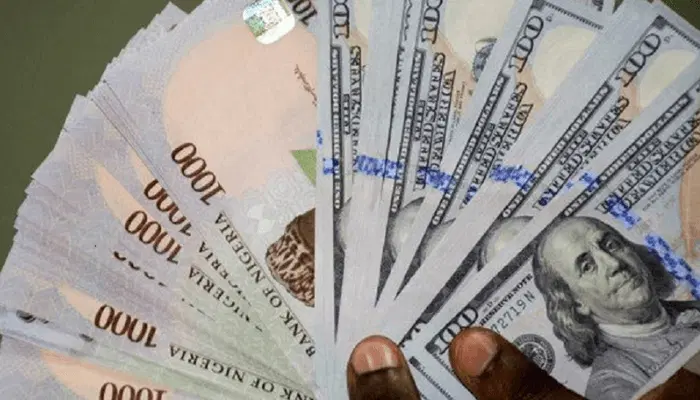
The Nigerian naira held steady at 1,326.30 to the American dollar on the official window on Tuesday, 15 September 2026. Central Bank of Nigeria records show that the spot rate firmed slightly from Monday’s opening levels at the Nigerian Foreign Exchange Market. Street dealers in Lagos, Abuja, and Kano quoted the greenback between 1,385 naira on the buying side and 1,410 naira on the selling side for cash retail transactions. That leaves an informal retail gap of roughly 83.70 naira, or about six per cent above the official electronic benchmark. The modest premium shows that central bank interventions continue to suppress the wild speculative runs of previous years. Importers no longer rush to street counters in blind panic to secure foreign currency. Governor Olayemi Cardoso currently holds sufficient foreign reserves to steady institutional demand at bank desks. The official trading desk retains control over market volume.
The steady trading band reflects sustained foreign exchange liquidity from crude oil sales and offshore remittances. National gross reserves held by the central bank hover near multi-year highs, supported by firm global oil benchmarks. That cushion allows monetary authorities to clear legitimate corporate import orders through commercial lenders without generating backlogs. Foreign portfolio capital also trickles into local sovereign debt auctions, drawn by attractive yields on treasury bills. These combined capital flows provide the hard currency needed to anchor official quotes around the 1,320 to 1,330 naira corridor. Lenders process routine commercial documentation without turning corporate clients toward street dealers. Adequate foreign reserves remain the best defence against speculative short sellers. A liquid bank counter keeps currency traders disciplined.
The parallel market continues to expose the friction that retail customers face inside regulated bank branches. Ordinary citizens buying 100 dollars for school fees, personal travel, or small business imports pay roughly 141,000 naira at street kiosks. Anyone selling that same sum to informal dealers collects around 138,500 naira in local notes. That transaction gap reflects the convenience premium that informal currency desks charge for immediate cash delivery. Retail users often find bank paperwork slow and burdensome for modest foreign exchange requirements. Unregistered money changers operating on city pavements fill that gap by offering instant settlements. A six per cent spread proves that small-scale retail demand still outpaces formal over-the-counter access. Convenience on the street carries an unavoidable cash tax.
Global monetary decisions pose an immediate test for domestic currency stability in the days ahead. The American Federal Reserve, the Bank of England, and the Bank of Japan convene policy meetings this week to chart their own interest rate paths. With global crude benchmarks trading above 100 dollars per barrel following Middle Eastern supply shocks, Western central bankers face stubborn energy inflation. Higher interest rates in Washington would strengthen the dollar index and draw capital away from emerging frontier markets. Such capital flight would test the central bank’s ability to defend the current exchange rate peg. Nigerian monetary officials cannot isolate domestic desks from interest rate moves made abroad. Capital flows follow global yields without sentiment.
The broader economy has yet to turn this foreign exchange stability into cheaper living costs for households. National headline inflation remains high, with financial analysts forecasting that August numbers will exceed July’s 15.43 per cent. Retail petrol recently crossed 1,400 naira per litre, driving commercial transport charges sharply higher across urban centres. Food costs continue to rise in city markets because high haulage bills wipe out the benefits of steady import quotes. Manufacturers welcome predictable currency conversion rates, but expensive diesel and double-digit loan costs squeeze production margins. Importers pass their elevated logistics overheads down to consumers who hold very little discretionary income. A stable exchange rate prevents currency collapse, but it cannot fix broken domestic transport routes. Grocery bills do not respond to central bank communiqués alone.
Industrial policy continues to show the limits of relying on financial engineering rather than domestic production. Nigeria spent trillions of naira on foreign-manufactured goods during the first half of the year, showing its deep reliance on overseas factories. While a predictable exchange desk helps firms plan raw material purchases, it also keeps imported finished goods relatively cheap. Local manufacturers battle erratic electricity grids, port gridlock, and expensive commercial borrowing rates above 30 per cent. Those high production costs leave domestic factories sitting on 1.77 trillion naira in unsold warehouse stock. Factory directors cannot lower shelf prices because production expenses remain pinned to the ceiling. True currency resilience requires factories that can process local farm harvests for export markets. Nigeria cannot build monetary strength on oil receipts alone. Real industrial output must replace foreign import manifests.
The Monetary Policy Committee faces a difficult balancing act as it prepares for its upcoming rate-setting session. Governor Cardoso must decide whether to hold the benchmark interest rate at 26.5 per cent or tighten borrowing costs further to contain price pressures. Commercial lenders argue that high cash reserve requirements restrict their capacity to lend to job-creating businesses. Yet lowering rates too early risks triggering capital flight and destabilising the foreign exchange window. The monetary authority must preserve foreign investor confidence while preventing high debt costs from strangling local commerce. If international shipping disruptions worsen and push energy prices higher, imported inflationary pressures will mount. For now, the naira trades with quiet discipline on official and informal counters. Sustainable monetary health requires structural economic reform, not just tactical currency management.