
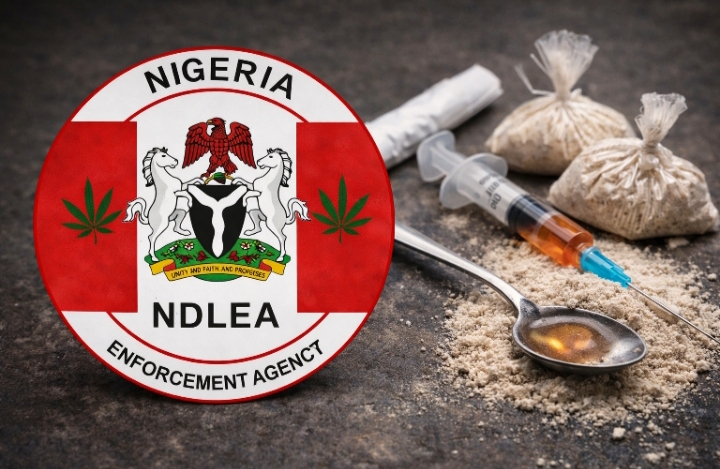
Operatives of the National Drug Law Enforcement Agency intercepted a massive narcotics shipment worth N6.2 billion at the Murtala Muhammed International Airport in Lagos on Sunday, 30 August 2026. The haul contained 47,200 pills of Captagon, a potent synthetic stimulant widely known as the Jihadi drug, alongside 3.9 million illicit opioid tablets. Agency spokesman Femi Babafemi confirmed the dual airport busts during a weekend operational briefing in Abuja. Officers arrested a 49-year-old cross-border trafficker named Aikins as he stepped off an Africa World Airlines flight from Accra. The suspect attempted to slip the synthetic stimulant past customs desks by embedding the tablets inside commercial boxes of traditional black soap. Narcotic cartels continue to invent novel concealment tricks to bypass airport security screeners. Smugglers turn everyday regional trade goods into clandestine chemical carriers. Nigeria remains a central transit battleground for international narcotics syndicates.
The discovery of the Captagon cache inside black soap blocks shows the cunning methods of West African smugglers. Narcotic screeners uncovered the pills after physical inspectors sliced open the dense, dark soap bricks. The seized stimulant carries an estimated market value of more than N1.5 billion on regional retail streets. Aikins claimed during initial interrogation that an Accra syndicate hired him to deliver the consignment to an unnamed contact in Lagos. The arrest proves that regional passenger air links now double as fast transit routes for high-value pills. Drug syndicates know that short regional flights often receive lighter customs scrutiny than long-haul intercontinental routes. Aviation screeners must now treat regional baggage with the same suspicion they apply to overseas cargo. Simple trade goods conceal deadly chemical shipments.
Captagon holds a dark reputation across global security circles as the chemical fuel of modern insurgencies. German chemists first synthesised fenethylline in the 1960s to treat hyperactivity and depression before regulators banned it for severe addictive harm. Industrial laboratories in Syria and Lebanon subsequently revived the formula to supply fighters during Middle Eastern conflicts. The stimulant suppresses fear, blunts physical pain, and induces long periods of sleepless euphoria. Middle Eastern terror factions used the pill to produce manic aggression among frontline assault squads. Its appearance at a Nigerian airport signals expanding trade corridors between Mediterranean producers and West African syndicates. The agency first intercepted Captagon in Nigeria in September 2021 inside machine parts at the Apapa seaport. The illicit trade in fear-killing chemicals has reached Nigerian shores.
The second half of the Lagos seizure highlights the domestic appetite for synthetic opioids. Narcotics officers at the airport cargo shed recovered 3.9 million unregistered pharmaceutical pills during routine manifest searches. The massive volume of pain relievers reveals how organised cartels use air freight to supply street dealers. Unscrupulous Asian pharmaceutical exporters continue to flood African ports with high-strength tramadol and tapentadol. Importers routinely forge bill of lading documents, misdeclaring dangerous controlled substances as general electronics or automotive parts. Corrupt clearing agents at cargo terminals help cartels slip bulk containers past electronic customs gates. The agency seized these millions of pills before they could reach informal medicine stalls across urban slums. Airport cargo sheds remain major gateways for black-market pharmaceuticals.
The bust confirms that West Africa functions as both a lucrative consumer market and a transit bridge for synthetic drugs. Organised crime rings exploit the free movement protocols of the Economic Community of West African States to shift contraband across borders. Smugglers move chemical shipments from Ghana, Togo, and Benin into Nigeria through informal bush paths and regional flights. Once inside the country, distribution rings break down bulk consignments into smaller parcels for domestic sale. The profits from these illicit transactions finance other criminal ventures, including arms trafficking and violent street cults. Regional police desks rarely share real-time passenger intelligence across national frontiers. Porous regional borders make drug interdiction a permanent uphill struggle. Cartels exploit open regional borders to move chemical poison.
The arrival of battlefield stimulants like Captagon carries grave implications for Nigeria’s internal security. Armed bandits in north-western forests and Boko Haram insurgents in the Lake Chad basin rely heavily on mind-altering drugs. Captagon pills provide the synthetic courage that drives young recruits into deadly village raids and suicide attacks. Rural outlaws consume massive quantities of stimulants before storming farming hamlets on motorbikes. Security analysts fear that the inflow of foreign combat stimulants will make rural armed factions even more ruthless. Interdicting these supplies at border entry points directly starves forest camps of chemical fuel. The fight against rural banditry begins with cutting off illicit drug supplies at international ports. Security forces cannot defeat forest gangs without seizing their pills.
The NDLEA has recorded impressive interdiction numbers under its current leadership, yet major structural hurdles remain. The agency relies heavily on tip-offs and manual physical searches rather than integrated automated cargo scanning systems. Federal authorities must equip major air and sea ports with modern spectrometry detectors and heavy-duty baggage scanners. Nigerian financial intelligence units must also do far more to track the corporate accounts that move drug money. Street seizures capture low-ranking mules like Aikins while the wealthy cartel bosses remain untouchable in executive mansions. The state must strip syndicate financiers of their luxury real estate holdings and bank balances. Arresting couriers achieves very little if the financiers keep their wealth. Real victory requires bankrupting the drug barons.
Supply interdiction alone cannot solve a narcotics crisis driven by deep domestic demand. Millions of unemployed youths turn to cheap opioids and stimulants to numb the daily pain of extreme poverty. Federal and state health ministries run very few public rehabilitation clinics for citizens battling severe chemical addiction. Families must rely on expensive private treatment facilities or lock addicted relatives in unregulated prayer camps. The government must treat substance abuse as a serious public health crisis rather than a purely penal offence. Community health programmes must provide accessible counselling, medical detox, and social reintegration services in vulnerable neighbourhoods. A society cannot arrest its way out of an addiction epidemic. Nigeria must heal the social despair that fuels the drug trade.