
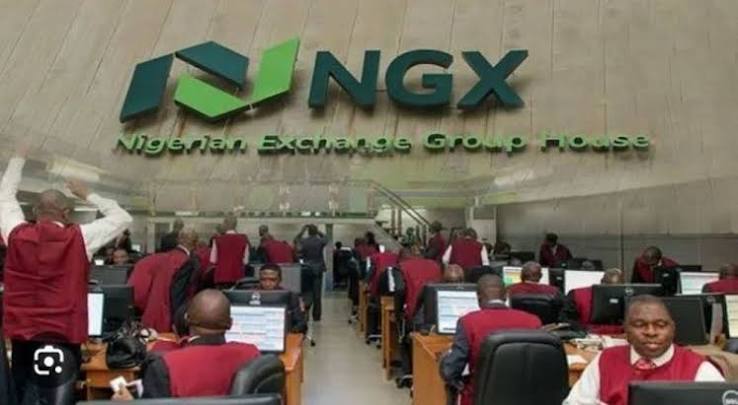
Nigerian equities ended the week of 6 November 2026 firmly in the red, with the benchmark All-Share Index of the Nigerian Exchange Limited falling 2.13 per cent to 248,877.22 points and market capitalisation sliding to N161.594tn. The retreat stripped roughly N3.5tn from the value of listed shares in five sessions, as investors locked in gains after one of the strongest rallies the market has seen in years.
Trading activity also cooled sharply. Turnover for the week stood at 2.829 billion shares worth N208.407bn in 192,158 deals, down from 7.619 billion shares valued at N637.826bn the previous week. The slide in volume, even as the number of deals held roughly steady, points to thinner participation and smaller average ticket sizes rather than a wholesale exit.
Even after the drop, the broader picture remains strongly positive. The index opened the year at 155,613.03 points, which leaves it up by around 60 per cent for 2026 so far. That run has at various points this year made Nigeria one of the best performing equity markets in the world in dollar terms, helped by improving corporate earnings, a steadier naira and the country’s return to the frontier-market indices tracked by international investors. The week’s losses, in that context, look more like a pause than a reversal.
Market breadth confirmed the bearish mood. Fifty-seven stocks declined against 29 that advanced, with 60 closing flat, a clear deterioration from the previous week when gainers and losers were more evenly matched. Losses ran across the main indices, with the Premium Index down 3.88 per cent, the Industrial Goods Index off 4.35 per cent and the Banking Index lower by 2.45 per cent. The Lotus II Index, which tracks Shariah-compliant stocks, fell hardest at 5.10 per cent, while the Growth Index bucked the trend with a 1.33 per cent gain.
The Financial Services sector again dominated activity, accounting for 1.983 billion shares, or just over 70 per cent of the week’s volume, and about 61 per cent of its value. First Holdco, Access Holdings and Honeywell Flour Mill were the most actively traded names, together making up more than a third of all shares that changed hands. Consumer goods and agriculture stocks rounded out the top three sectors by volume.
Individual price moves were wide in both directions. Honeywell Flour Mill led the gainers, rising 30.82 per cent to N29.50, followed by Transcorp Power, up 23.37 per cent to N219.60, and e-Tranzact, which added 14.42 per cent. On the other side, Vitafoam shed 18.96 per cent to close at N141.50, Sovereign Trust Insurance fell 17.02 per cent, Eterna dropped 15.79 per cent to N36.00 and ABC Transport lost 13.64 per cent.
Away from equities, the fixed income segment told a different story. Bond trading jumped to 21.993 million units worth N20.601bn across 48 deals, against just 2.294 million units the week before, almost entirely on the back of a single large transaction in the NBET 2033 bond that accounted for N20.468bn. The surge suggests institutional investors rotating funds into government debt, a familiar pattern when equity sentiment weakens.
Corporate actions shaped some of the pricing. Guinness Nigeria and Unilever Nigeria were both adjusted for dividends on 2 November, Guinness to an ex-dividend price of N416.00 after declaring N7.00 per share and Unilever to N107.00 after a N2.00 payout. The currency market thinned out too, with total foreign exchange turnover falling 51.29 per cent to $1.81bn from $3.71bn, spot deals making up almost 99 per cent of the total.
Taken together, the week reflected a market catching its breath. After months of record-setting gains, the mix of profit-taking, lighter turnover and a rotation into bonds points to investors reassessing valuations rather than walking away. Whether the pullback deepens or proves brief will likely depend on the third-quarter earnings still trickling in and on the direction of interest rates in the weeks ahead.