
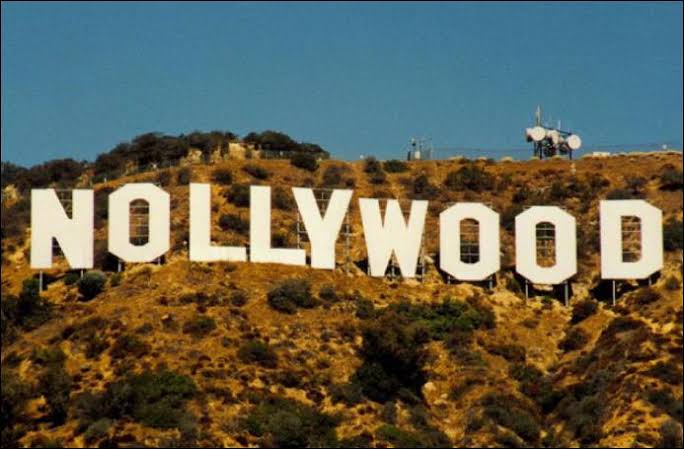
For decades, Nollywood operated on a simple formula: make films quickly, keep production costs low and get them into the hands of as many viewers as possible. It was an industry built on resourcefulness.
Long before international streaming platforms began competing for African audiences, Nigerian filmmakers were producing hundreds of movies every year, often with limited budgets and modest equipment. Stories travelled through DVDs, television stations, markets and informal distribution networks. The films were not always polished, but they were accessible, familiar and unmistakably Nigerian.
Then came Netflix. Amazon Prime Video followed.
And suddenly, Nollywood was no longer making films primarily for the Nigerian living room or the African market. Its filmmakers got the opportunity to make stories that could land on screens in Lagos, London, New York, Johannesburg and beyond at almost the same time. That shift has become one of the most significant changes in African cinema.
According to the U.S. Department of Commerce, Nollywood produces roughly 2,500 films annually, making it the world’s second-largest film industry by volume. The industry has also become an important contributor to Nigeria’s economy, with the wider arts, entertainment and recreation sector recording substantial growth in recent years.
But the streaming revolution has not been a simple success story. It has brought bigger budgets, better production standards and unprecedented international visibility, while also raising new questions about creative control, ownership and the sustainability of relying on foreign platforms.
From Low-Budget Hustle to Global Production
Nollywood’s greatest strength has historically been its ability to do more with less. The industry developed outside the traditional studio system. Filmmakers often worked with limited financing, small crews and extremely tight production schedules. According to Wired, traditional Nollywood productions could be made for tens of thousands of dollars, with some films completed within only a few months.
The arrival of global streamers began to challenge that model. Netflix entered Nigeria in 2016 and gradually moved beyond simply licensing existing Nigerian films. It began investing in original productions and forming partnerships with major Nigerian production companies and filmmakers. Its partnerships included projects involving EbonyLife Media and producer Mo Abudu, among others.
Amazon Prime Video launched its Nigerian service in 2022, bringing another major international player into the market. Its Nigerian slate included productions such as Gangs of Lagos and LOL: Last One Laughing Naija, while the platform also entered partnerships with local studios.
The implications were significant. For filmmakers who had spent years working within financial limitations, streaming money created room for bigger sets, better equipment, longer production schedules, stronger post-production and more ambitious storytelling.
The change was not simply about making films look more expensive. It was about making filmmakers think bigger.
The Rise of the “New Nollywood”
Streaming also helped accelerate what is often described as New Nollywood — a version of the industry that combines the commercial instincts of traditional Nollywood with the visual ambition and storytelling structure associated with international cinema. The difference is observable in films such as The Black Book.
Released on Netflix in 2023, the action thriller was produced with a reported budget of about $1 million — a significant figure by traditional Nollywood standards. Within 48 hours of release, it recorded 5.6 million views and entered Netflix’s Top 10 in 69 countries. Its success demonstrated something Nigerian filmmakers had long believed: local stories could travel globally without becoming completely foreign.
The film dealt with corruption, police brutality and justice — themes rooted in Nigeria — but presented them through the language of a commercial action thriller that audiences outside the country could understand. That combination has become increasingly important. The international audience does not necessarily need a Nigerian story to stop being Nigerian. What it needs is a story with emotions, conflicts and characters that can cross cultural boundaries.
Storytelling Is Changing Too
The most interesting effect of streaming is not the cameras or production budgets. It is the writing. Traditional Nollywood has often been criticised for predictable plots, repetitive storylines and melodramatic storytelling. While those criticisms can sometimes overlook the industry’s enormous diversity, streaming platforms have undeniably raised audience expectations.
Nigerian viewers can now watch a Nollywood production immediately alongside Korean dramas, American thrillers, British crime series and Spanish dramas. That creates a new standard. A Nigerian filmmaker is no longer competing only with another Nigerian film. They are competing with the entire world.
Streaming has therefore encouraged filmmakers to experiment with genres, tighter narratives, more sophisticated cinematography and stories built around concepts that can appeal beyond Nigeria. Academic research into Nollywood’s relationship with streaming has similarly found that streaming has created new pathways to international audiences and capital while changing production practices and audience relationships. The result is an industry increasingly conscious of how its stories look and feel to someone who may know very little about Nigeria. But that comes with a delicate balancing act.
How do you make a story globally accessible without stripping away what makes it Nigerian? That may be one of Nollywood’s defining creative questions for the next decade.
When the World Started Watching
For much of Nollywood’s history, Nigerian films already had international audiences. The difference was that those audiences often found the films through DVDs, television, piracy or informal distribution networks. Streaming formalised that relationship.
Netflix could take a Nigerian film and put it in front of audiences worldwide at the same time. That changed the scale of the opportunity. A film that might previously have been popular in Lagos, Accra or among Nigerians in London could suddenly become part of a global catalogue.
Netflix’s investment in Nigerian content was estimated at more than $23 million through 2023, according to reporting cited by the Los Angeles Times. The platform’s Nigerian slate included films such as The Black Book, Swallow and Jagun Jagun. For filmmakers, this represented something traditional distribution had struggled to provide: global visibility without having to physically enter every market.
And for Nigerian culture, the impact goes beyond cinema. Viewers who may never have visited Nigeria can now encounter Nigerian accents, fashion, food, music, traditions, humour and social issues through entertainment.
The films become cultural ambassadors.
But the Streaming Boom Was Never Guaranteed
For all the excitement surrounding Netflix and Prime Video, the streaming story has entered a more complicated chapter. The platforms have scaled back direct commissioning of Nigerian originals, forcing filmmakers to reconsider how dependent the industry should be on international streamers. The shift has been linked to profitability concerns, subscriber economics and changing strategies in the global streaming market.
That retreat has exposed a vulnerability. If a filmmaker builds a production company around the expectation that Netflix or Prime Video will continually finance new projects, what happens when the platforms change direction?
The answer, increasingly, has been diversification. Filmmakers are exploring cinemas, YouTube, local platforms, regional distribution and international sales rather than relying on a single streaming buyer. The Guardian reported that Nigerian filmmakers have increasingly turned to YouTube following the pullback by major streamers, with films such as Love in Every Word demonstrating the potential of direct-to-audience distribution.
In some ways, this represents a return to Nollywood’s original instinct: find a way to reach the audience regardless of the limitations.
The Question of Ownership
Another issue that the streaming boom has brought into sharper focus is: who actually benefits when a Nigerian film becomes a global success? International distribution can provide enormous exposure, but exposure is not necessarily the same thing as ownership. The more Nollywood depends on external platforms for financing and distribution, the more important questions about intellectual property, licensing, rights and revenue-sharing become. A filmmaker may receive funding to make a film and gain international visibility, but the long-term economic value of that film depends heavily on the terms of the deal.
That is why the next phase of Nollywood’s development may need to move beyond simply attracting foreign investment. It may need to focus on building Nigerian ownership of the industry’s intellectual property and distribution infrastructure.
The goal should not be to reject Netflix, Prime Video or other global platforms. It should be to ensure that Nigerian filmmakers have enough bargaining power that these platforms become partners rather than gatekeepers.
A New Audience, A New Responsibility
There is also a creative responsibility that comes with global visibility. For years, Nollywood’s primary obligation was to entertain Nigerian audiences. Now, a filmmaker knows that a movie could potentially be watched by someone in Canada, Brazil, South Korea or the United Kingdom. That creates opportunities — but it also creates pressure. Should filmmakers simplify cultural references so foreigners can understand them? Should Nigerian stories become more “universal”? Or should filmmakers trust international audiences to engage with Nigerian culture on its own terms?
There is no easy answer.
The most successful Nigerian films may ultimately be those that do both: tell distinctly Nigerian stories while exploring emotions that audiences everywhere recognise. That is what made The Black Book significant. Its story was deeply connected to Nigeria, but its themes — corruption, grief, revenge and the search for justice — were not confined to Nigeria.
Beyond Netflix and Prime Video
The streaming era has therefore left Nollywood with something more valuable than a collection of successful titles. It has changed expectations. Filmmakers have seen what is possible when production receives greater financial support. Audiences have become more demanding. Nigerian actors and directors have gained greater international visibility. Local stories have travelled further than ever before.
But the industry has also learned a difficult lesson: global platforms can open the door, but they cannot be the entire house. Nollywood’s future will likely depend on a wider ecosystem — cinemas, YouTube, local streaming platforms, international distributors, television, film festivals, private investors and, eventually, stronger Nigerian-owned production and distribution infrastructure.
The streaming giants may have sparked the renaissance, but they do not have to define its ending. Nollywood was built long before Netflix arrived. It survived piracy, inadequate funding, weak distribution networks and years of being underestimated. Its greatest advantage has always been its ability to adapt.
Now, the challenge is different. It is no longer simply about proving that Nigeria can make films.
The challenge is ensuring that when the world comes to watch those films, Nigerians retain enough control over the stories, the businesses and the value they create. That may ultimately be the real measure of Nollywood’s streaming renaissance: not how many Nigerian films global platforms can distribute, but whether the industry can use the opportunity to build a sustainable global film business of its own.