
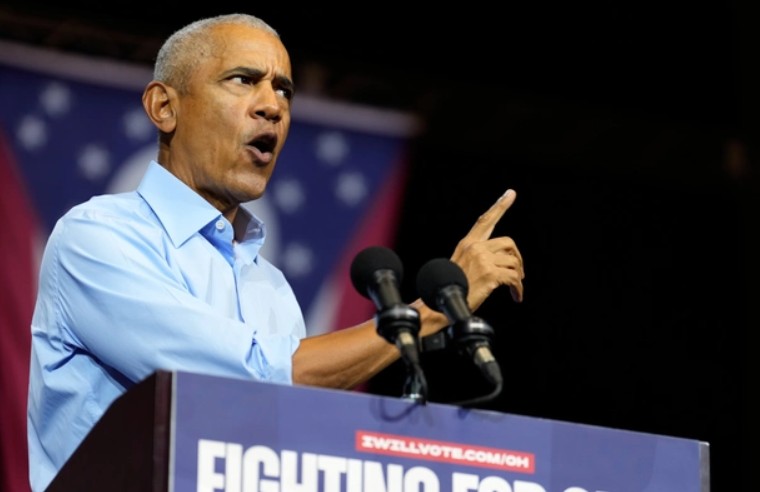
Former US President Barack Obama ridiculed the White House on 28 October 2026 for deploying state communications channels to counter a joke about Oval Office decor. Speaking at a campaign rally in Atlanta, Georgia, Obama noted that Donald Trump mobilised an entire administration apparatus to defend his executive interior design choices. The dispute began after Obama remarked that recent gold-leaf additions made the presidential office look as though Saddam Hussein had opened a Cheesecake Factory. Administration officials swiftly issued formal defences of the architectural renovations, overlooking weightier charges of systemic corruption and economic inflation.
The former president pointed out the absurdity of federal communications teams prioritising decor complaints over domestic cost of living pressures. He observed that Trump appeared entirely unbothered by comparisons to a foreign dictator, taking offence only at the casual insult to his commercial restaurant aesthetic. White House aides spent the week highlighting the skill of executive artisans rather than addressing public anxiety over rising consumer prices. Obama told the campaign audience that the president was busy super-glueing gold medallions to the Oval Office mantelpiece during an ongoing economic squeeze. Political satire continues to expose the delicate ego driving current executive communications strategies.
Campaign trail messaging from the Democratic surrogate focused on drawing sharp contrasts between performance antics and actual public governance. Obama urged voters to keep reality television drama on entertainment networks rather than delegating statutory executive power to performative leaders. He warned that working families pay a heavy material price when elected officials prefer vanity construction projects over basic policy work. The administration recently paved over parts of the historic Rose Garden and constructed an expansive new ballroom on executive grounds. These heavy capital investments contrast sharply with stagnant real wages for middle-income households across key battleground states.
Republicans continue to defend the physical upgrades as long-overdue maintenance of an iconic national monument and historical site. Administration representatives insist that private donations and institutional funds cover the bulk of the interior construction expenses. However, voters routinely express frustration when public figures focus on symbolic pageantry during periods of sustained financial stress. The former president used the architectural controversy to question the basic competence and operational priorities of the current administration. Voters will weigh these competing visions of executive governance when casting their ballots in upcoming regional contests.
Political strategists recognise that humorous barbs often penetrate public consciousness far more effectively than dense policy white papers. By framing the administration as hyper-sensitive and easily distracted, Democrats hope to alienate moderate swing voters in key electoral districts. The White House response inadvertently prolonged the news cycle by taking the initial comedic insult completely seriously. White House press officers spent critical briefing cycles defending plaster mouldings instead of outlining federal anti-inflation measures. The incident illustrates how thin-skinned leadership can leave an entire administration vulnerable to strategic public mockery.
The broader political landscape remains deeply divided as both major parties rally core supporters ahead of crucial national elections. Operational discipline and clear economic messaging will determine whether candidates successfully win over undecided independent voters. For now, the public debate remains anchored on executive aesthetics and the political costs of performative governance. Democratic organisers plan to deploy similar rhetorical tactics across upcoming Midwest campaign stops to drive turnout. White House communications officers face growing pressure to ignore personal taunts and focus on core policy achievements.