
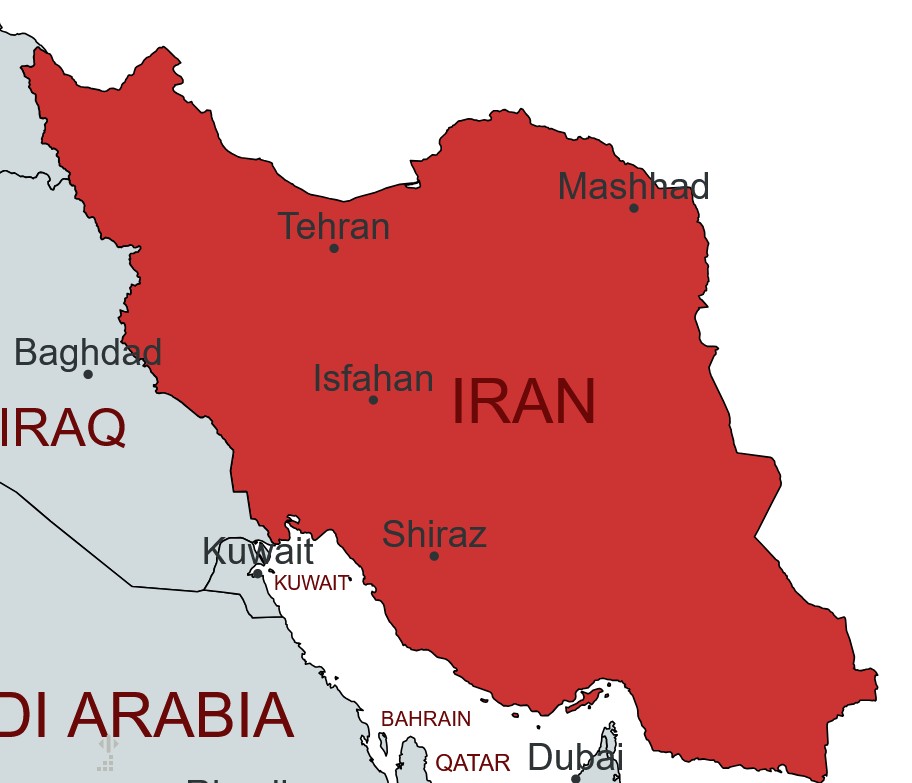
Iran’s military command declared on Monday that its armed forces are fully prepared for a direct confrontation with the United States and Israel. Tehran claimed to possess credible intelligence indicating that Washington is preparing a fresh wave of large-scale military assaults. Revolutionary Guard officials warned that any new aggression would trigger immediate retaliation against American bases across the Persian Gulf without operational limits. The rhetoric signals a dangerous turn in a confrontation that has simmered for seven months. Brinkmanship is rapidly replacing the quiet calculations of containment.
The military warning follows public statements from United States President Donald Trump, who announced that he has entered a decisive phase regarding the Middle Eastern conflict. Trump outlined three divergent strategic paths: total military destruction of the Iranian regime, complete economic strangulation, or a negotiated settlement. Speaking to domestic broadcasters, Trump openly questioned how soon to strike while demanding that Tehran accept American terms. The White House insists that it holds the military upper hand. Yet ambiguous red lines rarely deter an adversary that believes an assault is already underway.
The confrontation is already setting fire to regional proxy battlegrounds, most notably across the Arabian Peninsula. In Yemen, the Houthi movement fired a ballistic missile toward the Saudi capital of Riyadh over the weekend, testing air defence batteries outside the city. Fierce fighting between the insurgent group and the Saudi-backed coalition has reignited full-scale warfare in several southern provinces. The United Nations International Organisation for Migration reported that the revived conflict displaced nearly 130,000 Yemenis within days. Civil wars in the region never remain confined to local borders.
Commercial maritime traffic through the Strait of Hormuz has plummeted as tanker owners digest the threat of open war. Data from shipping registries showed that only seventeen commodity vessels entered the narrow channel over the weekend, down sharply from thirty-seven just seven days prior. The United States Central Command revealed that it has already redirected 109 merchant ships to enforce an active naval blockade on Iranian ports. Meanwhile, the United States Treasury announced plans to sever all international fuelling, landing, and ticketing access for Iranian commercial airlines this week. Washington wants to cut Iran off from the global financial grid completely.
Diplomatic channels have not collapsed entirely, though they carry very little momentum. Iran delivered a list of conditions for ending the standoff to American officials through Qatari mediators. Tehran demands an immediate cessation of strikes across all regional fronts, the release of frozen foreign assets, and the lifting of the naval blockade. Parliament Speaker Mohammad Bagher Ghalibaf struck a harsher note at home, insisting that Iran must deal painful military blows before any serious talks can begin. Both sides want concessions that the other considers impossible to grant.
The economic fallout of an expanded conflict extends far beyond regional capitals. Energy markets remain jittery, pricing in the risk that an exchange of missile salvos could shut the world’s most critical oil transit corridor. For developing economies reliant on imported petroleum, higher freight costs and rising war risk insurance rates threaten domestic fuel pricing. American embassies in the United Arab Emirates and Saudi Arabia have already issued travel advisories, warning citizens of potential flight cancellations and airspace closures. Panic is spreading into routine commercial aviation.
The military posture adopted by Tehran suggests that deterrence is eroding on both sides of the Gulf. Iranian commanders claim to have adjusted their strike plans to focus on American naval vessels, carrier strike groups, and logistics hubs in the Arabian Sea. Washington believes that aggressive displays of naval power will force Tehran into an unequal treaty. Instead, pressure is driving the Islamic Republic into a defensive crouch that treats pre-emptive escalation as a rational choice. Miscalculation now presents a far greater hazard than deliberate policy.
The standoff tests whether diplomacy can function when both sides treat military violence as an opening bid. Trump wants an exit that looks like total victory, while Tehran cannot afford a retreat that looks like collapse. The deployment of heavy weapons, naval blockades, and proxy missile strikes leaves very little room for face-saving compromises. Both adversaries are daring the other to fire the first shot. When leaders run out of patience, weapons do the talking.