
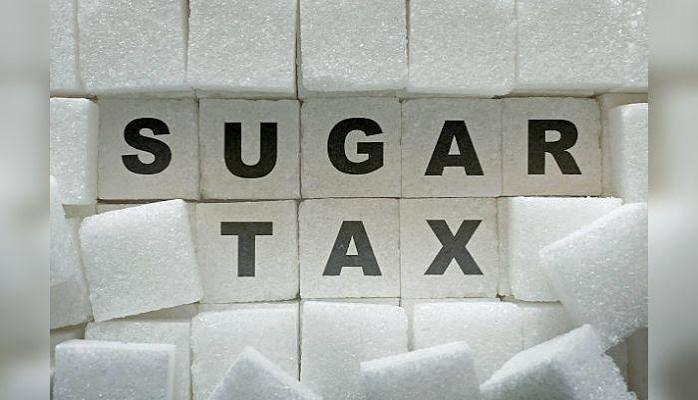
A fresh analysis has warned that Nigeria’s plan to replace its flat excise duty on sugar-sweetened beverages with a value-based charge could push up the price of soft drinks sharply while delivering uncertain gains for public health, adding a note of caution to a debate that has been building in the National Assembly for almost a year.
The report, produced by ThinkBusiness Africa, a Lagos-based economic research firm, examines the amendment to the Customs, Excise Tariff, Etc. (Consolidation) Act, known as CETA. The bill seeks to scrap the current excise duty of N10 per litre on non-alcoholic sweetened drinks and put in its place an ad valorem, or percentage-based, levy tied to the retail price of each product. According to the firm’s assessment, that shift could raise the effective burden to roughly N130 per litre at prevailing prices, meaning the tax would rise and fall with the value of the drink rather than the volume produced.
The proposal has moved further than many households may realise. The Senate passed the CETA amendment at third reading on 4 June 2026, and the bill is awaiting consideration in the House of Representatives. Under the framework approved by senators, the exact rate would be fixed by the Minister of Finance in line with what lawmakers described as global best practice, and a portion of the proceeds would be earmarked for health promotion, disease prevention, primary healthcare and insurance cover for vulnerable groups. Supporters, including the Coordinating Minister of Health and Social Welfare, Muhammad Pate, have argued that inflation has hollowed out the original N10 charge and that a stronger levy is needed both to curb consumption and to fund health programmes.
The N130 figure and its projected effects are central to the argument, and their origin matters. The modelling was carried out by researchers linked to the Corporate Accountability and Public Participation Africa, a civil society group that has campaigned for the higher rate, and was cited in a submission by the Manufacturers Association of Nigeria and again by ThinkBusiness Africa. That work estimated a N130-per-litre tax could raise retail prices by about 39 per cent and reduce annual per capita consumption by around 29 per cent. Professor Pate relied on the same study when presenting the government’s case at a Senate hearing, telling lawmakers the projections aligned with a World Health Organisation recommendation that SSB taxes lift retail prices by at least 20 per cent. ThinkBusiness Africa stressed that such figures are modelled scenarios rather than observed outcomes, a distinction that has run through the dispute since the firm first challenged the projections in 2024.
On the industry side, the report projected that annual sector output could fall from about N1.5 trillion to N1.1 trillion by 2030, with the production index dropping from 78 to about 40. It cited the Manufacturers Association’s estimate that roughly 1.5 million jobs depend on the beverage value chain, spanning agriculture, sugar supply, packaging, logistics, distribution and retail. Those are forecasts built on assumptions, and the actual effect would depend on the final rate set by the minister, on how much of the tax manufacturers pass to consumers, and on how buyers respond.
Recent trade data lend some weight to the concern about a sector already under strain, though they do not prove the tax is the cause. Drawing on figures from the National Sugar Development Council, the report noted that total sugar consumption fell from about 1.72 million tonnes in 2022 to 1.44 million tonnes in 2023, while domestic production dropped from 46,479 tonnes to 30,053 tonnes over the same period. ThinkBusiness Africa was careful to say these declines could not be pinned on the existing levy alone, pointing instead to a difficult operating environment shaped by inflation, exchange-rate pressure, higher input costs and weaker demand. Between 2022 and 2025, the N10 charge itself generated about N108.6 billion, according to figures presented during the Senate process.
The health question is where the report is most guarded. It acknowledged evidence that taxing sugary drinks can reduce purchases of the taxed products, consistent with international studies, but said the link between lower purchases and lower rates of obesity, diabetes and hypertension is far less settled. Chronic diseases, it argued, are driven by many factors, including overall diet, physical activity, income, education and access to care, so a single tax cannot be assumed to deliver a health outcome on its own. The concern is not academic. A meta-analysis has put diabetes prevalence among adult Nigerians at roughly 5.8 per cent, about six million people, while hypertension estimates range widely, and health advocates cite these numbers in pressing for stronger deterrents.
That backdrop of hardship cuts both ways. The report noted that more than 133 million Nigerians, about 63 per cent of the population, were classed as multidimensionally poor in the National Bureau of Statistics survey of 2022, with household purchasing power already squeezed by rising living costs. For many families, it argued, the immediate consequence of a higher SSB tax would be simpler than any long-term health debate: higher shelf prices. It also cautioned that a steeper levy would not automatically translate into larger or steadier revenue, since falling consumption, reduced formal-sector output and a possible shift to informal markets could shrink the taxable base.
Rather than the value-based model, the firm recommended a tax linked directly to sugar content, citing South Africa and the United Kingdom, where such structures have encouraged manufacturers to reformulate products with less sugar. It also called for a full assessment of the proposal, greater transparency on what the existing N10 levy has raised, and stronger non-tax measures such as public health campaigns, promotion of physical activity, early screening for diabetes and hypertension, and better primary care.
For now, the outcome rests with the House of Representatives and, should the bill pass, with the finance minister who would set the rate. The report’s central message is one of sequencing: that the impact of the current policy should be measured before a much larger one is imposed, and that a health objective is better served by a tax aimed at sugar itself than at the price of the bottle.