
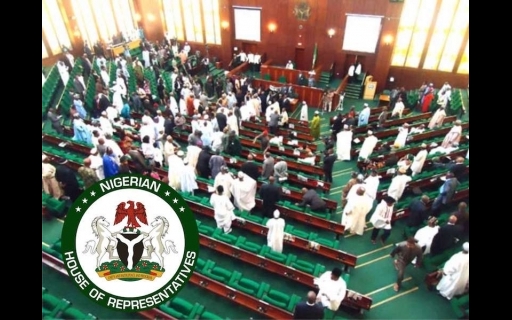
A parliamentary committee has issued a strict 48-hour ultimatum to federal ministries, departments, and agencies stalling its investigation into a phantom government body. The House Ad-hoc Committee investigating the illicit creation and operational history of the Presidential Foreign Investment Promotion Council declared Thursday as the final deadline for recalcitrant civil servants. Committee Chairman Yusuf Gagdi warned that non-compliant institutions face immediate statutory sanctions under Sections 88 and 89 of the 1999 Constitution. Lawmakers are attempting to uncover how a non-existent agency operated inside official premises and secured a N1.3 billion allocation within federal budget proposals. Institutional resistance to legislative scrutiny remains stubbornly embedded in Abuja.
The parliamentary inquiry focuses on a deeply embarrassing administrative failure across multiple tier-one state institutions. Officials from the Central Bank of Nigeria confirmed to lawmakers that two domiciliary accounts were opened for the council following direct instructions from the Office of the Accountant-General of the Federation. The Head of the Civil Service of the Federation, Didi Walson-Jack, also admitted that administrative bodies granted the phantom council an authorized recruitment establishment despite identifying severe flaws in its enabling documentation. The Ministry of Foreign Affairs subsequently alerted the National Security Adviser in October 2025 after discovering widespread forgery and discrepancies across submitted files. Administrative oversight collapsed completely.
The escalating scandal centres on the council’s self-acclaimed Director-General, Prince Adeniyi Adeyemi Matthew, who currently faces criminal prosecution for forgery, conspiracy, and criminal impersonation. Adeyemi allegedly managed to secure physical office space at the Federal Secretariat Complex, issue recruitment waivers, and request diplomatic endorsements for international trade summits. His legal strategy suffered a major setback this week after senior advocate Femi Falana withdrew from his defense team following Adeyemi’s refusal to attend scheduled court dates. Adeyemi previously claimed high-ranking executive officials facilitated the council’s backroom operational approval. Political actors routinely exploit administrative vulnerabilities for institutional fraud.
Parliamentarians are demanding that cabinet ministers and agency heads appear in person rather than delegating representatives to avoid political discomfort. The committee summoned Minister of Foreign Affairs Bianca Odumegwu-Ojukwu and National Security Adviser Nuhu Ribadu to explain why state security services failed to halt the phantom agency immediately upon detecting the fraudulent filings. Gagdi reiterated that legislative invitations carry binding legal force, rejecting claims that executive officers can skip parliamentary hearings at will. The committee intends to invoke warrant powers to arrest non-compliant bureaucrats if they miss Thursday’s final compliance window. Legislative patience has eroded entirely.
The existence of a phantom agency operating seamlessly inside federal networks exposes profound, systemic vulnerabilities across Nigeria’s budgetary and administrative safeguards. Lawmakers resolved to mandate the Budget Office to attach verifiable statutory instruments for every listed government entity alongside future annual appropriation bills. The committee ordered the central bank to track all external commercial bank accounts linked to the fake council to verify whether any public funds were successfully diverted. State officials must now determine whether similar fictitious entities sit undetected within the national budget. Administrative opacity continues to destroy public trust in sovereign governance.