
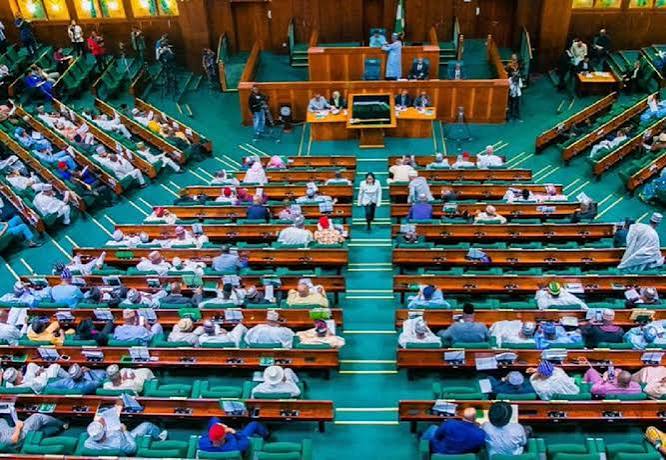
A disputed agency that lawmakers say never legally existed has forced the Nigerian state to account for itself in real time, with the House of Representatives on Tuesday handing defaulting government offices a 48 hour ultimatum to produce documents and officials in a probe that has now drawn in two ministers, the National Security Adviser, the Central Bank, the anticorruption commission and the President’s Chief of Staff.
The ad hoc committee investigating the alleged Presidential Foreign Investment Promotion Council, known by its initials PFIPC, told ministries, departments and agencies that failure to appear on Thursday would trigger the full weight of the legislature’s constitutional powers. Its chairman, Yusuf Gagdi, framed the standoff as a test of parliamentary authority rather than a routine hearing.
“The committee views this conduct as a serious affront to the constitutional oversight powers of the House of Representatives and an unacceptable disregard for the authority of the parliament, which represents the sovereign will of the Nigerian people,” Gagdi said. He reminded the affected offices that committee invitations are grounded in Sections 88 and 89 of the 1999 Constitution, adding, “Compliance is therefore a legal obligation, not an act of courtesy.”
The controversy sits inside an unusually large fiscal frame. President Bola Tinubu signed the 2026 Appropriation Act into law in April, approving a record ₦68.32 trillion, up from the ₦58.47 trillion he first presented, with roughly ₦32.2 trillion set aside for capital spending. Against that scale, the sum at the heart of the scandal is minuscule. Lawmakers say about ₦1.3 billion was allocated in the 2026 budget to what they describe as an illegal agency, a figure equal to less than two thousandths of one percent of the national budget, yet large enough to expose how questionable entries can survive the appropriation process.
The twelve member committee, inaugurated on Monday, is examining how the council entered the budget, how it obtained recognition in official records, and whether any public institution facilitated its activities. At the inauguration, Speaker Abbas Tajudeen, represented by the Majority Leader, Julius Ihonvbere, insisted the exercise was neither political nor speculative. “Our objective is simply to establish the facts,” he said.
The inquiry traces back to explosive claims by Prince Adeniyi Adeyemi Matthew, who for a reported two years presented himself as the council’s Director General, allegedly operating from within the Federal Secretariat in Abuja. At a press conference before his arrest earlier this month, Adeyemi alleged that the Chief of Staff to the President, Femi Gbajabiamila, demanded 48 percent of the council’s purported ₦27.3 billion take off grant. He further claimed that Gbajabiamila received ₦400 million through a proxy and requested an additional ₦200 million to facilitate presidential approvals, and that the Chief of Staff had issued him an appointment letter for the role.
Gbajabiamila has firmly denied every element of the account. In a statement on oath, he maintained that he had no personal, official or professional relationship with Adeyemi, and rejected claims of receiving money, abusing his office, interfering with investigations, or any link to the reported death of Babatunde Tanimola, whom Adeyemi described as an intermediary. The Presidency has gone further, with presidential spokesman Bayo Onanuga stating that police forensic analysis found the signature on the disputed appointment letter to be forged, and that a case had already been filed in court. Gbajabiamila has also instituted a ₦15 billion defamation suit against Adeyemi before the High Court of the Federal Capital Territory, Abuja.
Acting on a directive from President Tinubu to investigate how the disowned entity operated inside the Federal Secretariat, the Independent Corrupt Practices and Other Related Offences Commission questioned Gbajabiamila on Monday, July 20. His counsel, Jiti Ogunye, confirmed that the Chief of Staff appeared at about 3:00 p.m., answered investigators’ questions and returned to his duties. The commission stressed that he was invited, not arrested, describing his visit as consistent with its effort to gather all relevant facts.
That clarification did not settle the matter publicly. Human rights activist and African Action Congress presidential candidate, Omoyele Sowore, challenged the commission to publish the recording. “If the ICPC truly interrogated Tinubu’s Chief of Staff, Femi Gbajabiamila, they should release the full, unedited video recording to the public now. All these gimmicks won’t work. We know this is just another smokescreen,” Sowore wrote on X. He had earlier demanded that Gbajabiamila himself be investigated and alleged that the case was being managed as a cover up.
Successive appearances before the committee have produced a consistent picture of official disavowal. The Permanent Secretary of the Ministry of Foreign Affairs, Ambassador Dunoma Umar Ahmed, told lawmakers that Adeyemi, presenting himself as head of both the Presidential Economic Advisory Council and the PFIPC, wrote to the ministry three times, on June 26, 2025, August 5, 2025 and June 5, 2026, seeking endorsement to host a World Investment Summit. Each request was rejected. The ministry said it wrote to the Office of the National Security Adviser on October 16, 2025, and that the office replied on November 26, 2025, confirming that enquiries with the Secretary to the Government of the Federation and the Office of the Chief of Staff had established that Adeyemi was “unknown to any office of the Federal Government.”
The Central Bank told the panel it opened two domiciliary accounts for the council on the authorisation of the Office of the Accountant General of the Federation, but that the accounts carried zero balances and recorded no transactions. The Head of the Civil Service of the Federation, Didi Walson-Jack, also appeared, with testimony indicating that office space used by the council had been allocated to the Office of the Secretary to the Government of the Federation. The committee summoned the NSA, Nuhu Ribadu, and insisted that the Minister of Foreign Affairs, Bianca Odumegwu-Ojukwu, appear personally rather than by proxy, while rejecting a representative sent on behalf of the Minister of Finance, Taiwo Oyedele.
The legal terrain has also shifted. Femi Falana, the Senior Advocate of Nigeria who initially took up Adeyemi’s defence pro bono and had earlier urged the ICPC to investigate both Adeyemi and Gbajabiamila, confirmed his exit from the case. “I have withdrawn from the Adeyemi case,” he said tersely, without giving reasons. Reports linked the withdrawal to difficulties in obtaining verifiable documents from Adeyemi, inconsistencies in his account, his decision to grant an Instagram Live interview to social media activist Martins Otse, known as VeryDarkMan, against counsel, and his stated intention not to appear for his arraignment scheduled for July 27 at the Federal High Court in Abuja.
The episode revives long standing anxieties about the integrity of Nigeria’s budget process. The country has repeatedly grappled with disputes over questionable insertions and duplicated or opaque line items, most memorably the 2016 budget padding row that consumed the leadership of the House of Representatives, and civic budget trackers have for years flagged allocations that appear detached from any verifiable mandate. That the alleged council could reportedly occupy federal office space, secure bank accounts and appear in appropriation records, even as multiple arms of government now say they never recognised it, sharpens questions about the controls meant to stand between public money and unverified claimants.
For now, attention turns to two dates. On Thursday, the committee says defaulting agencies get their final chance to comply before it invokes its enforcement powers. On July 27, the Federal High Court is expected to take up the criminal proceedings against Adeyemi. Both will test whether the widening inquiry produces accountability or simply adds fresh layers to a controversy that has already reached the doorstep of the Presidency.