
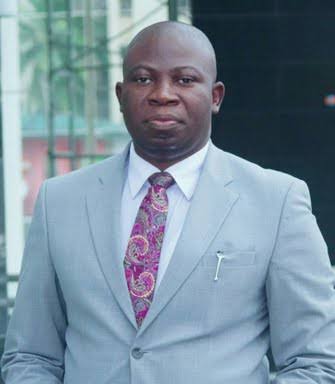
The Director of News at Arise Television, Sumner Sambo, has argued that former Vice President Atiku Abubakar’s determination to contest the 2027 presidential election, despite the existing zoning convention, will ultimately deepen Nigeria’s democratic journey.
Sambo made the assertion on Monday during Arise Television’s ‘Morning Show’, wading into the ongoing national debate over power rotation and the former vice president’s political ambitions.
According to Sambo, the Nigerian Constitution is clear that any qualified citizen can contest for the Office of the President, and the rotational practice observed in the country remains an informal arrangement.
“The rotational practice we have had is just an informal arrangement. By putting himself forward as the leading northern candidate at a time when it is supposed to be the South’s turn, he will enrich our constitutional democracy,” Sambo stated.
He further contended that the zoning convention has fostered complacency among politicians, allowing many to rely on rotational entitlement rather than merit. “Meritocracy must remain the focus of elections. This zoning convention has made many politicians complacent, content to simply wait for their turn,” he said.
Sambo also referenced the recommendations of the 1995 National Constitutional Conference, which was led by the late former Vice President Alex Ekwueme. He noted that the conference had proposed rotating the presidency across the six geopolitical zones, with the intention of eventually abolishing the arrangement in favour of merit-based selection.
“So the rotational presidency that we have had is just a backdoor channel, and we have not even practiced it the way Alex Ekweme report through the 1995 conference had wanted,” Sambo explained.
“What they had wanted was for us to rotate it across the six geopolitical zones. But even in that report, don’t forget, Alex Ekweme said that once it goes round the six geopolitical zone, we should abolish it, and then get back to meritocracy.”
The six geopolitical zones—Northwest, Northeast, North Central, Southwest, Southeast, and South-South—were proposed by Ekwueme at the 1994–1995 Constitutional Conference under the Abacha administration. While the zones have become the informal framework for political balancing, they have never been formally enshrined in the Nigerian Constitution.
Sambo concluded that the current practice of zoning falls short of the original vision. “But we haven’t practiced it the way Sani Abacha had wanted it to be done. So at this point in time, it still boils down to the political reforms that we need in the country,” he said.
The debate over zoning has intensified ahead of the 2027 elections. The Presidency has previously advised Atiku to abandon his ambition, insisting that it is the turn of the South to produce the president under the established North-South power rotation arrangement. Similarly, a founding member of the All Progressives Congress (APC), Osita Okechukwu, has urged Atiku to withdraw from the race and allow the South to complete its turn.
Atiku, who is the presidential candidate of the African Democratic Congress (ADC) for the 2027 election, has maintained his stance. He has also called on President Bola Ahmed Tinubu to withdraw from the race, citing governance concerns. Meanwhile, former Borno State Governor Ali Modu Sheriff has argued that the North is unlikely to support Atiku’s bid, as the region believes power should remain in the South.