
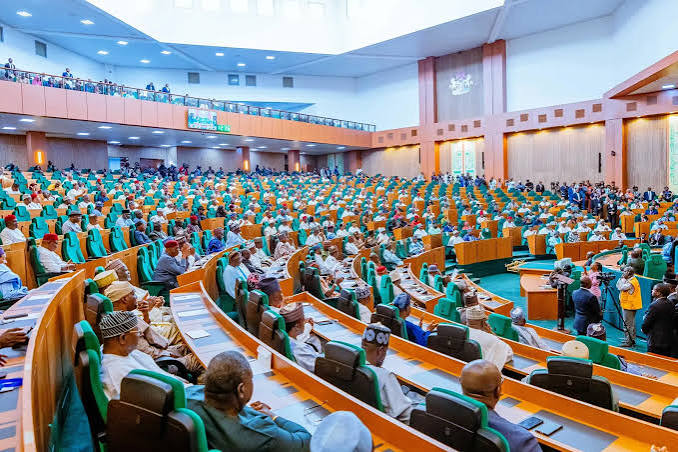
Nigeria is on the brink of its most far-reaching policing reform in decades, as a constitutional amendment to establish state police has cleared the last major legislative hurdle and now moves to President Bola Tinubu for assent.
The Constitution of the Federal Republic of Nigeria, 1999 (Sixth Alteration) Bill, 2026, has secured the backing of more than the 24 state Houses of Assembly required under Section 9(2) of the Constitution, which sets a two-thirds threshold for any alteration. Senate Leader Opeyemi Bamidele put the number of approving assemblies at 32, with lawmakers suggesting the figure may be higher, leaving only a few states, among them Cross River and Niger, yet to communicate their positions.
The bill began as an executive proposal from Tinubu. The Senate passed it on 24 June 2026 and the House of Representatives followed on 23 July 2026, before the Clerk to the National Assembly, Kamoru Ogunlana, transmitted it to the 36 state assemblies on 16 September for ratification. Senate President Godswill Akpabio had warned that any state failing to respond by the 15 November deadline would be deemed to have withheld approval, and lawmakers now expect the measure to reach the President before the Christmas break.
At its heart, the amendment dismantles the unitary structure that has defined the Nigeria Police Force for generations, replacing it with a dual model of a Federal Police Service and State Police Services. Bamidele has sought to reassure sceptics that the new formations would be community based and bound by constitutional safeguards, not ethnic or state armies, answering a fear that has sunk the idea before: that governors might turn local police on their rivals.
The push is inseparable from the scale of insecurity. The force fields roughly 371,800 personnel for a population above 200 million, a ratio of about one officer to 650 citizens, well short of the United Nations benchmark of one to 450. The acting Inspector General of Police, Kayode Egbetokun, has said the force needs an additional 190,000 officers to secure the country effectively.
Those gaps have met relentless violence. The Nigeria Violent Conflicts Database compiled by Nextier Advisory recorded 4,654 deaths and 3,141 abductions across 1,274 incidents in 2025, with banditry alone causing 2,724 deaths, up sharply from 1,585 the year before. A separate count by SBM Intelligence put the number kidnapped between July 2025 and June 2026 at about 7,825, while the 2026 Global Terrorism Index ranked Nigeria fourth worst globally and reported a 46 per cent rise in terrorism deaths in 2025.
The money has flowed without matching results. Federal security allocations climbed from N1.97tn in 2021 to N5.41tn in 2026, yet attacks on farms, highways, schools and worshippers have continued across the North West, North Central and North East. Supporters of state police argue that officers drawn from their own communities, who know the terrain and the language, can gather intelligence and respond faster than a force run from Abuja.
The idea itself is old, surfacing at national conferences and constitutional reviews for years before stalling over cost, political interference and the risk of abuse. What has changed is the alignment behind it: a reform proposed by the President, passed by both chambers and ratified by most states has cleared the ground that defeated earlier efforts.
The hard questions now move downstream. The amendment supplies the legal framework, but the cost of recruiting, training and paying new officers, and the command lines between federal and state forces, will be fixed in later law. A Presidential Working Group chaired by the Chief of Staff, Femi Gbajabiamila, has already sent a draft National Policing Bill and 29 related amendment bills to the Ministry of Justice for review. For now, the decision rests with Tinubu, whose signature would turn a decades-old argument into a new chapter for Nigerian security.