
Hours after US President Donald Trump cautioned Taiwan against declaring formal independence, the island’s government pushed back firmly, insisting it already is one.
Taiwan’s foreign ministry issued a direct statement on Saturday declaring that Taiwan “is a sovereign and independent democratic nation, and is not subordinate to the People’s Republic of China.”
The statement also noted that since Trump assumed office, Washington had repeatedly reaffirmed that its policy on Taiwan “remains unchanged,” an apparent effort by Taipei to signal continued American backing despite the President’s latest remarks.
The exchange marks a rare moment of public tension between Taiwan and its most powerful unofficial ally. The United States does not formally recognise Taiwan as an independent state, operating instead under the longstanding “One China” policy, which acknowledges Beijing’s position that Taiwan is part of China without explicitly endorsing it. Washington, however, maintains robust unofficial ties with Taipei and supplies it with defensive arms under the Taiwan Relations Act of 1979.
China considers Taiwan a breakaway province and has never renounced the use of military force to bring the island under its control. Beijing has consistently condemned any international recognition of Taiwanese sovereignty as a provocation.
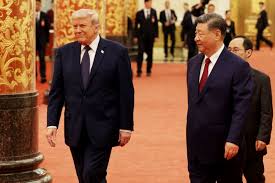
Trump’s warning, delivered ahead of his scheduled meeting with Chinese President Xi Jinping, was widely interpreted as a diplomatic concession to Beijing, signalling that Washington may be seeking to moderate its posture on the Taiwan question in exchange for broader geopolitical or economic concessions from China.
Taiwan, which has operated as a self governing democracy since 1949, has long maintained its own military, currency, passport, and governmental institutions. Despite this, fewer than a dozen United Nations member states formally recognise it as an independent country, largely due to sustained Chinese diplomatic pressure.
Taipei’s swift and unambiguous response to Trump underscores the sensitivity of the sovereignty question for the island’s 23 million people, and signals that Taiwan’s government has no intention of allowing external pressure, including from Washington, to define or dilute its national identity.
The development has drawn close international attention, with analysts watching whether the exchange will complicate US relations with both Taipei and Beijing ahead of the Trump and Xi summit.