
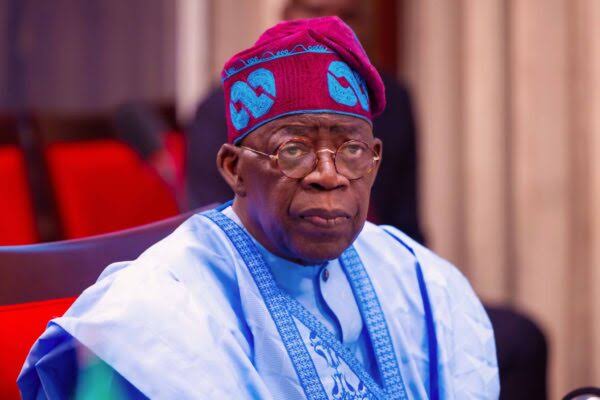
President Bola Tinubu’s latest attempt to stop the release of US investigative records has revived a three decade old controversy, but the legal dispute now centres less on whether a 1993 forfeiture occurred and more on whether records from an American law enforcement investigation can be withheld under US privacy and investigative exemptions.
Tinubu, through his lawyers, filed a 16 page submission on August 28, 2026, asking the US District Court for the District of Columbia to reject a request by transparency activist Aaron Greenspan for further disclosure of records held by the Federal Bureau of Investigation and Drug Enforcement Administration. The filing argues that Tinubu retains privacy interests in investigative files concerning him and that previous public disclosures do not automatically remove those protections.
The development is the latest stage in a Freedom of Information Act case filed by Greenspan in 2023. His requests include the FBI’s complete file on Tinubu and FBI Form 302 interview records relating to the period 1992 to 1993. Court records show that the FBI and DEA initially relied on FOIA exemptions that allow agencies, in specified circumstances, to neither confirm nor deny the existence of investigative records concerning individuals.
The dispute therefore does not establish that any undisclosed FBI file contains evidence of criminal conduct by Tinubu. What is established is that Greenspan is seeking access to records and that US agencies have resisted full disclosure.
The historical background dates to July 1993, when the United States filed a civil forfeiture action in the Northern District of Illinois involving funds held in several bank accounts associated with Tinubu and other claimants.
Court records identify the case as United States of America v. Funds in Account 263226700 Held by First Heritage Bank in the Name of Bola Tinubu, case number 93 C 4483.
The proceedings culminated in a settlement approved on September 15, 1993. A decree entered on October 4, 1993 ordered $460,000 in one First Heritage Bank account in Tinubu’s name forfeited to the United States. The decree stated that the funds represented proceeds of narcotics trafficking or were involved in financial transactions violating specified US laws.
However, the proceeding was a civil forfeiture case, not a criminal conviction against Tinubu. This distinction became important during Nigeria’s 2023 presidential election litigation. The Presidential Election Petition Court found that the petitioners had failed to establish that Tinubu had been criminally arrested or convicted in the United States over the matter.
The distinction is also important when discussing the constitutional argument now being repeated by political opponents.
Section 137 of Nigeria’s Constitution provides several grounds for presidential disqualification, including certain sentences and convictions for offences involving dishonesty or fraud. The provision does not state that a civil forfeiture order automatically disqualifies a presidential candidate.
Consequently, the assertion by the Allied Peoples Movement that the 1993 forfeiture itself makes Tinubu constitutionally ineligible is a political and legal argument, not an established consequence of the court record.
Greenspan’s lawsuit began after US agencies declined to provide the records he requested. According to the 2025 federal court ruling, his requests covered investigative material involving Tinubu and Abiodun Agbele and related to a federal investigation into a Chicago heroin trafficking and money laundering operation in the early 1990s.
One request, submitted in March 2023, sought the entire FBI file concerning Tinubu. Another, submitted in May 2023, specifically sought FBI Form 302 interviews involving Tinubu from 1992 to 1993. The FBI responded that it would neither confirm nor deny whether such records existed, citing privacy provisions under the Freedom of Information Act.
A federal judge subsequently examined the agencies’ reliance on those exemptions. The litigation has since continued over the scope of records that can be withheld, redacted or released.
The latest filing puts Tinubu directly into that dispute. His lawyers argue that the public availability of information from the old forfeiture proceedings does not eliminate his privacy interest in potentially broader investigative files. They also challenge Greenspan’s arguments concerning the FBI’s search, DEA redactions, confidential sources and the segregation of releasable material from protected information.
The court has also required the FBI to provide material for judicial review under seal, meaning the judge can examine disputed records privately before deciding what, if anything, should be released publicly. The FBI’s August 28 submission was made in connection with that process.
The timing gives the dispute additional significance because Nigeria is approaching the 2027 presidential election cycle. Political opponents have repeatedly used the 1993 forfeiture and allegations surrounding it to question Tinubu’s record.
The APM has now urged US authorities to disclose material that can legally be released, arguing that Nigerians have an interest in knowing what the historical investigation established.
That position remains contested by Tinubu’s legal team, which argues that public interest does not automatically override statutory privacy protections.
The central question before the US court is therefore narrower than the political debate in Nigeria: which records can legally be disclosed under US freedom of information law, and which must remain protected?
Until the court rules on the outstanding requests, the contents of records that remain withheld cannot responsibly be treated as established evidence of wrongdoing.
For Nigeria, the significance of the case lies in that unresolved distinction. The 1993 forfeiture is a documented historical court proceeding. The existence and contents of additional investigative records are the subject of continuing litigation. Whether those records eventually become public will depend on the US court’s application of American disclosure and privacy laws, rather than political claims made in Nigeria.