
African governments and international development partners have pledged approximately $498.8 million to strengthen response operations against the ongoing Bundibugyo Ebola Virus outbreak, even as the World Health Organisation warns that the epidemic is currently outpacing containment efforts across the continent.
The figure was disclosed by Jean Kaseya, Director-General of the Africa Centres for Disease Control and Prevention (Africa CDC), in a statement shared on X on Monday, May 26, 2026, following a High-Level Ministerial Meeting convened to coordinate continental response.
“Today, during the High-Level Ministerial Meeting, governments and partners announced approximately US$498.8 million in pledges and commitments to strengthen response efforts across affected and high-risk countries,” Kaseya said.
He framed the commitments as evidence of African solidarity, leadership, and collective responsibility for safeguarding the continent’s health security, stressing that trust, coordination, and rapid response remain critical to stopping transmission and saving lives.
The fresh financing includes $160 million from the World Bank earmarked for the Democratic Republic of the Congo, $82 million from the United States, and approximately $57 million from European partners. The package builds on an earlier $60 million emergency allocation by the United Nations Office for the Coordination of Humanitarian Affairs, disclosed last week by Tom Fletcher, the UN Under-Secretary-General for Humanitarian Affairs and Emergency Relief Coordinator.
The UN emergency disbursement was triggered five days after the WHO formally declared the outbreak a Public Health Emergency of International Concern (PHEIC), citing the absence of any approved vaccine or specific treatment for the Bundibugyo strain.
WHO Director-General, Tedros Adhanom Ghebreyesus, confirmed that the death toll linked to the outbreak had risen to 220, conceding that “at the moment, the epidemic is outpacing us.”
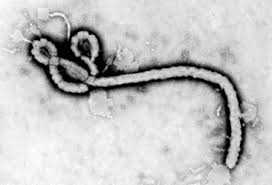
The Bundibugyo ebolavirus, the pathogen behind the current outbreak, is regarded as one of the rarest Ebola species known to infect humans. Prior to the current crisis, it had been linked to only two recorded outbreaks: an initial emergence in Uganda in 2007 and a subsequent flare-up in eastern Democratic Republic of the Congo in 2012.
Crucially, the existing global arsenal of Ebola vaccines and antibody therapies was developed primarily for the more widespread and deadlier **Zaire ebolavirus**, the strain responsible for the catastrophic 2014 to 2016 West African epidemic that killed more than 11,000 people. None of those countermeasures has been formally approved for the Bundibugyo strain, leaving health workers heavily reliant on classical outbreak control measures: contact tracing, isolation, safe burials, and community engagement.
The outbreak’s epidemiological burden remains heavily concentrated in two countries. In the Democratic Republic of the Congo, authorities have logged 906 suspected cases, 105 confirmed cases, 223 suspected deaths, and 10 confirmed deaths.
Uganda has so far recorded seven confirmed cases and one confirmed death. Health officials in Kampala indicate that five of the seven cases carry clear epidemiological links to the first two confirmed infections, suggesting a traceable transmission chain that, if broken, could limit further national spread.
The geographic spread across two countries that share porous borders, dense forest corridors, and active cross-border trade routes underscores the regional dimensions of the threat and the rationale behind a continent-wide financing push.
The current response effort places significant pressure on Africa’s evolving health security architecture, particularly the Africa CDC, which has positioned itself as the coordinating body for continental disease response since its elevation to a fully autonomous African Union agency in 2023.
For African governments, the unfolding crisis presents a dual test: clinical containment of a virus for which no licensed pharmaceutical countermeasures exist, and the political execution of a coordinated, multi-donor response involving the World Bank, the United States, European partners, the United Nations, and individual member states. Whether the $498.8 million pledged translates into operational impact on the ground will depend on disbursement speed, supply chain readiness, and the capacity of affected countries to absorb the funds effectively.
For now, the WHO’s blunt assessment that the epidemic is outpacing the response remains the defining backdrop against which the continental mobilisation will be measured.