
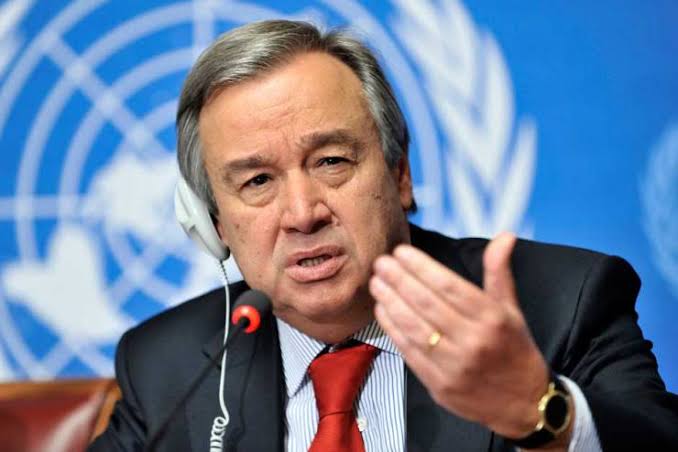
United Nations Secretary-General António Guterres on Thursday appealed for $1.1 billion to complete a $2.1 billion aid plan against Ebola in the Democratic Republic of the Congo, warning that operations could run out of money just as they need to expand.
The programme is 48 per cent funded. “Without additional funding, vital operations will run out of money, just when they need to expand,” Guterres said. “Current resources will last weeks, not months. That is why I am appealing for the remaining $1.1 billion, recognising that even more will be needed in the future.” The United States has already made a large contribution, including an additional $242 million announced earlier in August.
The outbreak was declared on 15 May 2026 in north-eastern Ituri Province. The World Health Organization characterised it as a Public Health Emergency of International Concern on 16–17 May. It is the DRC’s 17th Ebola outbreak since the virus was identified in 1976, and the first on this scale caused by Bundibugyo virus, not the Zaire strain that drove the 2014–16 West Africa epidemic and the 2018–20 Kivu outbreak.
European Centre for Disease Prevention and Control figures, updated on 27 August from data to 25 August, put confirmed cases at 5,713 and deaths at 2,744, a case fatality ratio of about 48 per cent. Some 1,269 people have recovered. The US CDC, as of 24 August, listed 5,656 confirmed cases and 2,715 deaths in the DRC. Cases have been confirmed in Ituri, Haut-Uele, North Kivu, South Kivu and Tshopo, with spread into Uganda and isolated patients treated in Europe.
Those totals already exceed the DRC’s previous deadliest epidemic. The 2018–20 outbreak of Zaire ebolavirus killed 2,299 people among about 3,481 cases, according to WHO figures based on Congolese data. This Bundibugyo wave has passed that death toll in a little over three months.
The medical difference matters. Licensed vaccines such as Ervebo and specific treatments used against Zaire ebolavirus do not apply to Bundibugyo. Earlier Bundibugyo outbreaks were smaller: Uganda in 2007–08 and the DRC in 2012. Without a vaccine ring, responders rely on surveillance, contact tracing, isolation, infection control and community trust. Africa CDC has said refusals of testing and resistance in some communities are hindering that work. Conflict in the east, attacks on health workers and weak laboratories compound the problem.
The WHO says it is scaling up community-level response. The European Union this week pledged testing kits worth €2.5 million. UN agencies have issued smaller, specialised appeals, including for reproductive health. Guterres’s $2.1 billion envelope is the wider humanitarian and health plan, not a single vaccine purchase.
For African health systems, including Nigeria’s, the lesson is familiar: an outbreak in a conflict zone with no licensed countermeasure can outrun both science and budgets. The DRC has more Ebola experience than any other country. Experience has not been enough this time. Whether donors close the $1.1 billion gap will decide if surveillance and care expand, or stall within weeks.